
Review · HISTORICAL TOURS
Rio Jewish Heritage Half-Day Tour
Rio’s Jewish story comes into focus through places spread across several neighborhoods, from Park Yitzhak Rabin’s view of Sugar Loaf to a 1932 Grand Temple and old Sephardic and Ashkenazi congregations. This is not a general city tour with one quick religious stop. Jewish life provides the main thread from start to finish.
I like the way the three-hour route combines history with living community spaces, and I like that transport is handled by an air-conditioned minivan or car. Guide Leonardo has been praised for making the subject personal through his own story, while also explaining Rio’s wider Jewish past in clear, engaging terms.
The main consideration is access. Entrance fees are extra, synagogue visits depend on availability and your request, and the itinerary can change. At $99 per person, this makes the most sense if you want focused Jewish history rather than a broad introduction to Rio.
Key points to know before booking
- Park Yitzhak Rabin: Begin with wide views over Botafogo Beach and Sugar Loaf from a park inaugurated by Lea Rabin.
- Several Jewish traditions: See places connected with Sephardic, Ashkenazi, and Orthodox Chasidic practice.
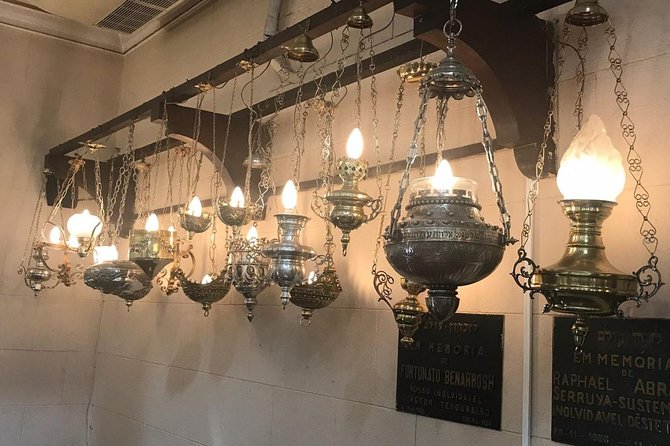
- Historic Grand Temple: Visit a beautiful 1932 building, with a suggested $6 Tzedakah contribution.
- Jewish Museum: Allow for a separate $3 entrance fee per person.
- Small-group comfort: Hotel pickup, drop-off, and air-conditioned transport keep this route practical across Rio.
- Flexible synagogue stops: Beth Yacov or Beit Lubavitch may replace other synagogue visits by request or according to availability.
Why this three-hour tour matters in Rio
Rio is often presented through beaches, mountains, samba, and colonial churches. Those are important parts of the city, but they do not tell the whole story. This tour gives you a different way to read Rio, using Jewish institutions, public spaces, schools, commerce, and religious buildings as clues.
You move through Botafogo, Catete, central Rio, and Copacabana rather than staying in one museum. That movement matters. It shows that Jewish life was not confined to a single enclave. It developed across the city, shaped neighborhoods, supported businesses, and created institutions that still matter today.
The format also suits anyone who wants more than dates and names. The Jewish Museum and Grand Temple provide historical context, while the synagogues show different religious traditions. You can see how Sephardic Jewish-Spanish practice differs from Eastern European Ashkenazi practice and Orthodox Chasidic practice, at least in broad architectural and institutional terms.
The small-group setup should make it easier to ask questions than on a large coach tour. The supplied information does not give a fixed group size, but it does identify the experience as small-group and includes a professional bilingual guide in English or Spanish.
More history tours in Rio de Janeiro:
- Rio de Janeiro: Historic Rio and Santa Teresa Half-Day Tour
★ 4.4 · 228 reviews - Rio de Janeiro: Little Africa Heritage Walking Tour
★ 4.9 · 177 reviews - Explore Little Africa : Unveiling Afro Heritage in Rio de Janeiro
★ 5.0 · 97 reviews
Starting at Park Yitzhak Rabin above Botafogo
The tour begins at Park Yitzhak Rabin, a fitting opening because it connects Rio to Jewish public memory while giving you one of the route’s best views. From here, you can look over Botafogo Beach toward Sugar Loaf.
The park was inaugurated by Lea Rabin, the wife of Yitzhak Rabin. That detail gives the stop a direct link to modern Jewish history, but the setting keeps the experience rooted in Rio. You are not beginning in a closed gallery. You are looking at the city’s coastline and hills while considering how Jewish identity is represented in a Brazilian setting.
This is also a useful place to get your bearings. Botafogo appears more than once during the route, including the visit to Shel Gmelut Hassidim. If you enjoy connecting neighborhoods to the people and institutions that shaped them, the opening stop sets the tone well.
Bring sun protection and comfortable shoes, though the tour itself is relatively short. The supplied details do not specify how much time is spent outdoors, so you should expect brief stops rather than a long park walk.
Chaim Weitzman Square and the route through Catete
On the way downtown, the tour points out Chaim Weitzman Square and a public school named for Anne Frank. These are small details, but they help show how Jewish names and memory appear in the public life of Rio.
You then pass through Catete, a neighborhood where Jewish residents once built a thriving furniture trade. This is one of the more unusual parts of the route because it connects Jewish history to work and commerce rather than only to worship.
I find that kind of stop especially useful for understanding migration. Religious buildings tell you where a community gathered. A commercial district tells you how families made a living and became part of the city’s daily economy. Catete adds that practical layer to the tour.
Do not expect a preserved Jewish quarter with a single street of historic buildings. The appeal here is interpretive. Your guide helps you understand what happened in the neighborhood, while the surrounding city continues its normal life.
The Jewish Museum and its separate entrance fee
The Jewish Museum gives the tour a more formal historical center. It is one of the listed visits, with an entrance fee of $3 per person paid separately.
The museum is likely to be most useful after the outdoor stops because you will already have seen public references, neighborhoods, and institutions connected to Jewish life. Instead of treating the museum as an isolated attraction, you can use it to connect the different parts of the route.
The available details do not specify the exact exhibitions or the amount of time inside. Keep that in mind when planning your expectations. The tour lasts three hours in total, so this is a focused visit rather than an afternoon spent studying every display.
The modest fee is not a major extra cost, but it is still worth budgeting for. Since food and drinks are not included either, bring any refreshments you need for the half-day outing.
A few more Rio de Janeiro tours worth weighing up
- Rio De Janeiro: Half-Day Rocinha Favela Walking Tour
★ 4.7 · 2,272 reviews - Rio: Half-Day Jeep Tour at Floresta da Tijuca
★ 4.5 · 353 reviews - Two of Rio’s Best: Christ the Redeemer & Sugarloaf Mountain Half-Day Tour
★ 4.5 · 294 reviews - Sugar Loaf Mountain Half-Day Tour
★ 4.0 · 217 reviews
Entering the 1932 Grand Temple
The Grand Temple is described as a beautiful building from 1932, and it gives the itinerary one of its clearest architectural highlights. A synagogue is not simply a place to admire from outside. Its design, age, and continued use help explain how a community established itself in Rio.
A $6 contribution, described as a Tzedakah, is not included in the tour price. Tzedakah is traditionally associated with charitable giving, so this payment is different in character from a standard museum ticket. You should carry the equivalent amount for this stop.
The building’s 1932 date also helps place Jewish communal life within Rio’s modern development. The tour is not limited to ancient history. It looks at institutions created in the twentieth century and the ways they remain part of the city.
Dress appropriately for religious sites. The exact dress code is not specified, so modest clothing is the sensible choice. Ask your guide before entering if you are unsure about local expectations.
Shel Gmelut Hassidim and its Sephardic identity
The Synagogue Shel Gmelut Hassidim in Botafogo follows the Sephardic Jewish-Spanish rite. That makes it more than another stop on a synagogue list. It introduces one of the Jewish traditions that shaped the community in Brazil.
The synagogue also has a notable imperial connection: Emperor D. Pedro II visited it. That detail ties the site to Brazil’s nineteenth-century history and gives your guide a chance to place Jewish life within the country’s wider political story.
You should see this stop as a cultural and historical visit, not assume that it will function like a regular tourist attraction with fixed public hours. Synagogue access can depend on availability, and the itinerary may change according to your request or local conditions.
That uncertainty is the price of visiting active community spaces. You gain a closer look at places with real religious purpose, but you do not get the same guaranteed access as at a museum.
Copacabana’s Jewish community institutions
The itinerary continues to Copacabana, where you visit the Club Israelita Brasileiro and Beth El Synagogue. These stops broaden the picture again. Jewish life in Rio is shown through both a community club and a synagogue, not through religious buildings alone.
The Club Israelita Brasileiro suggests the social side of communal life, while Beth El adds another religious institution to the route. The supplied information does not provide details about the club’s exhibitions, activities, or interior spaces, so I would treat these as guided visits rather than expect a long independent visit.
Copacabana is also where alternative synagogue stops may be arranged. Beth Yacov, associated with the Eastern European Ashkenazi rite, may replace another synagogue according to your request or availability. This is useful if you have a particular interest in Ashkenazi history or want to see a different tradition from the Sephardic synagogue in Botafogo.
The route may also include Beit Lubavitch in Leblon, associated with Orthodox Chasidic practice. These options make the tour more adaptable, but they also mean you should confirm the final schedule rather than assume every listed synagogue will be visited.
What the guide adds to the experience
A subject like this depends heavily on the guide. Names, dates, and buildings can feel disconnected if nobody explains how they relate to one another.
Leonardo is the guide specifically praised in the available information. His approach combines Jewish history and culture in Rio with his own story, which can give the tour a more personal tone. He is also described as willing to offer advice beyond the basic route.
That matters because the itinerary crosses several neighborhoods and traditions in a short period. You need someone who can keep the story clear while moving from a public park to a museum, a historic temple, and active community institutions.
The tour is offered in English and Spanish. When booking, confirm your preferred language and ask which synagogue visits are expected on your date. The confirmation is sent within 24 hours, subject to availability.
Is $99 a fair price?
At $99 per person, this is not a budget sightseeing ride. The price includes a professional guide, hotel pickup and drop-off, a small-group format, and transport in an air-conditioned minivan or car.
Those inclusions matter in Rio. The route covers multiple neighborhoods, and arranging several Jewish sites independently would require planning, local transport, and advance contact with institutions. The hotel service also saves you from finding a meeting point across town.
Entrance fees are not included. Add $3 per person for the Jewish Museum and $6 for the Grand Temple contribution, plus any food or drinks. A kosher lunch can be arranged in advance, but the supplied information does not state its price.
I would call the value good for a visitor with a clear interest in Jewish history, culture, architecture, or family heritage. If you simply want a general Rio sightseeing tour, the cost may feel high because beaches, viewpoints, and major landmarks are not the main purpose.
Timing, comfort, and practical planning
Three hours is enough for an introduction, but it requires a steady pace. You will cover several districts and make multiple stops, so this is not designed for long, unhurried visits at each location.
Hotel pickup and drop-off make the short format easier. You do not lose part of the morning or afternoon getting to a distant departure point. Air conditioning is another practical benefit in Rio’s warm climate.
A minimum of two people per booking is required. Confirmation arrives within 24 hours, subject to availability, so do not assume that a last-minute request is guaranteed.
Free cancellation is available up to 24 hours in advance for a full refund, and you can reserve now and pay later. These terms help if your Rio plans are still moving around, but synagogue availability can still affect the exact route.
Who should book this experience?
I would choose this tour if you have Jewish family connections, an interest in diaspora history, or a desire to understand Rio beyond its best-known sights. It is also a good fit if you prefer a guide to explain cultural context rather than simply point out buildings.
The route suits independent-minded visitors who want a focused half-day without giving up hotel convenience. The small-group format and bilingual guiding are helpful if you want to ask questions or discuss particular traditions.
It may not suit you if you need guaranteed entry to every listed site, dislike schedule changes, or want a broad first-day overview of Rio. You should also allow for the fact that religious buildings may have access rules and that the final synagogue selection can vary.
FAQ
How long does the Rio Jewish Heritage Tour last?
The tour lasts three hours.
What languages are available?
The live guide is available in English and Spanish.
Is hotel pickup included?
Yes. Hotel pickup and drop-off are included.
What entrance fees are extra?
The Jewish Museum costs $3 per person, and the Grand Temple requests a $6 per person Tzedakah contribution. Food and drinks are also not included.
Can I request a particular synagogue?
Yes. Beth Yacov in Copacabana and Beit Lubavitch in Leblon may replace other synagogue stops according to your request and availability.
Is kosher lunch available?
Yes. Kosher lunch can be arranged if requested in advance.
Should you book the Rio Jewish Heritage Tour?
Book it if Jewish history and culture are a real part of your Rio plans. You will see public memorials, a former Jewish commercial district, a museum, a 1932 temple, and congregations linked to several traditions, all within a guided three-hour route.
The strongest reason to go is the combination of place and explanation. Leonardo’s personal connection, the Park Yitzhak Rabin viewpoint, Emperor D. Pedro II’s link to Shel Gmelut Hassidim, and the option to request different synagogue traditions give the tour more substance than a simple photo stop.
Just confirm the final itinerary, dress respectfully, budget for the separate entrance contributions, and accept that active religious sites may not always be available. For the right audience, the $99 price buys a focused and practical look at a part of Rio that most standard sightseeing routes leave out.
Just added around Rio de Janeiro
- Vidigal Favela Tour★ 4.4 · 26 reviews
- Hang gliding flight in Rio de Janeiro★ 5.0 · 6 reviews
- Rio de Janeiro: Zip Lining and Canopy Tree Tour★ 3.3 · 6 reviews
- Tijuca Forest Hike – Waterfalls & Caves, Nature & Wild Life!★ 5.0 · 51 reviews
- Unforgettable Boat Party★ 5.0 · 3 reviews
- Guided Tour to Favela Santa Marta★ 5.0 · 60 reviews
- Rio de Janeiro: Attend a Vasco da Gama game with local guide★ 4.8 · 9 reviews
- Rio Highlights: Christ, Sugarloaf, and More in a Private Tour★ 5.0 · 36 reviews
Historical Tours, compared.


Explore Little Africa : Unveiling Afro Heritage in Rio de Janeiro
Read our review →
Learn the History of Rio with an Unforgettable City Center Walking Tour
Read our review →
Rio’s city walking tour: a glimpse of history and olympic legacy
Read our review →
Olympic Boulevard, Museum of Tomorrow & Historical Rio
Read our review →
Olympic Boulevard, Museum of Tomorrow & History Tour
Read our review →
Petropolis Bohemia: Historic tour and visit to the Bohemian Brewery
Read our review →Browse the lists this tour appears in