
Review · HISTORICAL TOURS
Explore Little Africa : Unveiling Afro Heritage in Rio de Janeiro
Rio’s Little Africa is not a side note in the city’s story. It is where Rio’s African past comes into view through churches, archaeology, museums, old port sites, music, religion, and the daily shape of the neighborhood. This tour gives that story a clear route, from Santa Rita to Largo da Prainha.
I like the decolonial approach, which puts Black people and Afro-Brazilian culture at the center rather than treating them as a footnote. I also like the compact route: you get the Pretos Novos Institute, MUHCAB, Valongo Wharf, Pedra do Sal, and a short ride on the VLT without spending a full day on the road.
The main consideration is walking. The route lasts about three and a half hours, includes several outdoor stops, and is not recommended for people with disabilities. Some museum closures also affect the schedule, especially on Sundays, during Carnival, and from December 16 through January 5.
Key points to know before booking
- This is Rio’s slavery and Black heritage story told from the city’s port district, not a general sightseeing walk.
- The Pretos Novos Institute and MUHCAB give the tour its strongest indoor context, while Valongo Wharf and Pedra do Sal connect that history to the streets.
- Guides such as Carolina, Rafael, Malu, and Val have been praised for clear English, warmth, and strong subject knowledge.
- A maximum of 20 people keeps the group manageable, though the experience still involves steady walking.
- The $82.53 price includes admission fees and the VLT ride, but not lunch or tips.
- Check the calendar carefully, since the New Black Institute closes Sundays and all museums close during the stated holiday periods.
Why Little Africa belongs on your Rio itinerary
Rio can make sightseeing easy. Christ the Redeemer and Sugarloaf Mountain offer instant views, clear photo stops, and a familiar picture of the city. Little Africa asks you to slow down and listen to a less visible part of Rio.
The port district was shaped by the forced arrival of Africans, by Black resistance and survival, and by the culture that grew from those communities. This tour connects those subjects to actual places. You are not only hearing dates in a room. You are moving from a church to an archaeological site, from a territory museum to a former landing point, and then toward music and religious traditions at Pedra do Sal.
That route matters. It helps you see how history remains tied to streets and squares. You also get a useful point of comparison with the history of Black communities elsewhere in the African diaspora, especially if you are familiar with the United States. The guide-led format is important here because several of the sites need explanation to make their meaning clear.
More history tours in Rio de Janeiro:
- Rio de Janeiro: Historic Rio and Santa Teresa Half-Day Tour
★ 4.4 · 228 reviews - Rio de Janeiro: Little Africa Heritage Walking Tour
★ 4.9 · 177 reviews - Learn the History of Rio with an Unforgettable City Center Walking Tour
★ 5.0 · 82 reviews
Starting at Santa Rita in central Rio
The tour begins at Santuário de Santa Rita, at Largo de Santa Rita in central Rio. The church is an outside stop, lasting about 20 minutes, with no separate admission charge.
This opening works as a quiet introduction. The guide sets out the decolonial reading of the area, shifting attention away from a version of Brazilian history told only through colonial institutions. The focus is on Black presence, memory, and the forces that shaped this section of Rio.
Do not expect a long church visit or a formal museum display here. The value comes from the explanation given on site. You will want to listen closely, since the exterior itself may not spell out why the place matters to Afro-Brazilian history.
Guides have included Carolina, Rafael, Malu, and Val, among others. The strongest guide feedback has centered on their ability to explain difficult subjects with care while keeping the walk approachable. English ability can vary by guide, but English-language interpretation is offered, and one scheduling problem in the past involved arranging an English interpreter after a guide became ill.
The Pretos Novos Institute and the evidence beneath the city
The visit to the Instituto de Pesquisa e Memória Pretos Novos, known as IPN, lasts about 40 minutes. This is the tour’s archaeological and memorial center, and admission is included in the price.
The Institute is connected to the history of the Pretos Novos, Africans who arrived in Brazil but died before being sold into slavery or before they could begin their forced lives in the country. The site gives physical weight to a subject that can otherwise become too abstract. You are looking at a place tied to human remains, memory, and the way the past was buried, ignored, and later brought back into public discussion.
The supplied details describe the visit as an external one, so you should confirm the exact access arrangement when booking. Still, the IPN ticket is included, and this is one of the most important stops for understanding why Little Africa cannot be reduced to food, music, or colorful streets.
This part of the tour may feel serious. That is appropriate. The guide’s job is not to soften the subject, but to explain it without turning suffering into a spectacle. Several guides have been praised for handling slavery and institutional inequality directly while keeping the discussion respectful.
MUHCAB puts Afro-Brazilian culture in place
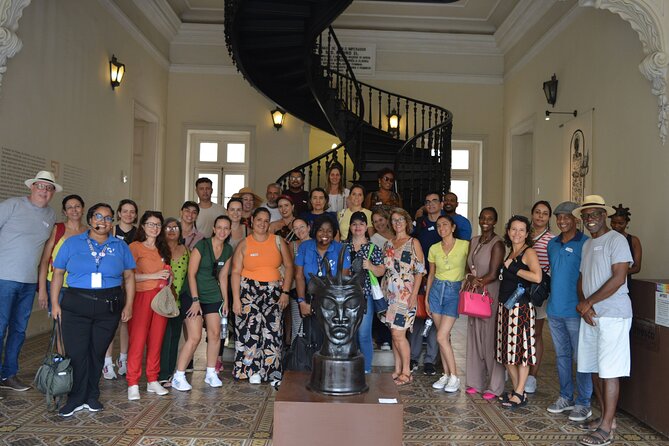
Next comes MUHCAB, the Museu da História e da Cultura Afro-Brasileira. Plan on roughly 40 minutes. The museum is free on this tour, and its focus is the history and culture of Afro-Brazilians in the Gamboa area.
I like the way this stop broadens the day. The IPN gives you archaeology and mourning. MUHCAB helps show the continuing cultural life shaped by African peoples in Brazil. The museum is described as a territory museum, so the neighborhood itself forms part of the exhibit. That makes the visit more useful than a quick gallery stop removed from the streets under discussion.
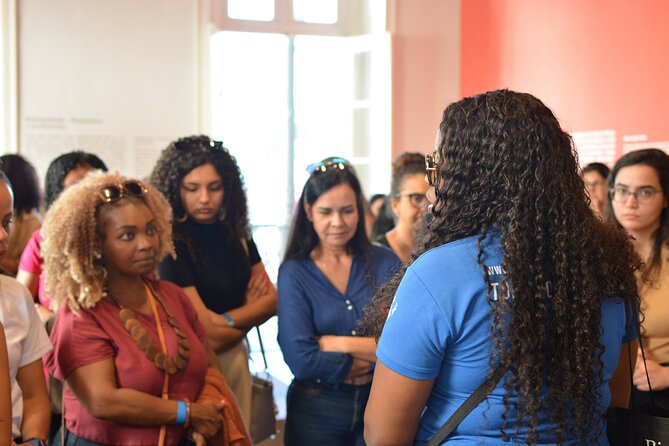
Your guide provides the thread between displays, neighborhood history, and the larger African diaspora. This is also the point where individual guides can make a real difference. Carolina has been singled out for her warmth and careful explanations, while Rafael has been praised for turning a large subject into an enjoyable half-day experience.
Allow yourself time to ask questions. The tour is not designed as a silent museum circuit. It is a guided interpretation of the places and the people connected to them.
Same city, a completely different kind of day:
- Rio de Janeiro: 6-Stop Highlights of Rio with Lunch
★ 4.4 · 5,157 reviews - Christ the Redeemer Entry Ticket by Corcovado Train
★ 4.4 · 4,476 reviews - Rio de Janeiro: Rocinha Favela Walking Tour with Local Guide
★ 4.8 · 3,052 reviews - Rio: Christ the Redeemer, Sugarloaf, Selaron & BBQ Lunch
★ 4.5 · 2,428 reviews
Valongo Wharf confronts Rio’s port history
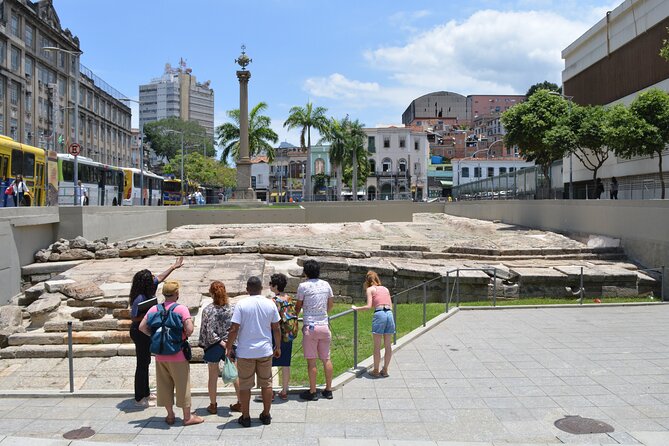
The tour then reaches Cais do Valongo, a former wharf in Rio’s port district, between the present-day Coelho e Castro and Sacadura Cabral streets. The stop lasts about 30 minutes and is free.
Valongo Wharf is one of the most important places on the route because it links Rio’s modern port to the forced arrival of Africans. A simple stretch of ground can be easy to pass without context. With a guide, it becomes a place to think about the scale of the slave trade and the way public space can preserve, hide, or recover painful history.
This is an outdoor stop, so conditions matter. Heat, rain, and bright afternoon light can affect your comfort and your photographs. The route is often scheduled in the afternoon rather than the hottest part of the day, but you still need water, sun protection, and shoes suited to pavement.
The guide-led explanation is the real feature here. You are not paying for an elaborate attraction. You are paying for the connection between the physical site and the history it represents.
Pedra do Sal brings history into living tradition
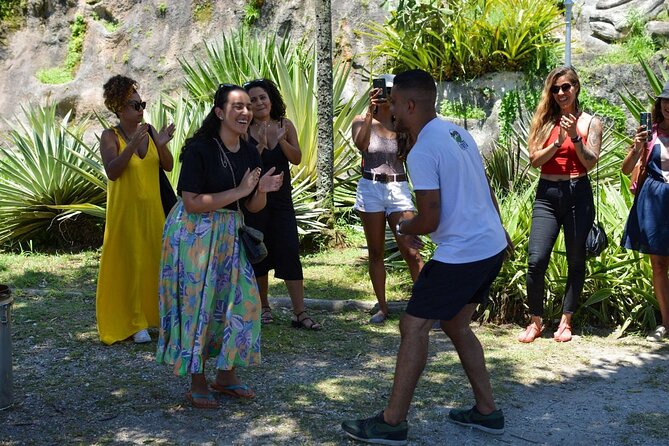
Pedra do Sal is an outside stop of about 25 minutes in the Saúde neighborhood, near Largo da Prainha. It is both a historical and religious landmark.
This is where the tour moves from the port’s painful history toward the ways Black culture continued to shape Rio. Pedra do Sal is closely associated with Afro-Brazilian religious traditions and the cultural life of the area. The stop helps you understand that Little Africa is not only a memorial zone. It is also a place connected to community, belief, music, and identity.
You may find that the guide spends more time explaining the significance of the site than pointing out a long list of objects. That is a strength, not a weakness. Pedra do Sal rewards context.
The visit is short, so it will not provide a full exploration of the neighborhood. If this is the part of Rio that interests you most, make a note of the location and consider returning independently, while following local guidance and staying aware of your surroundings.
Largo São Francisco da Prainha finishes the walk
The final stop is Largo São Francisco da Prainha, where the tour ends at R. São Francisco da Prainha, 7, in Saúde. The visit lasts about 20 minutes.
The square was once a symbolic part of Little Africa, marked by Black presence and the zungus, communal spaces connected to Black urban life. Today, it is also known for its restaurants and social atmosphere and has been named one of Rio’s cooler places by Time Out.
That contrast gives the final stop a useful edge. You can see how a historic area changes while still carrying older meanings. The ending is not at a distant bus parking area. It leaves you in a part of Rio where you can continue on your own, find a meal, or simply think over what you have seen.
The tour ends here rather than returning to Santa Rita. That is practical, but it also means you should plan your onward route. The short VLT ride is included in the final price and forms part of the connection between sections of the walk.
What the $82.53 price really covers
At $82.53 per person, this is not the cheapest way to walk through central Rio. The price includes all fees and taxes, the ticket for the Pretos Novos Institute, and the VLT ride. Most of the other stops are free.
So the value depends on how much help you want with context. If you only want to see the streets and take photographs, you can spend far less on an independent walk. If you want an English-speaking guide to explain the sites, connect them to the African diaspora, and handle the route between them, the cost is easier to justify.
The group maximum is 20 people. That is not a private tour, but it is small enough for questions and for a guide to keep the group together. The strongest feedback about this experience has focused on the guides’ preparation, enthusiasm, and ability to make people comfortable asking basic questions.
Lunch and tips are not included. Since the experience lasts about three and a half hours, eat beforehand or plan food at the end in Largo da Prainha. The afternoon timing can help you avoid the worst heat and hunger during the walk, but it may also mean lower light near the final stops.
Walking, timing, and practical comfort
Wear comfortable shoes. The route includes several outdoor stops, city streets, museum visits, and a short VLT ride. One direct account described the walking as considerable but manageable, while another guide adjusted the pace so older relatives in their seventies could take part.
That said, the official information says the tour is not recommended for disabled people. This is worth taking seriously even though one guide was able to adapt the experience for a family member with limited walking ability. Ask the provider before booking if you have mobility concerns rather than assuming an adjustment will be possible.
The experience accepts service animals and is near public transportation. Confirmation arrives at booking, and the group can include up to 20 people.
Free cancellation is available up to 24 hours before the start time for a full refund. Changes or cancellations inside that period are not accepted for a refund. The tour depends on good weather, and a weather cancellation brings the choice of another date or a full refund.
Check the calendar before paying. The New Black Institute is closed on Sundays. All museums close from December 16 through January 5 and during Carnival season, so the regular route may not operate then.
Who will get the most from this experience
I would choose this tour if you want Rio’s history explained through Black experiences and actual places. It is especially useful for first-time visitors who have already planned the major viewpoints but want something more grounded in the city’s social history.
It also suits families and couples who prefer conversation to a large bus tour. The guides have worked successfully with older relatives, solo participants, and people who arrived with different levels of background knowledge. You do not need to be an expert before you go.
I would think twice if you want a relaxed sightseeing stroll with little discussion of slavery, inequality, religion, or colonial violence. Those subjects are central here. This is an educational tour, and some stops are emotionally heavy.
I would also avoid booking it immediately before a flight or another fixed appointment. The advertised duration is about three hours and 30 minutes, but city walking and public transport can make any tight schedule uncomfortable.
Should you book Little Africa in Rio?
Book it if you want to understand Rio beyond its postcard views. The tour’s best feature is the combination of sites: Pretos Novos gives the past a physical presence, MUHCAB adds cultural context, Valongo Wharf confronts the port’s role, and Pedra do Sal and Largo da Prainha show how Black life continues to shape the neighborhood.
The price is fair when you value a strong guide and included admissions, though it is not a bargain for someone who only wants to wander. Bring water, wear good shoes, eat before the afternoon start, and confirm museum opening dates.
For a focused introduction to Afro-Brazilian history in Rio, this is one of the more meaningful half-day choices. It will not replace independent time in the neighborhood, but it can give that later time a much clearer purpose.
FAQ
How long does the Little Africa tour last?
The experience lasts approximately three hours and 30 minutes.
How much does the tour cost?
The listed price is $82.53 per person.
Where does the tour begin?
It begins at Santuário de Santa Rita, at Largo de Santa Rita, in central Rio de Janeiro.
Where does the tour end?
The tour ends at Largo São Francisco da Prainha, at R. São Francisco da Prainha, 7, in Saúde.
Is transportation included?
Yes. The experience includes a short ride on Rio’s VLT public transport, and that cost is included in the final price.
Are museum tickets included?
All fees and taxes are included, as well as the ticket for the Pretos Novos Institute. MUHCAB and the other listed outdoor stops have no separate admission charge for this experience.
Is lunch included?
No. Lunch is not included, and tips are also not included.
Is the tour available on Sundays?
The New Black Institute is closed on Sundays, so the regular experience may not operate as described on that day.
Are the museums open during Carnival and the Christmas holiday period?
The museums are closed from December 16 through January 5 and during Carnival season.
Can I cancel for a full refund?
Yes. You can cancel at least 24 hours before the experience starts for a full refund. Cancellations or changes made less than 24 hours before the start time are not accepted for a refund.
Just added around Rio de Janeiro
- Vidigal Favela Tour★ 4.4 · 26 reviews
- Hang gliding flight in Rio de Janeiro★ 5.0 · 6 reviews
- Rio de Janeiro: Zip Lining and Canopy Tree Tour★ 3.3 · 6 reviews
- Tijuca Forest Hike – Waterfalls & Caves, Nature & Wild Life!★ 5.0 · 51 reviews
- Unforgettable Boat Party★ 5.0 · 3 reviews
- Guided Tour to Favela Santa Marta★ 5.0 · 60 reviews
- Rio de Janeiro: Attend a Vasco da Gama game with local guide★ 4.8 · 9 reviews
- Rio Highlights: Christ, Sugarloaf, and More in a Private Tour★ 5.0 · 36 reviews
Historical Tours, compared.


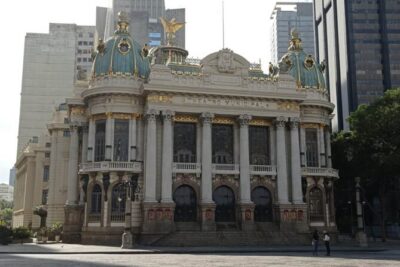
Learn the History of Rio with an Unforgettable City Center Walking Tour
Read our review →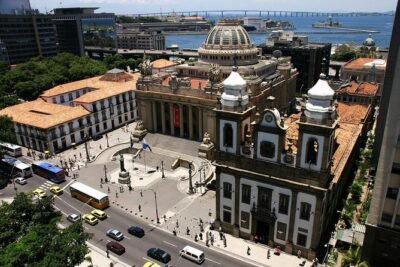
Rio’s city walking tour: a glimpse of history and olympic legacy
Read our review →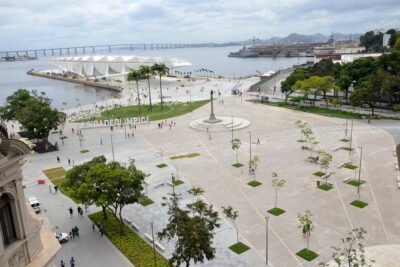
Olympic Boulevard, Museum of Tomorrow & Historical Rio
Read our review →
Olympic Boulevard, Museum of Tomorrow & History Tour
Read our review →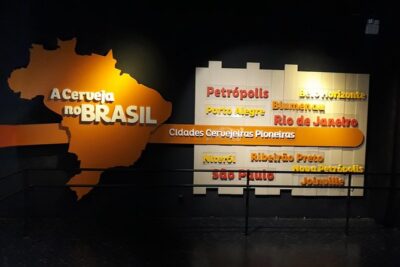
Petropolis Bohemia: Historic tour and visit to the Bohemian Brewery
Read our review →
Centro Historico and Lapa – Santa Teresa Walking, Historical and Bohemian Tour
Read our review →Browse the lists this tour appears in