

Review · MUSEUM OF TOMORROW TICKETS
Rio: Olympic Boulevard, Museum of Tomorrow & History Tour
Rio’s old center and renovated port come together on this four-hour city tour, which moves from the painful story of Valongo Wharf to the bright, futuristic halls of the Museum of Tomorrow. You’ll also see Eduardo Kobra’s huge mural, a Baroque church, the Olympic Cauldron, Praça XV, and one of Rio’s grandest cafés.
I like the strong mix of subjects: African heritage, Brazilian history, public art, architecture, and science all appear in one morning. I also like that the Museum of Tomorrow visit gives you time to explore at your own pace instead of keeping you tied to a guide inside every room.
The main caution is that the experience depends heavily on the guide and transport coordination. Several guides, including Emma, Pedro, and Emanuella, received especially warm praise for clear history and friendly service, but isolated outings had serious problems with navigation and hotel drop-off. Ask for your pickup time in advance and stay alert when the group returns to the van.
Key points to know before booking
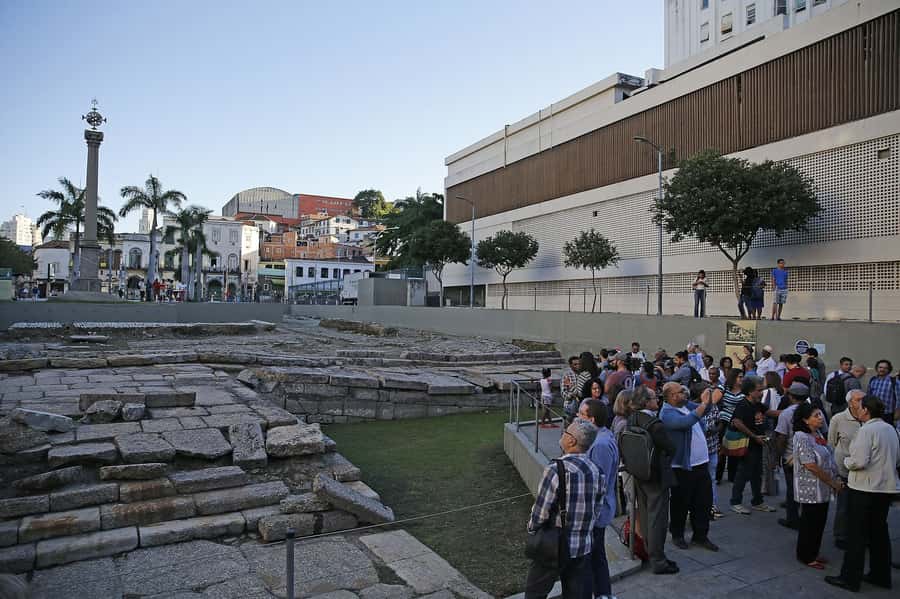
- Valongo Wharf gives the tour real historical weight: You learn about the African influence on Brazil at a site tied to the country’s painful slave-trade history.
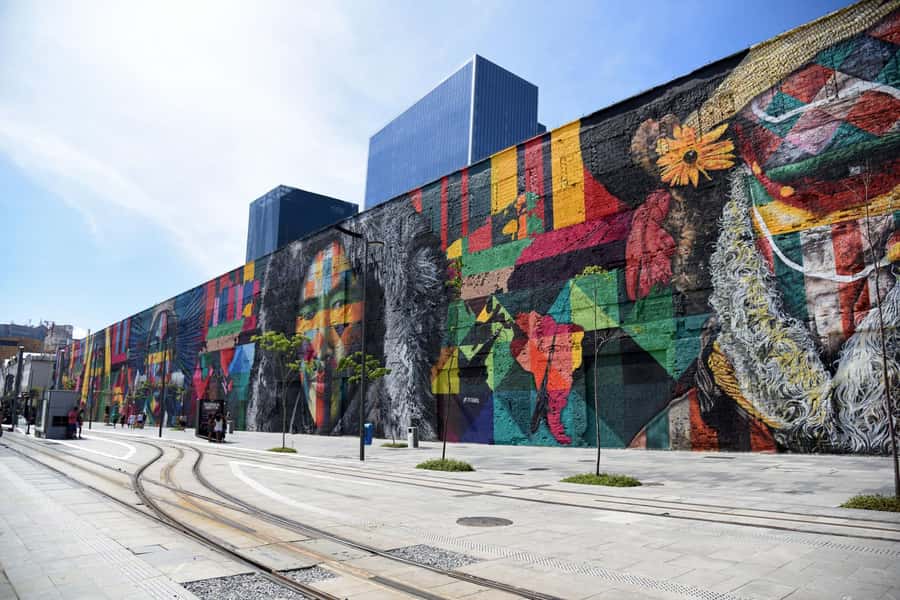
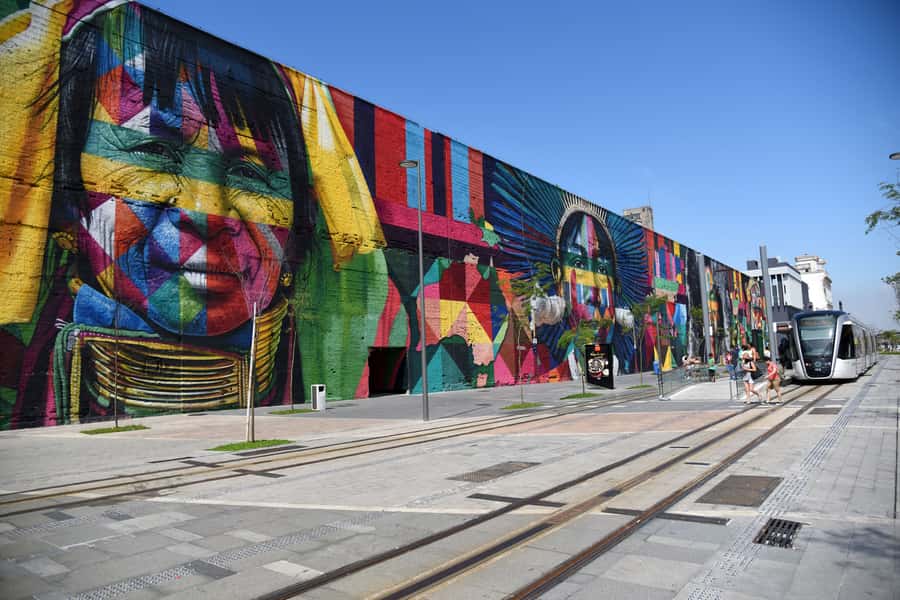
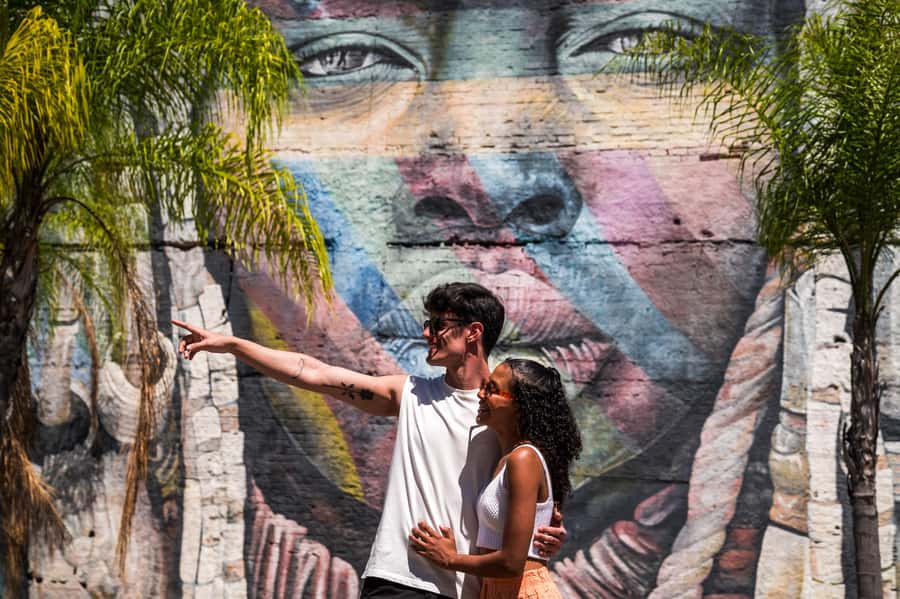
- Kobra’s mural is a quick but memorable stop: Five ethnic groups appear in a huge, colorful geometric design along the port area.
- The Museum of Tomorrow is the main ticketed attraction: Admission is included, and you can look around independently once inside.
- Saint Benedict Monastery delivers a sharp visual contrast: Its plain exterior gives way to an ornate Baroque interior covered in golden decoration.
- Confeitaria Colombo is a fitting final stop: Order a Brazilian snack or sweet, but remember that the café closes on Sundays.
- Hotel pickup is limited to Rio’s South Zone: Pickup and drop-off cover Copacabana, Ipanema, Leblon, and Leme, with a maximum group size of 19.
Why this tour is useful for seeing central Rio
Many first visits to Rio focus on beaches, Sugarloaf Mountain, and Christ the Redeemer. Those sights matter, but they leave out the city center, where Brazil’s imperial past, port redevelopment, African heritage, and modern public art sit close together.
This tour gives you a practical introduction to that less familiar side of Rio. It is not simply a museum visit with a vehicle ride attached. You walk through several connected areas and see how the city has tried to honor its past while building a modern waterfront district.
The four-hour length is helpful. You get a concentrated look at central Rio without giving up an entire day. The walking is moderate, so comfortable shoes matter. The pace may feel brisk because several stops are packed into one morning, but that is also the reason the tour works well for a short stay.
The group can include up to 19 people. That is not a tiny private outing, but it is still small enough for a guide to manage a walking group more easily than a large coach tour. Transportation is provided in an air-conditioned van, with pickup before the official activity start time.
More Museum of Tomorrow tickets:
- Olympic Boulevard, Museum of Tomorrow & Historical Rio
★ 4.5 · 66 reviews - Rio: Olympic Boulevard, AquaRio and Museum of Tomorrow Tour
★ 4.5 · 54 reviews - Museum of Tomorrow Guided Tour, Admission & Transfer
★ 4.5 · 38 reviews
Valongo Wharf and the African story of Brazil
The first major stop is Valongo Wharf, a UNESCO World Heritage site and one of the most important places on the route. Your guide uses the site to explain the African influence on Brazil, giving the tour a serious historical opening rather than beginning with only colorful architecture and photo stops.
Valongo Wharf is valuable because it helps you connect Rio’s development with the forced arrival of Africans in Brazil. The subject is difficult, and the quality of the explanation matters. Guides who take time with the history can make this stop far more meaningful than a quick look at old stones.
You should expect the guide to provide the main context while you walk around the area. This is not presented as a long academic lecture, so listen closely and ask questions while you have the chance. The tour’s strongest historical reports came from guides such as Pedro, who was praised for his commitment to explaining Brazil, and Emanuella, who gave detailed accounts of the country’s history and buildings.
This stop also sets up a useful theme for the rest of the morning. Rio is not being shown as a single postcard image. You are seeing a port district shaped by difficult history, Olympic redevelopment, art, religion, and commerce.
Eduardo Kobra’s enormous port mural
From Valongo Wharf, you continue to Eduardo Kobra’s mural. It is one of the largest graffiti walls in the world, with five ethnic groups shown against a colorful geometric background.
The mural makes an immediate visual change after the serious tone of Valongo Wharf. You will have time for photographs, and this is likely to be one of the easiest places on the tour for a memorable group picture. Kobra’s large-scale style works particularly well in this setting because the artwork is meant to be seen from a distance.
Still, keep your expectations in check. The mural is a short outdoor stop, not a full art lesson or a long gallery visit. Its value comes from the scale, location, and connection to the Olympic Boulevard redevelopment. Your guide can provide context, but you should not expect an extended discussion of every section of the painting.
Walking Olympic Boulevard to the Museum of Tomorrow
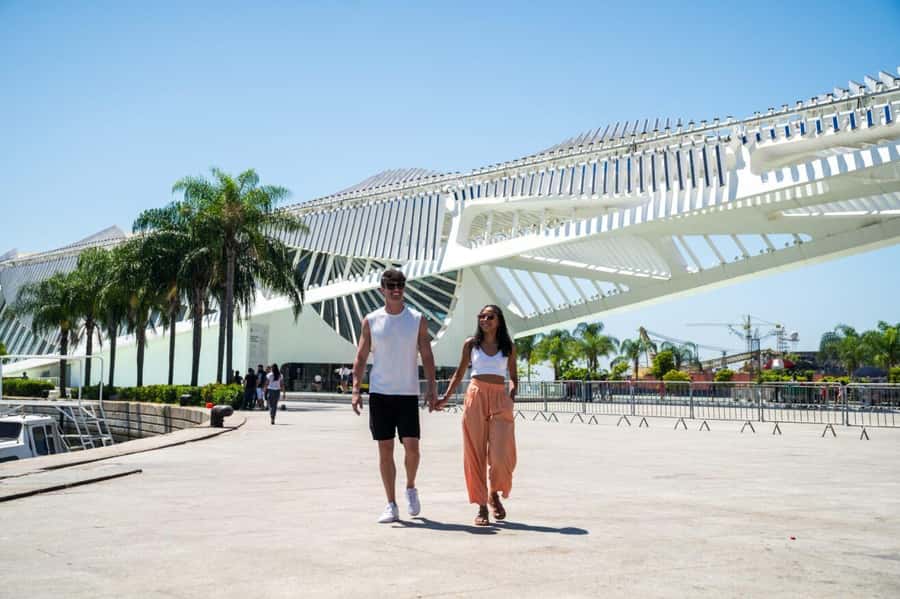
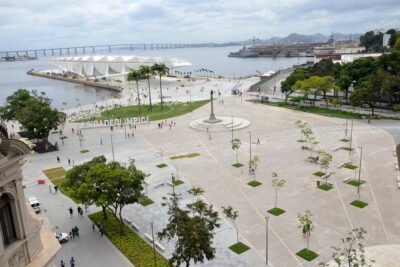
The route then follows Olympic Boulevard toward the Museum of Tomorrow. This is one of the tour’s better stretches because you see the waterfront district on foot rather than only through a van window.
The boulevard connects the public art and port history with Rio’s modern ambitions. The walk also gives you time to notice the contrast between older central Rio and the newer structures created or renewed around the Olympic period.
The Museum of Tomorrow is the central attraction. It is a science museum focused on possible futures for the planet and humanity, with exhibits that ask how people may shape what comes next. Its unusual, futuristic structure is part of the experience. Even before entering, the building gives you a clear visual break from the churches, imperial buildings, and historic streets visited later.
Admission is included in the $67 price, which improves the value of the package. Once inside, you can explore at your own pace. This arrangement was specifically praised by Elliot, who enjoyed the freedom to see the museum without being kept with the guide at every moment.
That freedom is important because museums rarely suit every person in the same way. You may want to spend more time with the science displays, while someone else in the group may be ready to move on. The tour allows some choice without making you arrange your own admission or transport.
The museum is also the stop most likely to appeal to families and visitors who want something beyond monuments. Children must be accompanied by an adult, and children under five can go free if they do not occupy a seat. The exact appeal will depend on how much you enjoy science and future-focused displays, but the building alone makes the stop worthwhile for architecture fans.
More Olympic Boulevard tours:
- Aqua Rio + Olympic Boulevard Tour – Rio de Janeiro by Pepe Rio Tours
★ 4.5 · 54 reviews - AquaRio and Olympic Boulevard Small Group Tour
★ 4.8 · 5 reviews - Rio: Museum of Tomorrow, Yup Star & Olympic Boulevard
★ 3.7 · 3 reviews
Saint Benedict Monastery and Rio’s Baroque surprise
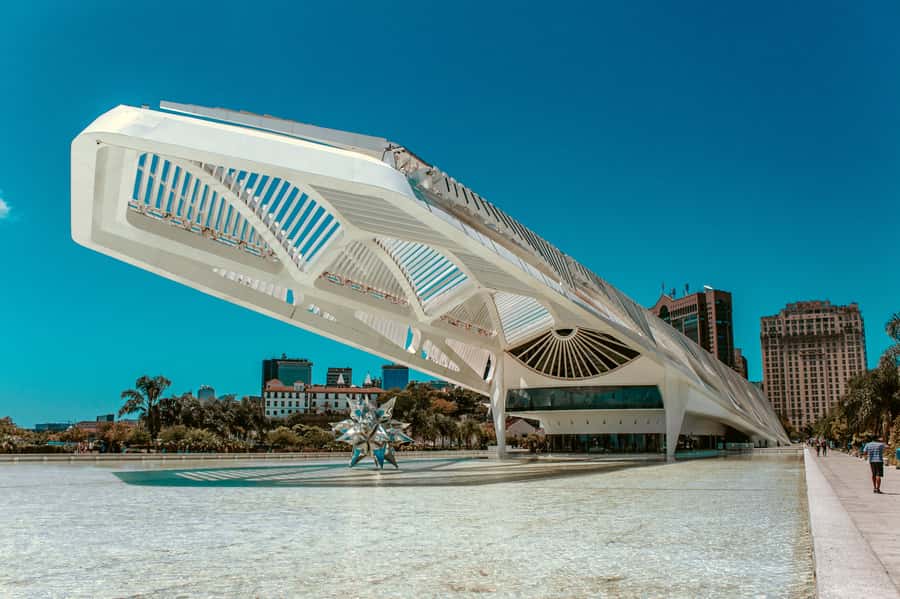
After looking forward, the tour turns sharply toward the past at the Monastery of Saint Benedict. The exterior is simple, which makes the interior reveal especially effective.
Inside, you see ornate Baroque decoration and extensive gold ornament. This is one of those places where the outside gives you little warning of what waits within. The contrast is the point, and it makes the monastery a strong architectural stop even if churches are not normally at the top of your list.
The guide’s role matters here. A good explanation can connect the monastery to Rio’s religious and colonial development, while a rushed visit may leave you noticing only the gold. The walk also gives you another chance to compare the older center with the modern port area seen earlier.
Because this is a half-day outing, the monastery visit is not designed as a long, quiet church tour. You will need to stay with the group and follow the guide’s timing. Comfortable shoes remain useful, since the experience involves a moderate amount of walking between major stops.
The Olympic Cauldron and Praça XV
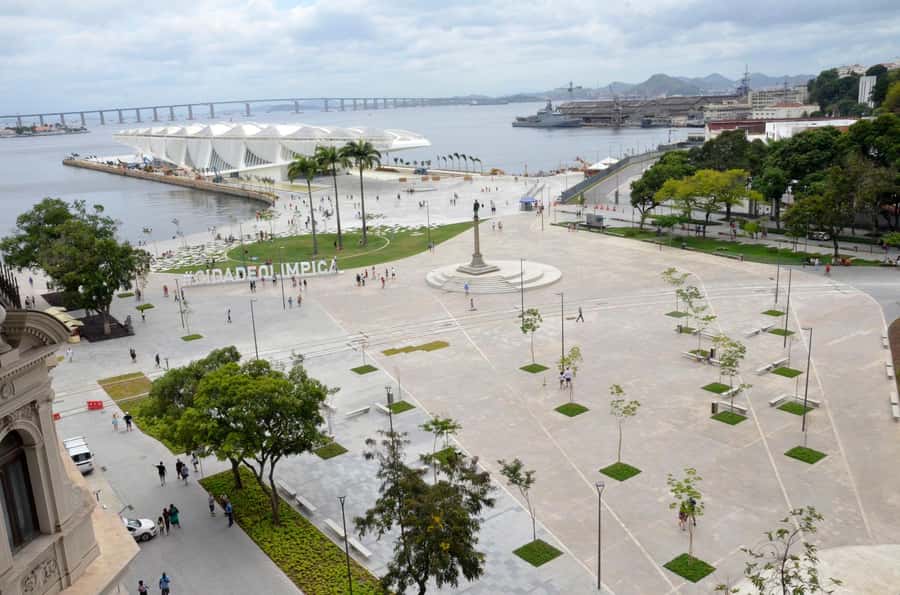
Before reaching the historic streets, you stop at the Rio 2016 Olympic Cauldron. American artist Anthony Howe created the reflective, kinetic spherical structure, which serves as a public reminder of the Games.
This is a brief stop, but it adds another layer to the route. You have already seen Olympic-era public art in Kobra’s mural and the renewed boulevard. The cauldron continues that theme while using movement and reflection rather than painted color.
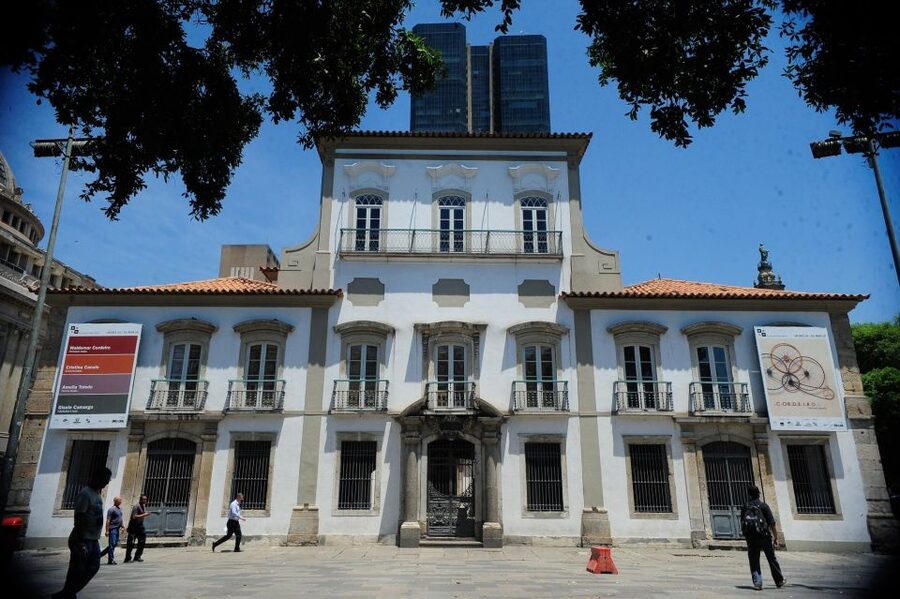
At Praça XV, the focus shifts back to Brazilian political history. You see one of the former headquarters of the Brazilian empire and hear about important events connected to the square. The site helps explain why central Rio is more than a collection of attractive old buildings. This is where power, government, and public life once gathered.
The tour does not promise a full study of every building around Praça XV. Instead, it gives you an organized introduction, with the guide pointing out why the area matters. If you want a detailed architectural study of central Rio, you will need extra time on another day. For a first orientation, the stop is well chosen.
Finishing at Confeitaria Colombo
The final stop is Confeitaria Colombo, one of Rio’s most famous historic cafés. Its interior features Art Nouveau decoration, large stained-glass windows, mirrors, and tiles imported from France, Portugal, and Belgium.
This is a fitting ending because the café turns history into a lived experience. Instead of finishing with another monument, you can sit in a grand setting associated with Rio’s early twentieth-century social life.
Food and drinks are not included, so budget separately if you want to order something. The café offers Brazilian favorites such as coxinha de frango, a savory chicken snack, and brigadeiro, a chocolate sweet. You do not have to eat here, but the stop gives you the chance to try a traditional item in one of the city’s best-known historic interiors.
There is one important scheduling issue: Confeitaria Colombo is closed on Sundays. The tour still operates on that day, but this final café visit will not be available. If the café is a major reason for booking, choose another day or confirm exactly how the Sunday itinerary changes.
Guides, transport, and the uneven service record
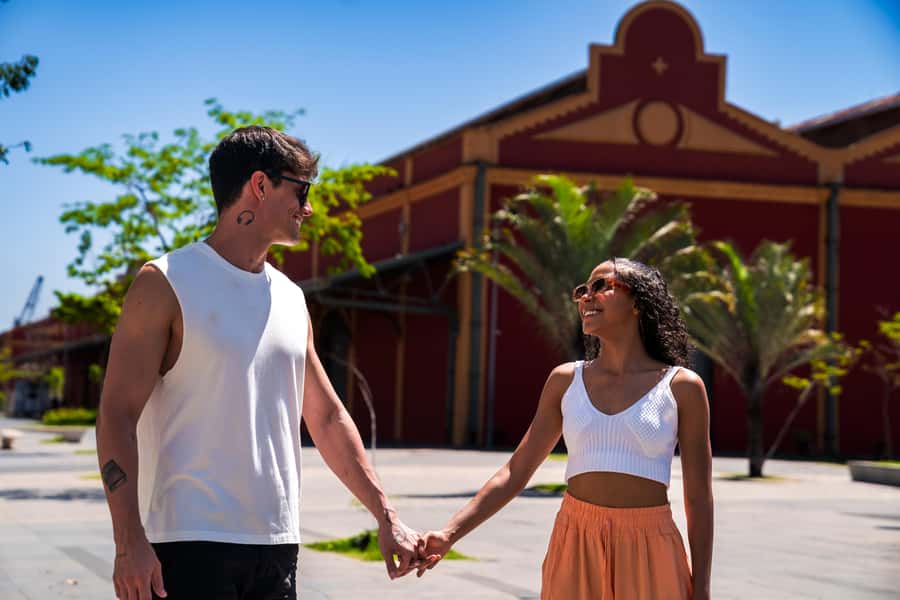
The best part of this tour is often the guide’s ability to make connections between the stops. Pedro received strong praise for his explanations of Brazilian history, while Emanuella was described as an excellent guide who discussed history and notable buildings at length. Emma was also praised for being friendly and for allowing independent time at the Museum of Tomorrow.
Those names are useful when you book, but guide assignments can change. The experience is not guaranteed to have one specific person unless the provider confirms it.
You should also pay attention to the return transfer. Hotel pickup and drop-off are available from South Zone hotels in Copacabana, Ipanema, Leblon, and Leme. If you stay in a hostel or bed-and-breakfast, the provider will assign a nearby hotel for pickup and return.
There have been outings where navigation problems caused delays and the guide rushed the remaining stops. In another case, a passenger was not properly accounted for when people boarded the van, resulting in a long wait for an Uber. These are serious coordination failures, even if they do not describe every departure.
To reduce the risk of confusion, confirm your exact pickup time with C2RIO Tours & Travel. Pickup normally takes place between 8:10 AM and 8:55 AM, before the official tour begins. At the end, make sure the guide or driver sees you board the correct vehicle, particularly if several tours share transportation.
The tour runs in rain or shine. Rio’s weather can change quickly, and the route includes outdoor walking, so bring suitable clothing and wear shoes you can use comfortably for several hours.
Is $67 a fair price?
At $67 per person, the tour is reasonably priced if you want a guided introduction to central Rio and need hotel transportation. The cost includes the guide, taxes and fees, museum admission, and an air-conditioned van. Food and drinks at Confeitaria Colombo cost extra.
The value is strongest for a first-time visitor staying in the South Zone. You avoid arranging transport to the port and historic center, and you get several sites in one carefully planned route. The Museum of Tomorrow ticket alone is part of the package, while the guide supplies historical context that you would miss on a self-guided walk.
The value is weaker if you prefer slow visits. Four hours is enough to see a lot, but not enough to linger at every stop. You may want more time at the monastery, Praça XV, or the café, and the schedule may not allow it.
The group limit of 19 is another point in its favor, though it does not guarantee an intimate outing. If you want a private guide, flexible meal time, or a longer museum visit, this is not the right format.
Who should book this Rio history tour?
I would recommend it to you if you have already seen, or plan to see, Rio’s major viewpoints and beaches and want a different side of the city. It suits first-time visitors who value context, families who want a mix of science and history, and anyone with only a few days who needs an efficient central Rio introduction.
It is also a good choice if the Museum of Tomorrow, Kobra’s mural, and Confeitaria Colombo all interest you. The route includes enough variety that one less-favored stop should not spoil the morning.
I would be more cautious if you dislike group schedules, have limited walking tolerance, or want dependable one-on-one attention. Confirm the pickup details, note the Sunday café closure, and stay attentive during the final boarding process.
For most visitors, the best reason to book is the unusual range packed into four hours. You move from Valongo Wharf and the African story of Brazil to a futuristic science museum, then back through Baroque religion, imperial politics, Olympic art, and café culture. That is a useful, well-rounded introduction to Rio beyond the postcard view.
FAQ
How long does the tour last?
The tour lasts four hours. Hotel pickup takes place before the activity start time.
What languages are available?
Live commentary is available in English, Spanish, and Portuguese.
Is hotel pickup included?
Yes. Pickup and drop-off are included for hotels in Copacabana, Ipanema, Leblon, and Leme.
What if I stay in a hostel or bed-and-breakfast?
You will be given the nearest hotel as your pickup and drop-off point.
Is admission to the Museum of Tomorrow included?
Yes. The ticket to the Museum of Tomorrow is included in the tour price.
Can I explore the Museum of Tomorrow on my own?
Yes. You can visit the museum at your own pace after entering with the group.
Is food included at Confeitaria Colombo?
No. Food and drinks are available for purchase separately at the café.
Does the tour visit Confeitaria Colombo on Sundays?
Confeitaria Colombo is closed on Sundays, so the café stop is not available that day.
What happens if the tour is canceled because too few people book?
You will be offered a different date or a full refund.
More History Tours in Rio de Janeiro
- Rio de Janeiro: Historic Rio and Santa Teresa Half-Day Tour
★ 4.4 · 228 reviews - Rio de Janeiro: Little Africa Heritage Walking Tour
★ 4.9 · 177 reviews - Explore Little Africa : Unveiling Afro Heritage in Rio de Janeiro
★ 5.0 · 97 reviews - Learn the History of Rio with an Unforgettable City Center Walking Tour
★ 5.0 · 82 reviews
More Museums in Rio de Janeiro
- Petrópolis Day Trip from Rio de Janeiro including Imperial Museum and Crystal Palace
★ 4.0 · 101 reviews - Rio de Janeiro: Flamengo Museum Ticket Entrance
★ 4.7 · 22 reviews
Just added around Rio de Janeiro
- Vidigal Favela Tour★ 4.4 · 26 reviews
- Hang gliding flight in Rio de Janeiro★ 5.0 · 6 reviews
- Rio de Janeiro: Zip Lining and Canopy Tree Tour★ 3.3 · 6 reviews
- Tijuca Forest Hike – Waterfalls & Caves, Nature & Wild Life!★ 5.0 · 51 reviews
- Unforgettable Boat Party★ 5.0 · 3 reviews
- Guided Tour to Favela Santa Marta★ 5.0 · 60 reviews
- Rio de Janeiro: Attend a Vasco da Gama game with local guide★ 4.8 · 9 reviews
- Rio Highlights: Christ, Sugarloaf, and More in a Private Tour★ 5.0 · 36 reviews
Museum of Tomorrow Tickets, compared.
Olympic Boulevard, Museum of Tomorrow & Historical Rio
Read our review →
Olympic Boulevard, AquaRio and Museum of Tomorrow Tour
Read our review →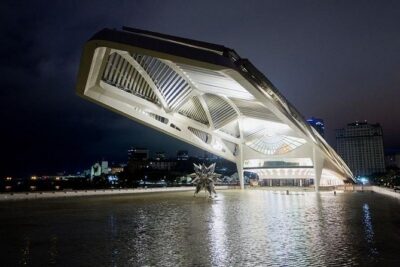
Museum of Tomorrow Guided Tour, Admission & Transfer
Read our review →
Browse the lists this tour appears in