
Review · RIO WALKING TOURS
Rio de Janeiro: Little Africa Heritage Walking Tour
Rio’s Little Africa tour puts the African roots of Rio de Janeiro at the center of the story. In 150 minutes, you move from the Rio Art Museum to Morro da Conceição, Largo da Prainha, Pedra do Sal, the Hanging Garden of Valongo, and the old Valongo wharf, where Brazil’s painful slave-trade history becomes impossible to ignore.
I like two things right away: the rooftop view of Mauá Square and Guanabara Bay gives you a useful sense of place, and the stops at Pedra do Sal and Valongo connect music, food, slavery, and modern Afro-Brazilian identity. The main drawback is practical: this is an outdoor walk in heat or rain, and the tour is offered only in English.
Key points at a glance
- Start with the colonial story: The opening at the Rio Art Museum gives the rest of the walk much-needed context.
- See Little Africa on foot: The route links Morro da Conceição, Largo da Prainha, Pedra do Sal, Valongo, and nearby historic sites.
- Look out over Mauá Square: A short rooftop stop adds a broad view of the port area and Guanabara Bay.
- Connect food and culture: Largo da Prainha is used to explain African influence on Brazilian cooking.
- Visit the birthplace of samba: Pedra do Sal is one of the tour’s most important stops.
- Expect strong guiding: Guides including Luana, Nathalia, Larissa, Ryane, Marina, and Eddie are praised for clear explanations, warmth, and personal passion.
Why Little Africa belongs on your Rio itinerary
Rio is often presented through beaches, viewpoints, carnival, and colonial churches. Those are worthwhile, but they do not explain the city on their own. The port district adds another essential chapter: the lives, labor, faith, music, food, and resistance of Africans and Afro-Brazilians.
The area became known as Little Africa around the turn of the 20th century. After Brazil ended the slave trade, formerly enslaved people and their descendants remained in the port area, working and building communities. The result was not simply a historic neighborhood. It became a place where African traditions adapted to Brazil and shaped the city around them.
I find this tour useful because it does not treat that past as a footnote. The guide moves between the colonial period, slavery, the end of slavery in 1888, samba, dance, racial inequality, and present-day identity. That wider view helps you understand why African influence is central to Brazil, not a side subject.
The tone is serious when it needs to be. Slavery and structural racism are not comfortable topics, and the guide may ask questions that make you think rather than simply listen. At the same time, the walk includes art, music, food, humor, and local recommendations, so the experience is not only about suffering.
More walking tours in Rio de Janeiro:
- Rio de Janeiro: Rocinha Favela Walking Tour with Local Guide
★ 4.8 · 3,052 reviews - Rio De Janeiro: Half-Day Rocinha Favela Walking Tour
★ 4.7 · 2,272 reviews - Sunrise and Sunrise Walk Two Brothers with Local Guide
★ 5.0 · 193 reviews
Meeting at the Rio Art Museum
You meet your guide in front of the Museu de Arte do Rio, usually called MAR, and should arrive five minutes early. The guide can wait only 15 minutes for late arrivals, so do not count on a relaxed start if your taxi or ride-hailing car is delayed.
The first stop is more than a roll call and route explanation. Your guide sets out Brazil’s colonial story before focusing on Little Africa. This opening matters because the later sites make less sense without knowing how the slave trade, port commerce, and the growth of Rio shaped the district.
You also get a short break at the museum, lasting about 10 minutes, and a rooftop look toward Mauá Square and Guanabara Bay. This is a good orientation point. From above, you can see the port zone as a connected urban area rather than a series of unrelated streets.
Do not expect a long museum visit or an indoor art tour. The museum is the meeting place and provides the view and introduction. The main experience takes place outside.
Morro da Conceição and the shape of the port district
The route then reaches Morro da Conceição for about 20 minutes of guided walking. This area helps show how the port neighborhoods developed on and around the hills.
The walk is not built around grand interiors or long stops in formal attractions. Instead, the guide uses streets, viewpoints, monuments, and public spaces to explain what happened here. That approach is valuable because Little Africa’s story is spread through the district rather than contained in one building.
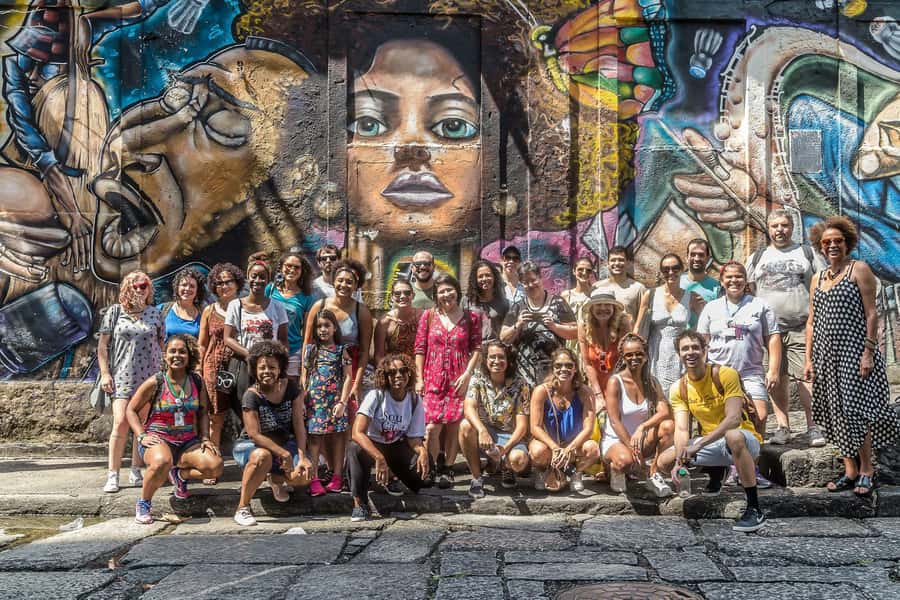
Your guide may also point out art and murals connected with Afro-Brazilian figures and culture. The route asks you to look closely at details you could easily pass while walking alone. This is one reason the tour can add value even if you have already seen the main port attractions.
The pace is designed for a walking tour, with several stops of around 20 minutes. You should still wear comfortable shoes. The route is not suitable for children under five, and the combination of urban walking, heat, and serious discussion may be better for older children and adults.
Largo da Prainha: food as a link to Africa
At Largo de São Francisco da Prainha, also known as Largo da Prainha, you spend about 20 minutes learning about African influence on Brazilian gastronomy. This gives the tour a welcome change of focus.
Food is one of the clearest ways cultures survive and change. Ingredients, methods, and dishes carried through forced migration became part of Brazilian cooking, and the guide uses the area to explain that connection. The subject is more than a list of dishes. It shows how African culture continued to shape daily life after slavery.
This is also a useful place to ask your guide for food suggestions. Larissa took one group to the Glória market afterward for lunch, and Nathalia offered recommendations for places to eat in Little Africa and other parts of Rio. Those outings are not included in the tour, so treat them as optional suggestions rather than part of the official route.
One practical note: lunch is not included, and the tour does not promise a food tasting. You may see restaurants and hear about Afro-Brazilian cooking, but bring your own water and plan a separate meal if food is a priority.
More history tours in Rio de Janeiro:
- Rio de Janeiro: Historic Rio and Santa Teresa Half-Day Tour
★ 4.4 · 228 reviews - Explore Little Africa : Unveiling Afro Heritage in Rio de Janeiro
★ 5.0 · 97 reviews - Learn the History of Rio with an Unforgettable City Center Walking Tour
★ 5.0 · 82 reviews - Rio’s city walking tour: a glimpse of history and olympic legacy
★ 4.5 · 78 reviews
Mercedes Baptista and the role of dance
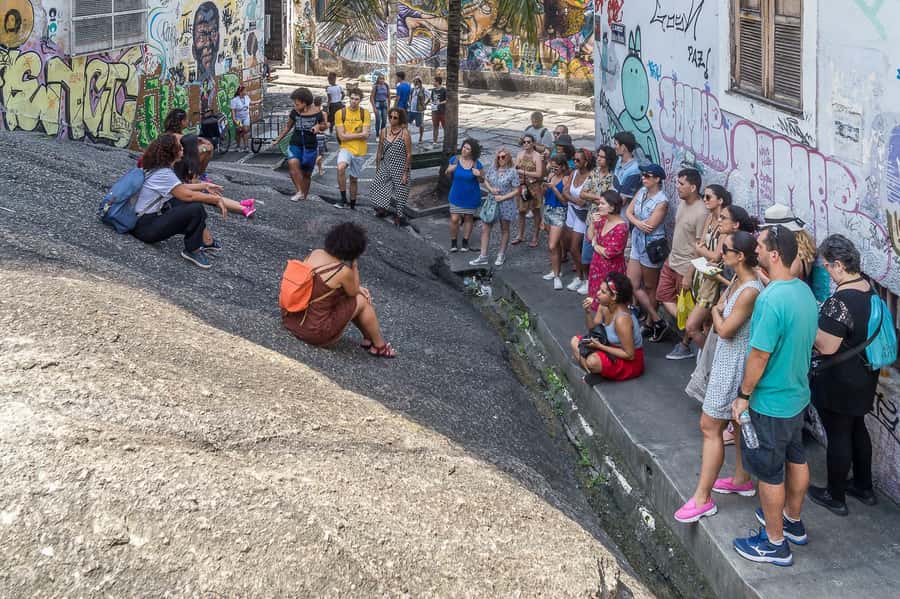
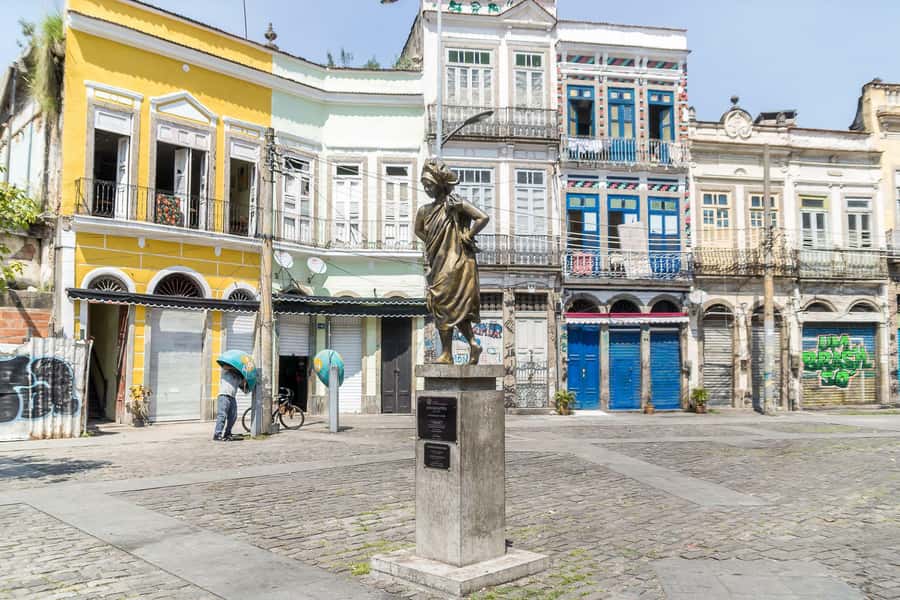
The walk includes a statue honoring Mercedes Baptista, a major figure in Brazilian dance. She was the first Black dancer at Rio’s Municipal Theater and a forerunner of Afro dance in Brazil.
This stop helps broaden the story beyond slavery and samba. It shows how Black artists faced barriers in established cultural institutions while also creating new forms of expression. The guide’s explanation gives the statue a human and social meaning that a quick photograph would miss.
The strongest guides make these moments feel connected. Marina, for example, is described as a Carioca with family ties to the subject and a background in history and tourism. Other guides, including Ryane and Nathalia, have been praised for discussing sensitive questions with care while connecting past events to present-day Brazil.
Guide assignments can change, so you should not book on the assumption that one named guide will lead your departure. The important point is the style of the experience: a live guide, not an audio script, with time for questions and conversation.
Pedra do Sal, samba, and a living neighborhood
Pedra do Sal is the emotional center of the walk for many people. It is considered the place where samba was born, and it is described as the oldest continuously inhabited Black neighborhood in Brazil.
The stop connects music with community. Samba did not appear in isolation. It grew from African and Afro-Brazilian traditions, social gatherings, movement through the port, and the persistence of Black communities in a city that often marginalized them.
You stop in front of Pedra do Sal for about 20 minutes. The guide explains the site and its role rather than offering a performance. That distinction matters. You are learning how a musical culture developed, not attending a samba show.
The area may also help you understand why music in Rio is tied so closely to place. The story is about who lived here, who gathered here, and how culture survived. If you want a fuller musical experience, ask the guide what else to see during your stay, but remember that recommendations are separate from the booked walk.
The Hanging Garden of Valongo
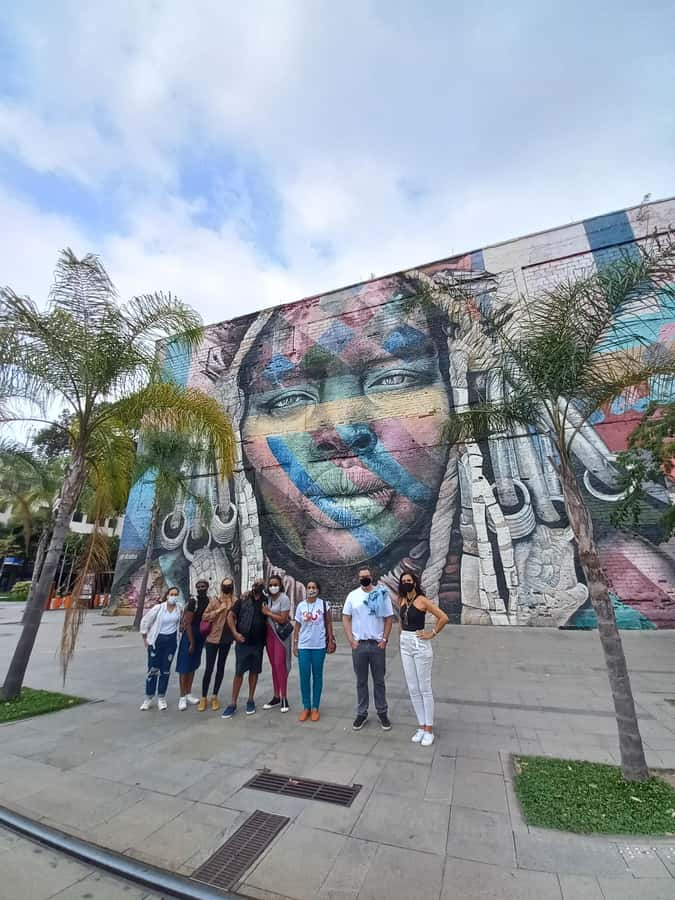
The Jardim Suspenso do Valongo, or Hanging Garden of Valongo, provides another pause in the route. You spend roughly 20 minutes here with the guide.
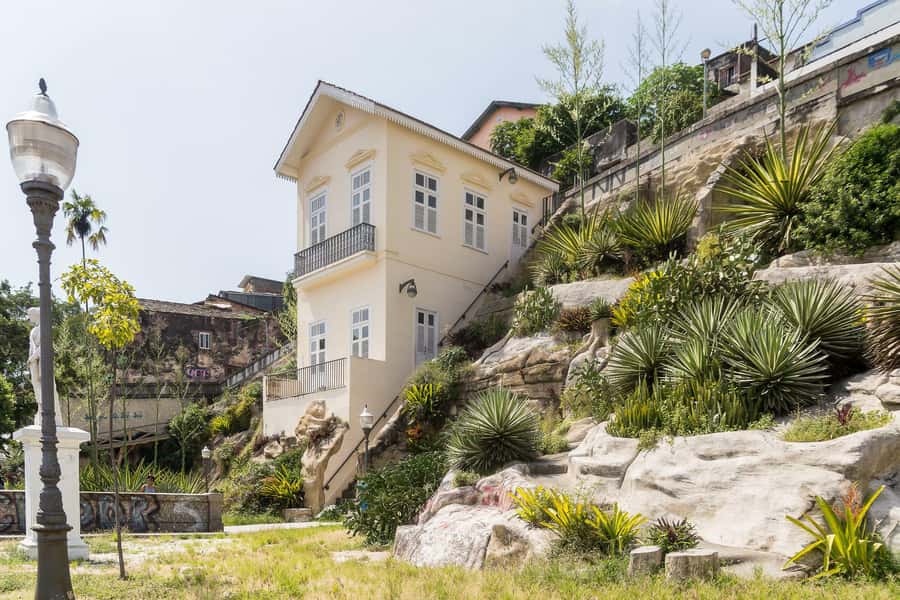
The garden is part of a broader memorial area connected with the old port and the forced arrival of Africans in Brazil. Its elevated setting also gives the tour a physical change after the street-level walk. Instead of moving quickly between attractions, you stop and consider how the port functioned and what it meant for the people brought through it.
This part of the walk can feel heavy. That is not a flaw, but you should know the subject before booking. The tour does not soften slavery into a distant story. It places the human consequences of the trade in the same neighborhood where later generations built homes, communities, music, and political identity.
The guide’s role is especially important here. The most praised guides, including Luana, Raquel, Marina, Eddie, and Larissa, are described as clear, warm, and able to handle difficult questions. Good guiding does not make the subject easy. It makes it possible to understand.
Cais do Valongo and the difficult center of the tour
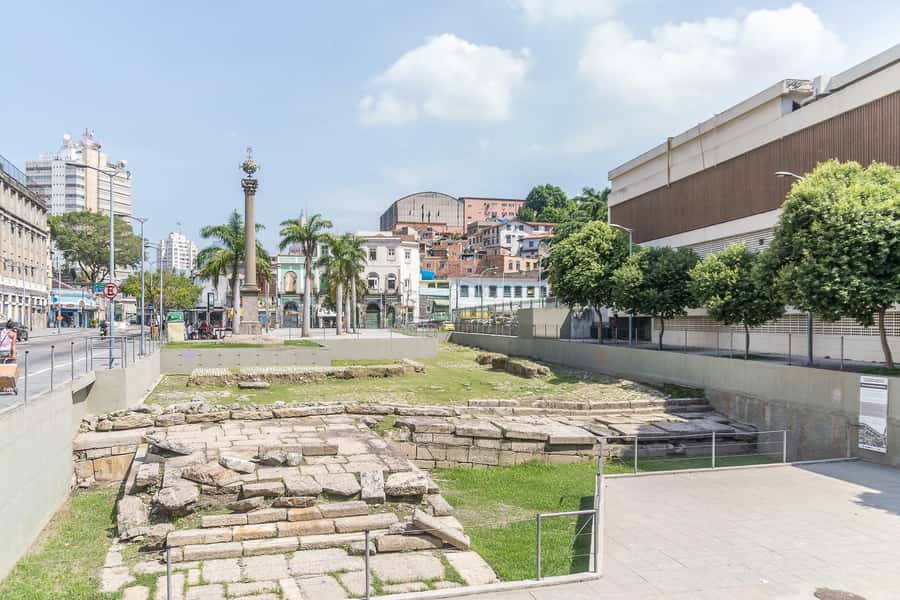
The final major stop is Cais do Valongo, the old Valongo wharf. This is where the tour’s earlier history comes together.
Valongo was associated with the arrival and sale of enslaved Africans in Rio. The site forces you to connect the economic growth of the port with the violence that supported it. You are not simply looking at an old waterfront. You are standing in a place tied to one of the darkest systems in Brazil’s past.
The stop lasts about 20 minutes, and the guide explains why Valongo matters. Expect a serious discussion rather than a quick photo opportunity. If you want a light sightseeing walk, choose another activity. If you want to understand Rio beyond its postcard image, this is one of the most worthwhile parts of the route.
From Valongo, the group returns to the Rio Art Museum. The full activity lasts 150 minutes, or two and a half hours. That is enough time to cover the main sites without turning the day into a long historical lecture.
What the guides add
The guide can make or break a history walk, and this experience has received especially strong praise for its human delivery. Names associated with memorable departures include Luana, Nathalia, Larissa, Ryane, Marina, Raquel, Eddie, Natalia, and others.
The common strengths are clear: strong English, enthusiasm, patience with questions, and an ability to connect broad history with personal stories. Eddie has been praised for placing Little Africa in a wider global context. Larissa has been noted for asking thoughtful questions and linking slavery to present-day racial dynamics. Nathalia has been appreciated for handling difficult issues with both humor and care.
You should also expect the guide to offer practical Rio advice. Some guides have suggested places to eat, markets to visit, and other activities. That is a useful bonus at the start of a trip, especially if you want to continue exploring the port district after the walk.
Since the guide may change, the exact style will vary. Still, the activity is designed around live explanation and discussion, not a fixed recording. That gives you room to ask about subjects that matter to you.
Price, timing, and practical value
At $40 per person, the tour is reasonably priced for a two-and-a-half-hour guided walk in a major Brazilian city. You are paying for a live English-speaking guide, a planned route through several important sites, and historical interpretation that would be difficult to gather on your own.
The value is strongest if you want context. The main locations are public spaces, so you could visit them without booking. But without a guide, you might miss the links between the colonial period, slavery, African foodways, samba, dance, and current racial questions.
The price does not include hotel pickup or drop-off, meals, or drinks. You arrange your own way to the Rio Art Museum and back. Bring water, sunscreen, comfortable clothes, and shoes with good support.
The walk runs rain or shine. That can be a benefit if you have limited time, but it means you should check the forecast and bring rain protection when needed. Heat is the bigger concern for many people, especially because the tour stays outside for about 2.5 hours.
You can cancel up to 24 hours before the activity for a full refund, and the reserve-now-pay-later option allows you to keep plans flexible. Check the available start times when booking.
Who should book this walk?
I would put this near the start of a Rio visit if you want cultural context before exploring more of the city. The tour gives you a framework for understanding samba, carnival, food, monuments, and race in Brazil.
It is particularly suited to adults, history fans, people interested in the African diaspora, and anyone who feels that standard city tours leave too much out. It also works well for visitors who prefer a thoughtful small-scale experience to a bus ride between famous sights.
You should think twice if you dislike walking outdoors, have little patience for serious historical subjects, or need a tour in another language. The activity is offered only in English, and it is not suitable for children under five.
Should you book the Little Africa Heritage Walking Tour?
Book it if you want Rio to make more sense. The views from the museum are useful, but the real value is the connection between places: Prainha and food, Mercedes Baptista and dance, Pedra do Sal and samba, Valongo and slavery.
I especially like this tour for a first or second day in Rio, when a guide can give you cultural bearings that improve the rest of your visit. Allow time for the walk, carry water, and consider staying in the area for lunch afterward.
Skip it only if you want a purely scenic outing or cannot handle heat and rain. For everyone else, $40 buys an honest, focused look at a part of Rio that deserves far more attention.
FAQ
Where does the Little Africa Heritage Walking Tour start?
The tour starts in front of the Rio Art Museum, or Museu de Arte do Rio.
How long does the tour last?
The tour lasts 150 minutes, or two and a half hours.
What language is the tour offered in?
The tour is offered in English with a live English-speaking guide.
What places are included on the route?
The route includes the Rio Art Museum, Morro da Conceição, Largo de São Francisco da Prainha, Pedra do Sal, the Hanging Garden of Valongo, and Cais do Valongo.
Does the tour include hotel pickup and drop-off?
No. Hotel pickup and drop-off are not included.
Is food included?
No. Food and drinks are not listed as included. The guide explains African influence on Brazilian gastronomy, and you can ask for restaurant suggestions.
What should I bring?
Bring comfortable shoes, sunscreen, water, and comfortable clothing.
Does the tour operate in bad weather?
Yes. The tour takes place rain or shine.
Can children join the tour?
Children under five are not suitable for this activity.
Just added around Rio de Janeiro
- Vidigal Favela Tour★ 4.4 · 26 reviews
- Hang gliding flight in Rio de Janeiro★ 5.0 · 6 reviews
- Rio de Janeiro: Zip Lining and Canopy Tree Tour★ 3.3 · 6 reviews
- Tijuca Forest Hike – Waterfalls & Caves, Nature & Wild Life!★ 5.0 · 51 reviews
- Unforgettable Boat Party★ 5.0 · 3 reviews
- Rio de Janeiro: Attend a Vasco da Gama game with local guide★ 4.8 · 9 reviews
- Guided Tour to Favela Santa Marta★ 5.0 · 60 reviews
- Rio Highlights: Christ, Sugarloaf, and More in a Private Tour★ 5.0 · 36 reviews
Rio Walking Tours, compared.



Sunrise and Sunrise Walk Two Brothers with Local Guide
Read our review →
Learn the History of Rio with an Unforgettable City Center Walking Tour
Read our review →
Rio’s city walking tour: a glimpse of history and olympic legacy
Read our review →
Walking tour of the bohemian neighborhoods of Santa Teresa and Lapa
Read our review →
Browse the lists this tour appears in