

Review · RIO FAVELA TOURS
Rio De Janeiro: Half-Day Rocinha Favela Walking Tour
Rocinha is not a backdrop for a quick photo from a jeep. This three-hour walk takes you into Rio’s largest favela, where local guides such as Wellington, Alberto, Daniel, and Roberto explain daily life, social challenges, and the community’s own culture. The walking format helps you see streets, homes, shops, and meeting places at human speed.
I like the personal touch, especially when a guide who grew up in Rocinha shares his own story or shows you the place where he lives. I also like the capoeira stop and the hilltop views over Rio. The main caution is physical: narrow alleys, steep stairs, and uneven surfaces make this a poor choice if you have knee, mobility, or recent surgery concerns.
Key points to know before you book
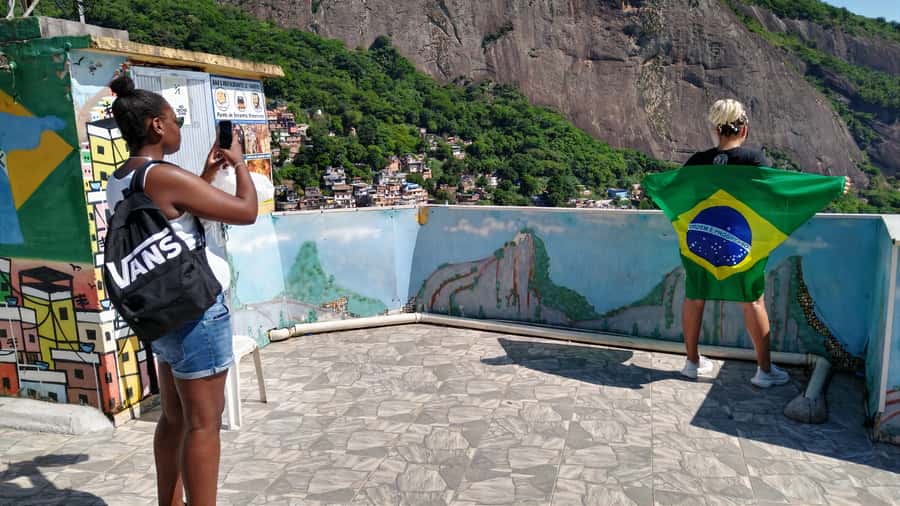
- Local guides lead the route: Wellington, Alberto, Daniel, and other English, Spanish, or Portuguese-speaking guides may lead your group.
- You walk, rather than ride through: The route uses narrow alleys and steep stairs, offering closer contact with ordinary neighborhood life.
- Capoeira adds cultural depth: A local school may demonstrate the art, music, and movement tied to favela culture.
- The best views come from above: A rooftop or hilltop stop can reveal Rocinha beside Rio’s wealthier districts and famous coastline.
- The tone is respectful: The tour aims to avoid treating residents as attractions, and part of the price supports the community.
- The $35 price is reasonable: For three hours with a local guide and several stops, this is good value, though drinks and optional purchases cost extra.
Why Rocinha is worth seeing on foot
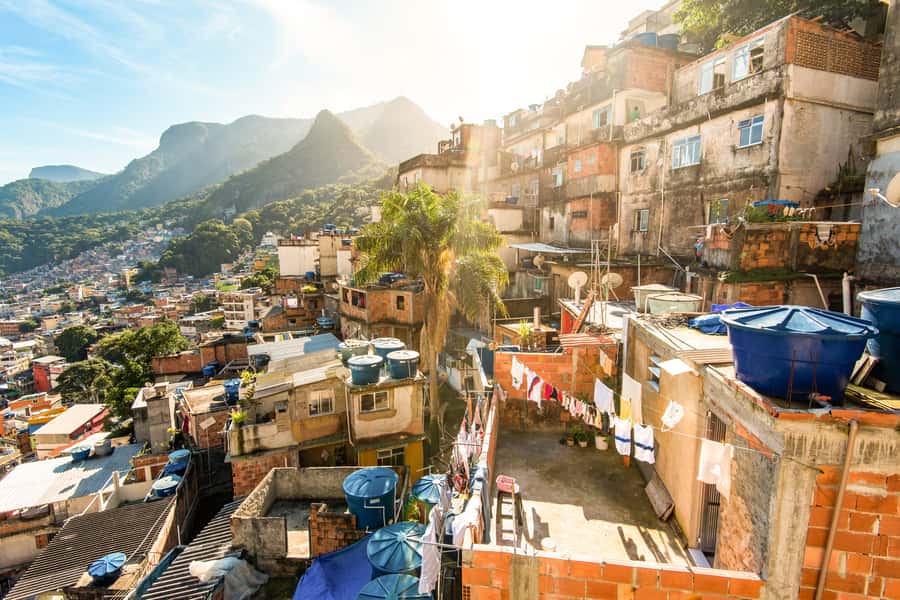
Rocinha is often reduced to a few alarming headlines or movie images. That narrow picture misses the basic fact that it is a home, a workplace, and a community for a large number of people. The point of this tour is not to pretend that poverty or crime do not exist. It is to give you a more ordinary, human view of how people live there.
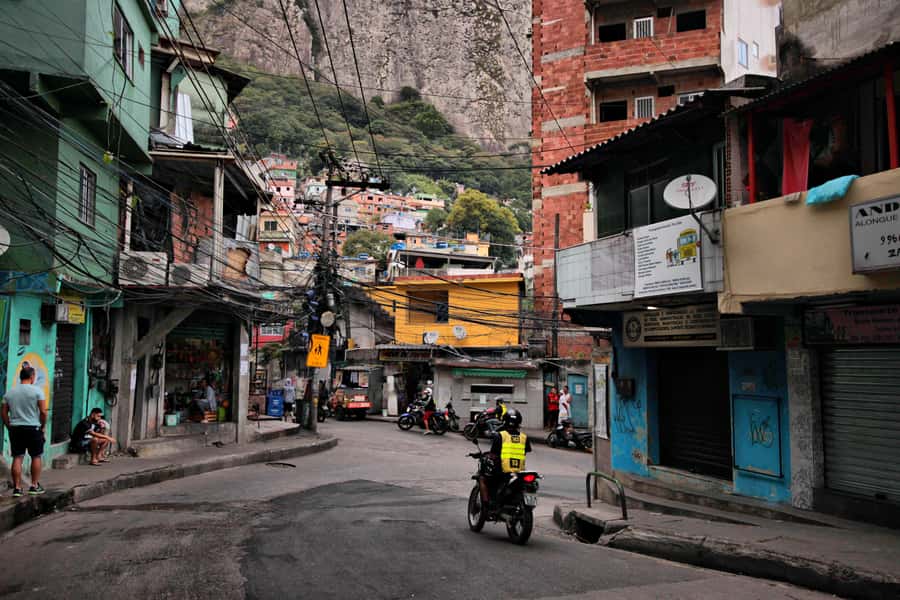
A walking tour makes that difference clear. Instead of looking down from a vehicle, you move through streets where people are going about their day. You may see small businesses, homes built up the hillside, children connected with local cultural groups, and residents who have no reason to perform a story for an outsider.
Your guide provides the context that a casual visit cannot. The tour covers the history of favelas, the social and economic pressures residents face, and the way Rocinha functions today. Guides who have lived there for decades can explain the neighborhood from personal experience rather than relying on a script.
That does not make the visit free of ethical questions. You are still entering someone else’s home as a sightseer. The small-group, locally guided approach helps, but you should still ask before photographing people, homes, or private moments. Keep your camera away when your guide is discussing sensitive subjects.
More favela tours in Rio de Janeiro:
- Rio de Janeiro: Rocinha Favela Walking Tour with Local Guide
★ 4.8 · 3,052 reviews - Rio de Janeiro: Favela Santa Marta Top Tour with Local Guide
★ 4.9 · 488 reviews - Rio de Janeiro: Favela Santa Marta Tour with Resident Guide
★ 4.6 · 220 reviews
Meeting at Copacabana Palace
The meeting point is in front of the Belmond Copacabana Palace Hotel at 1:25 p.m. Look for the statue of journalist Ibrahim Sued beside the main entrance, on the same sidewalk. This detail matters because the hotel frontage is long and busy, so do not simply wait somewhere along Avenida Atlântica.
Hotel pickup is not included. You need to reach Copacabana Palace on your own and arrive ready to walk. Since the tour starts in the afternoon, it fits neatly into a day that begins at the beach or another Copacabana sight, but leave enough time to reach the meeting point without rushing.
The activity lasts three hours. Starting times can vary, so check the available departure when booking. The tour is offered in English, Spanish, and Portuguese. Guides may include Wellington, Alberto, Daniel, Martin, or others from the local team, so you cannot assume a particular guide unless the provider confirms it.
Walking into Rocinha’s narrow lanes

The first part of the route introduces you to Rocinha as a lived-in neighborhood rather than a collection of stereotypes. Your guide explains the area’s past and points out how its physical layout reflects years of rapid growth. The route takes you through narrow alleys and stairways, not broad sightseeing streets.
This is where the walking format earns its $35 price. You see the tight connections between homes, shops, passageways, and viewpoints. A vehicle can show you the scale of a favela, but walking gives you time to ask questions and notice small details.
The route is physically demanding in places. You will walk up and down steep stairs, and some surfaces may require sure footing. Comfortable shoes are essential. The supplied information specifically excludes people with mobility impairments and wheelchair users, and it is not recommended for people with knee problems, recent surgery, or related physical limits.
The age guidance is also restrictive, with the activity not recommended for young children under six or older participants above the listed age limits of 70 and 75. The weight restrictions are listed at 287 pounds, or 130 kilograms, and 309 pounds, or 140 kilograms. Because those figures overlap, check the current booking conditions if they apply to you.
Meeting residents without turning them into a show

The tour’s strongest idea is its attempt to keep the visit non-intrusive. You are not driven around in a jeep to point at residents from behind glass. You walk in a small group with local hosts who have a reason to care about the neighborhood’s reputation and future.
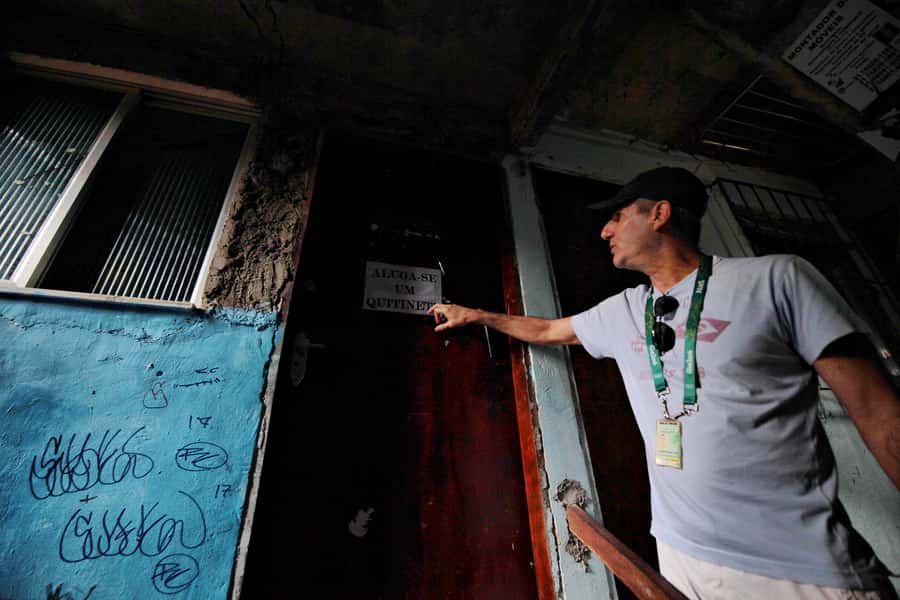
Several of the guides have long personal ties to Rocinha. Alberto, for example, has been described as someone who grew up there and has lived there for more than 60 years. Other guides, including Wellington and Daniel, are praised for making the tour personal, answering questions, and explaining their own experiences.
That local connection changes the tone. Instead of presenting Rocinha as a dangerous curiosity, the guide can talk about family, work, schooling, culture, local rules, and the challenges that shape daily life. One guide may emphasize his own story; another may focus more on history and social conditions. The exact balance depends on who leads your group.
I would still treat safety guidance seriously. The tour is designed to be safe and the overwhelming response has been positive on that point, but no organized visit can erase the fact that conditions can change. Stay with your guide, follow instructions, and avoid wandering away for a photo.
More walking tours in Rio de Janeiro:
- Sunrise and Sunrise Walk Two Brothers with Local Guide
★ 5.0 · 193 reviews - Rio de Janeiro: Little Africa Heritage Walking Tour
★ 4.9 · 177 reviews - Learn the History of Rio with an Unforgettable City Center Walking Tour
★ 5.0 · 82 reviews - Rio’s city walking tour: a glimpse of history and olympic legacy
★ 4.5 · 78 reviews
The rooftop view and Rio’s sharp contrasts

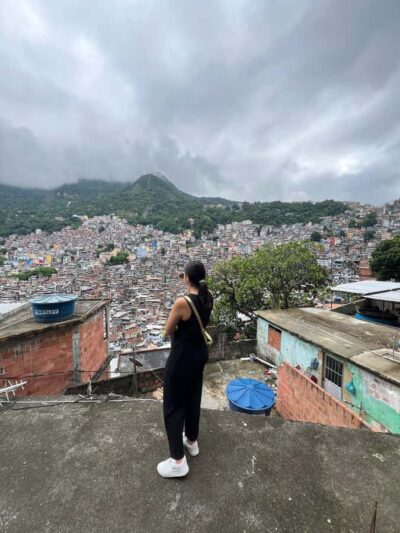
A high point in Rocinha often gives you a sweeping view of Rio. From above, you can see the dense neighborhood climbing the hillside and the polished districts nearby. The contrast is one of the tour’s most useful lessons: luxury hotels, beaches, expensive homes, and informal housing can sit close together, yet the quality of services and opportunities may be very different.
Some groups stop at a rooftop bar or viewpoint known as Novo Visual Rocinha. You may be able to buy a drink there, including a caipirinha, and in some cases a drone video is offered for an extra charge. One reported price for the video was R$200, so treat this as optional and bring extra money only if you want it.
The view is not just a pretty pause. It helps you understand Rocinha’s position within Rio. From street level, the neighborhood can feel enclosed by stairs and tight lanes. From above, you see how it sits beside the city’s more affluent areas and how closely the different parts of Rio press against one another.
Do not assume every group includes the same purchase opportunity. The included items are the local guide and walking tour. Food, drinks, and optional videos are not included.
Capoeira, music, and community life

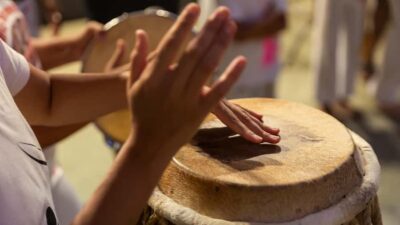
A visit to a local capoeira school is one of the most praised parts of this experience. Capoeira combines movement, music, rhythm, and martial arts, and it offers a way to understand how cultural traditions grow through community groups and youth programs.
The presentation may include local children and instructors. Some groups also get to handle instruments or join in simple musical activities. Tiane and her team have been singled out for making the session lively and explaining capoeira’s cultural meaning. The activity may also include samba or other music, depending on the day and the group.
This stop gives the tour more balance. Without it, the visit could focus too heavily on poverty, crime, and political problems. Capoeira shows another side of Rocinha: creativity, discipline, pride, and a place for young people to learn from local teachers.
A donation may be suggested at the capoeira stop. It is not listed as part of the tour price, so carry some Brazilian reais if you want to support the group. You should also be comfortable with the possibility that the exact performance or presentation can vary.
What the $35 price really covers
At $35 per person, this is not a full-day excursion with transport, meals, or a long list of paid attractions. You pay for three hours of local guiding, neighborhood access, walking, interpretation, and the chance to meet community hosts.
I consider that fair value, especially when the guide has lived in Rocinha for much of his life. The value is less about the number of stops and more about the quality of explanation. A guide who can discuss his own family, home, and experience gives you something a sightseeing bus cannot provide.
The price also includes a monetary contribution to the favela community. That is important, although you should not assume it replaces all optional donations or purchases. Drinks, food, and extras such as a drone video cost more.
There is also free cancellation up to 24 hours before the start time, along with a reserve-now-and-pay-later option. Those policies are useful if your Rio schedule is still shifting, but check the current terms when you book.
What to wear and bring
Choose comfortable clothing and sturdy shoes. Sandals or slippery footwear are a bad match for steep steps and uneven passageways. You may be walking in warm weather, so light clothing is practical, but your main priority should be freedom of movement.
Bring a camera if you want to record the views, but use it with restraint. Ask before photographing residents, homes, children, or community activities. The goal is to see Rocinha as a neighborhood, not to collect dramatic images.
Carry only what you need. The provided information does not promise food or drinks, so plan to purchase those separately if you want them. Brazilian reais are useful for a drink, a donation, or an optional local purchase.
How safe does the tour feel?
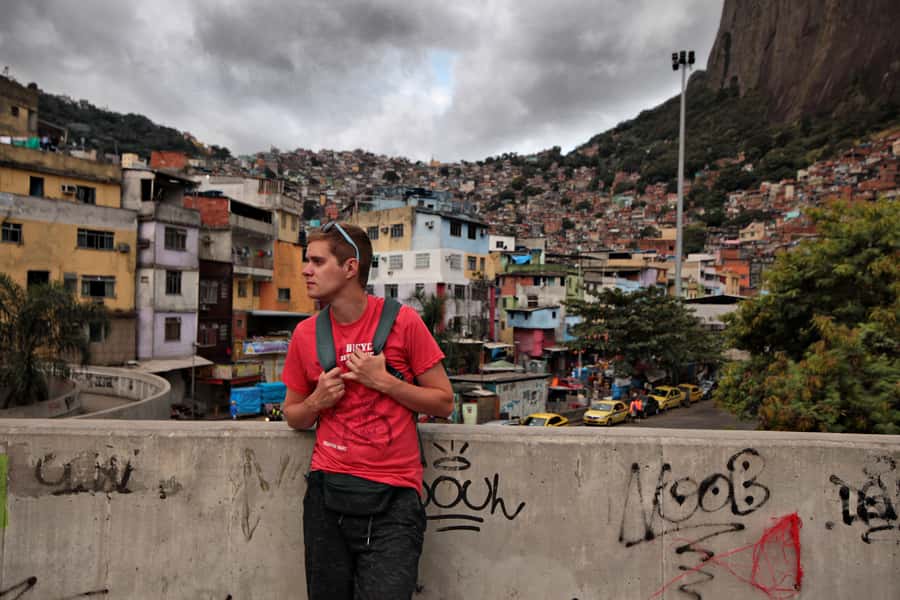
Safety is a central concern for most people considering a favela visit. The route is organized with local guides and hosts, and the tour is specifically designed to let you explore Rocinha with guidance rather than alone. Guides such as Wellington, Alberto, and Daniel receive repeated praise for staying with the group, answering questions, and creating a calm atmosphere.
Still, I would not read that as a guarantee that every moment will feel like a regular sightseeing walk in Copacabana. Rocinha is a complex urban area, and local conditions can change. Your guide’s local standing is one of the tour’s main assets, so follow directions and do not split from the group.
The walking route can also feel more exposed than a vehicle tour because you are physically among the buildings and residents. For some people, that closeness is exactly the point. For others, the idea of walking through a favela may remain uncomfortable. Think honestly about your own response before booking.
Who will enjoy this experience most?
This tour suits you if you want to understand Rio beyond beaches, viewpoints, and famous monuments. It is especially useful if you prefer local explanation, small-group walking, and cultural contact over a quick drive-by visit.
It also suits travelers who are prepared to reconsider simple ideas about favelas. You will hear about hardship and inequality, but you will also see work, family life, music, sport, and community pride. The best attitude is curious but not entitled.
You may want to skip it if you have trouble with stairs, knee pain, recent surgery, or mobility limits. It is also not a good match if you want a relaxed afternoon with little exertion. The three-hour length sounds modest, but steep steps can make it feel demanding.
Should you book the Rocinha walking tour?
I would book this tour if you want a respectful, locally led look at Rio’s social divisions and community culture. The best reasons are the personal guides, the on-foot route, the capoeira stop, and the rooftop views. Wellington, Alberto, and Daniel are names worth noting, but the guide assigned to you may differ.
The $35 cost is sensible for three hours, especially since it supports the local community and includes more than a simple lookout visit. Go with comfortable shoes, modest expectations, and respect for the people who live there. If you want to understand a less polished but important part of Rio, this is one of the more worthwhile short tours in the city.
FAQ
How long does the Rocinha walking tour last?
The tour lasts three hours.
How much does the tour cost?
The listed price is $35 per person.
Where is the meeting point?
Meet in front of the Belmond Copacabana Palace Hotel at Avenida Atlântica 1702 in Copacabana. Wait beside the statue of journalist Ibrahim Sued near the main entrance.
What time should I meet the guide?
The listed meeting time is 1:25 p.m. Check the available starting time when booking because schedules can vary.
Is hotel pickup included?
No. You must make your own way to the meeting point.
Which languages are available?
The tour is offered in English, Spanish, and Portuguese.
Is food or drink included?
No. Food and drinks are not included in the tour price.
Will I visit a capoeira school?
The route commonly includes a capoeira visit or demonstration, with local performers and instructors. The exact presentation can vary.
Is the tour suitable for wheelchair users?
No. The route includes narrow alleys and stairs, and wheelchair users and people with mobility impairments are listed as unsuitable for the activity.
Can I cancel for a full refund?
Yes. You can cancel up to 24 hours in advance for a full refund, according to the provided booking terms.
More Half-Day in Rio de Janeiro
- Rio: Half-Day Jeep Tour at Floresta da Tijuca
★ 4.5 · 353 reviews - Two of Rio’s Best: Christ the Redeemer & Sugarloaf Mountain Half-Day Tour
★ 4.5 · 294 reviews - Rio de Janeiro: Historic Rio and Santa Teresa Half-Day Tour
★ 4.4 · 228 reviews - Sugar Loaf Mountain Half-Day Tour
★ 4.0 · 217 reviews
Just added around Rio de Janeiro
- Rio de Janeiro: Zip Lining and Canopy Tree Tour★ 3.3 · 6 reviews
- Vidigal Favela Tour★ 4.4 · 26 reviews
- Hang gliding flight in Rio de Janeiro★ 5.0 · 6 reviews
- Tijuca Forest Hike – Waterfalls & Caves, Nature & Wild Life!★ 5.0 · 51 reviews
- Unforgettable Boat Party★ 5.0 · 3 reviews
- Guided Tour to Favela Santa Marta★ 5.0 · 60 reviews
- Rio de Janeiro: Attend a Vasco da Gama game with local guide★ 4.8 · 9 reviews
- Rio Highlights: Christ, Sugarloaf, and More in a Private Tour★ 5.0 · 36 reviews
Rio Favela Tours, compared.

Favela Rocinha Tour with Local Guide & Secret Spots
Read our review →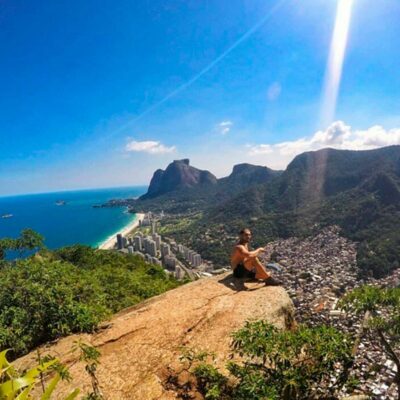

Favela Tour The Original, Rocinha & Vila Canoas since 1992
Read our review →

Sunrise at Morro 2 Irmãos – Vidigal – Rio de Janeiro
Read our review →
Half Day Hiking Tour Morro Dois Irmaos and Favela Vidigal
Read our review →Browse the lists this tour appears in