
Review · RIO WALKING TOURS
Rio de Janeiro: Afrobrazilian Heritage & Black History Walk
Rio’s Little Africa is not a theme park or a tidy museum exhibit. It is a living part of downtown, where stone, murals, music, religion, and painful memories meet on ordinary streets. This 150-minute walk takes you to Valongo Wharf, Pedra do Sal, Praça Mauá, and other key sites tied to the African history of Rio.
I like two things here: the tour gives the slave trade a clear human context, and it connects that past to samba, candomblé, umbanda, and today’s local culture. Guides such as Kelly and Jaíse are praised for careful research and personal connection to the subject. The main consideration is that this is a serious history walk, not a light sightseeing stroll, and the tour runs rain or shine.
Key points to know before you book
- Valongo Wharf puts Rio’s past in plain view: Visit the UNESCO World Heritage Site linked to the arrival and sale of enslaved Africans in the Americas.
- Pedra do Sal connects history with samba: See the place regarded as the birthplace of samba and the heart of Rio’s Little Africa.
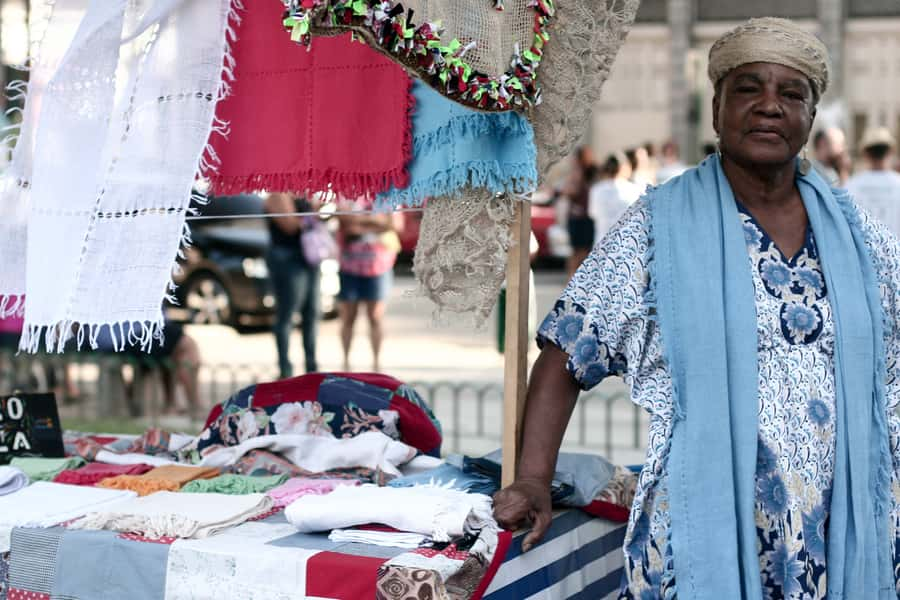
- The guide shapes the experience: Kelly and Jaíse have led especially strong tours, with detailed explanations and a personal connection to Afro-Brazilian heritage.
- Religion is part of the story: Learn how candomblé and umbanda developed, including the roles of orishas, nkisis, voduns, and Christian syncretism.
- The price includes a focused walking tour: At $64 per person, you are paying for an expert-led cultural experience rather than transport, meals, or museum admission.
- Plan for weather and walking: Bring water, comfortable clothes, a hat, and rain gear. The route goes ahead in wet weather.
Why this walk matters in Rio
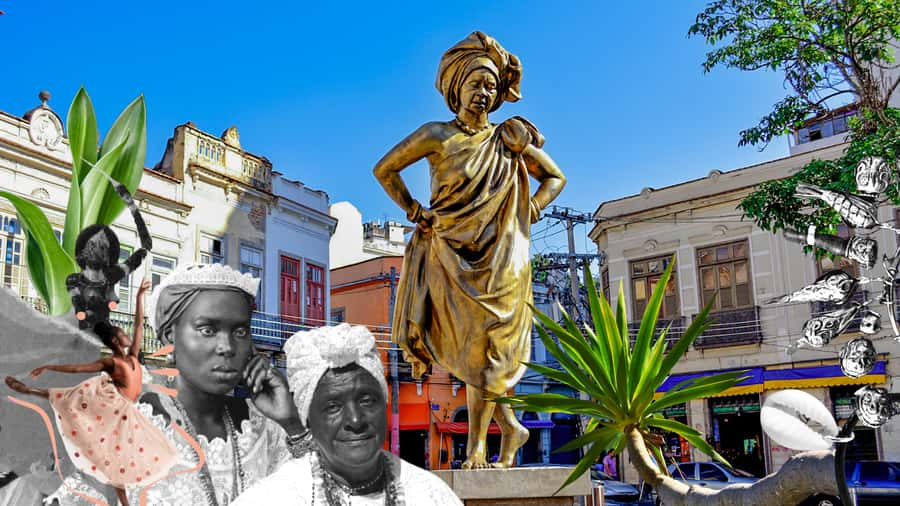
Rio is often sold through beaches, viewpoints, and carnival. Those are real parts of the city, but they leave out a major part of its identity. African descendants shaped Rio’s music, food, religion, language, celebrations, and neighborhood life, even as enslaved people were denied freedom and treated as property.
This tour gives you a way to see those connections in one compact route. You are not only hearing dates and names. You are learning how the forced arrival of Africans changed Rio and how African traditions survived, adapted, and helped form Brazilian culture.
The subject is difficult. Portuguese trafficking continued for more than 380 years, and Rio became a major port in that system. A good guide has to explain the violence without reducing people to statistics. That is one reason the guide’s role matters so much here.
Kelly is praised for extensive research, passion, and care when telling this story. Jaíse is also singled out for detailed historical explanations and for making Afro-Brazilian history feel present rather than distant. Guides speak English, Spanish, and Portuguese, though French is not listed as a tour language.
More walking tours in Rio de Janeiro:
- Rio de Janeiro: Rocinha Favela Walking Tour with Local Guide
★ 4.8 · 3,052 reviews - Rio De Janeiro: Half-Day Rocinha Favela Walking Tour
★ 4.7 · 2,272 reviews - Sunrise and Sunrise Walk Two Brothers with Local Guide
★ 5.0 · 193 reviews
Starting at Praça Mauá and the MAR Museum
The stated meeting point is under the trees in front of the Rio Art Museum, known as MAR, at Praça Mauá. The address provided is Praça Mauá, with one listed starting option at Museu de Arte do, R. Pedro Ernesto, 32. Since the information gives more than one starting reference, I would confirm the exact meeting spot with the guide before setting out.
Praça Mauá is a useful place to begin because it puts you in the middle of Rio’s port district. This area has been reshaped in recent years, but its older layers remain important. The square also places you close to major cultural institutions, including MAR and the Museum of Tomorrow.
The tour does not include admission to either museum. That is not a problem if you are booking this specifically as a walking history experience, but it matters for your budget and schedule. You can add a museum visit separately if you want more indoor time, but do not expect museum entry to be part of the $64 price.
The opening section sets up the geography. You learn how the port connected Rio to the Atlantic slave trade and why the nearby streets became central to African-descended communities. This background makes the later stops easier to understand.
Saúde and Rio’s port district
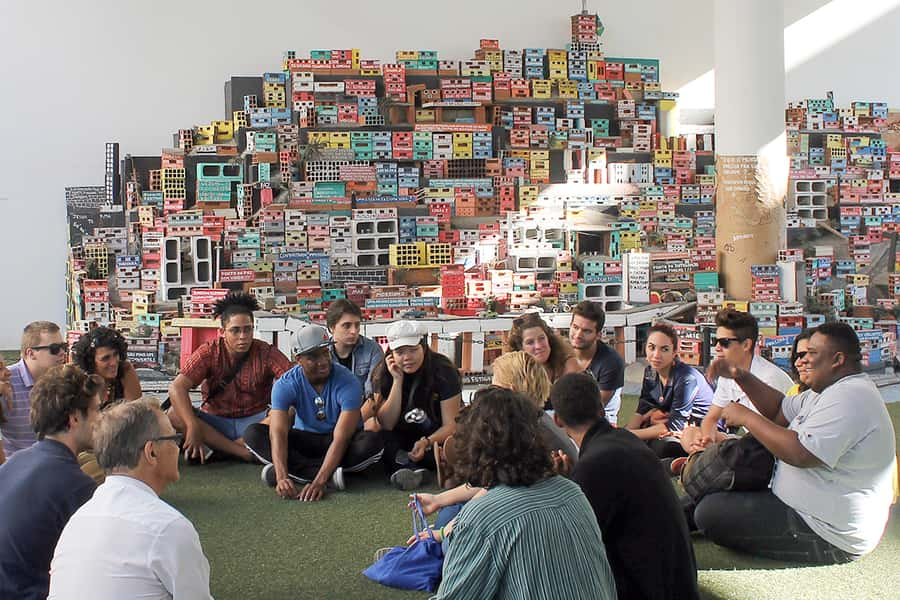
From Praça Mauá, the walk moves through Saúde, with about 15 minutes of walking listed for this portion. Saúde is one of the neighborhoods associated with the port and with the formation of Little Africa.
The value of this section is the link between place and power. The port was not simply where ships arrived. It was part of a system that moved people by force, sold them, and used their labor to build Brazil’s wealth. The streets you walk through were shaped by that system, but they also became places where African customs, music, food, faith, and community endured.
Your guide will explain the arrival of enslaved Africans in Rio and the conditions under which they lived. The focus is not only on what happened at the port, but on the cultural legacy that followed. This is where the tour begins to move beyond a conventional slavery narrative and toward the survival of African traditions.
You should expect a steady walking pace and a fair amount of standing while the guide speaks. Comfortable shoes are important. The tour is wheelchair accessible, but the route is outdoors and includes walking between sites, so anyone with specific mobility needs should confirm the route details in advance.
Valongo Wharf and the memory of the Atlantic trade
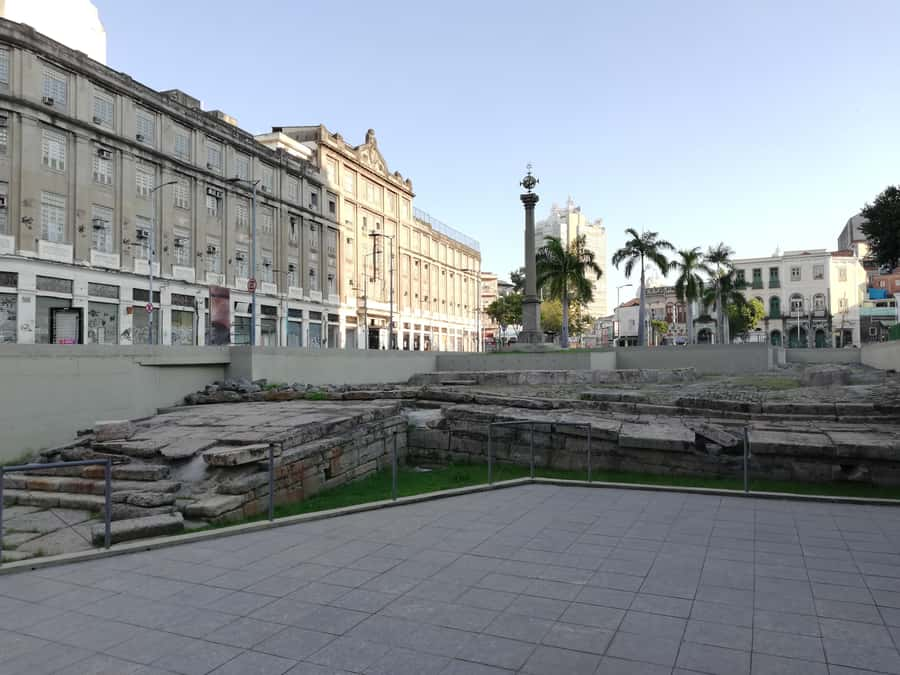
Valongo Wharf is the emotional center of the walk. It is a UNESCO World Heritage Site recognized for its connection to the transatlantic slave trade. Millions of Africans arrived through this system, and many were brought to Rio to be sold as enslaved people.
The site matters because it makes the scale of the trade harder to ignore. This was not an abstract process taking place far away. Rio itself was one of the major points in the forced movement of Africans across the Atlantic.
Your guide places the wharf within the wider history of Portuguese trafficking and the city’s development. Expect serious discussion here, with attention to the people who arrived, the violence they faced, and the ways their descendants shaped Brazil.
I find this stop especially valuable for visitors who have seen Rio only through its postcard attractions. Valongo Wharf changes the way you read the city. The port is no longer just a scenic waterfront district. It becomes a place tied to one of the most painful parts of Brazil’s past.
Give yourself time to listen. This is not a stop to rush through for a photograph. The site’s power comes from the story attached to it and from the guide’s explanation of what happened there.
More history tours in Rio de Janeiro:
- Rio de Janeiro: Historic Rio and Santa Teresa Half-Day Tour
★ 4.4 · 228 reviews - Rio de Janeiro: Little Africa Heritage Walking Tour
★ 4.9 · 177 reviews - Explore Little Africa : Unveiling Afro Heritage in Rio de Janeiro
★ 5.0 · 97 reviews - Learn the History of Rio with an Unforgettable City Center Walking Tour
★ 5.0 · 82 reviews
Praça Mauá, murals, and public memory
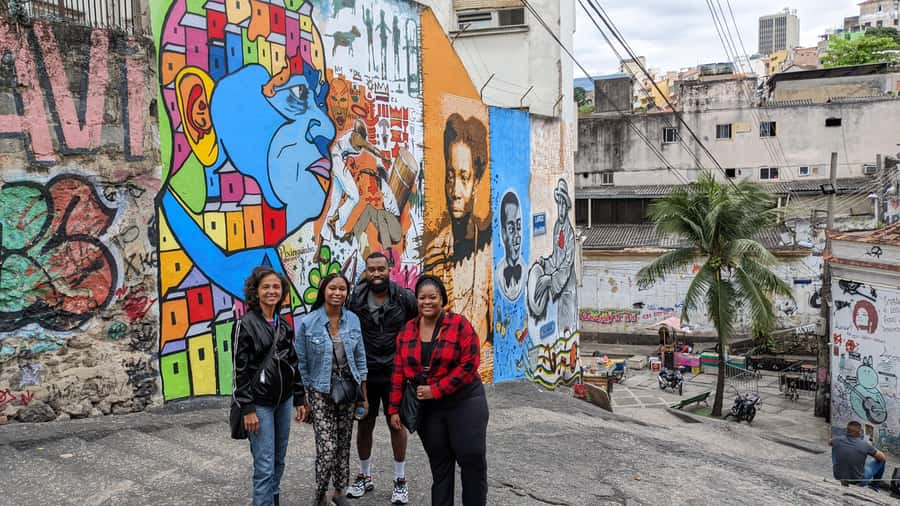
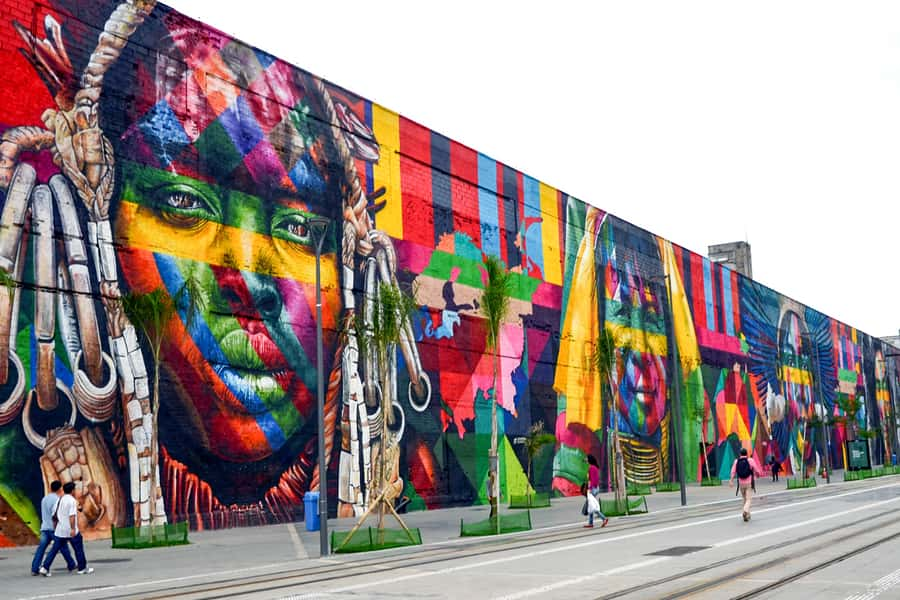
The walk also includes Praça Mauá and the Etnias mural by Brazilian artist Eduardo Kobra. The mural is a major visual feature of the port area, and it brings a different tone to the route after the difficult material at Valongo Wharf.
The colorful images represent Indigenous peoples from different parts of the world. While the mural is not a direct memorial to the slave trade, it adds to the discussion of identity, ancestry, and public art in Rio. It also shows how the port district uses walls and public spaces to tell stories about people and cultures.
One practical note: the Etnias mural is outdoors, so the experience depends on the weather and the light. You will want to pause for photographs, but the guide’s explanation is the more important part of the stop.
The route may finish or offer drop-off points around Cais do Valongo, Etnias, and Largo São Francisco da Prainha. These locations are useful if you want to continue exploring the port district on foot. The activity does not include a transfer, so you should plan your onward transportation separately.
Pedra do Sal, where samba meets memory
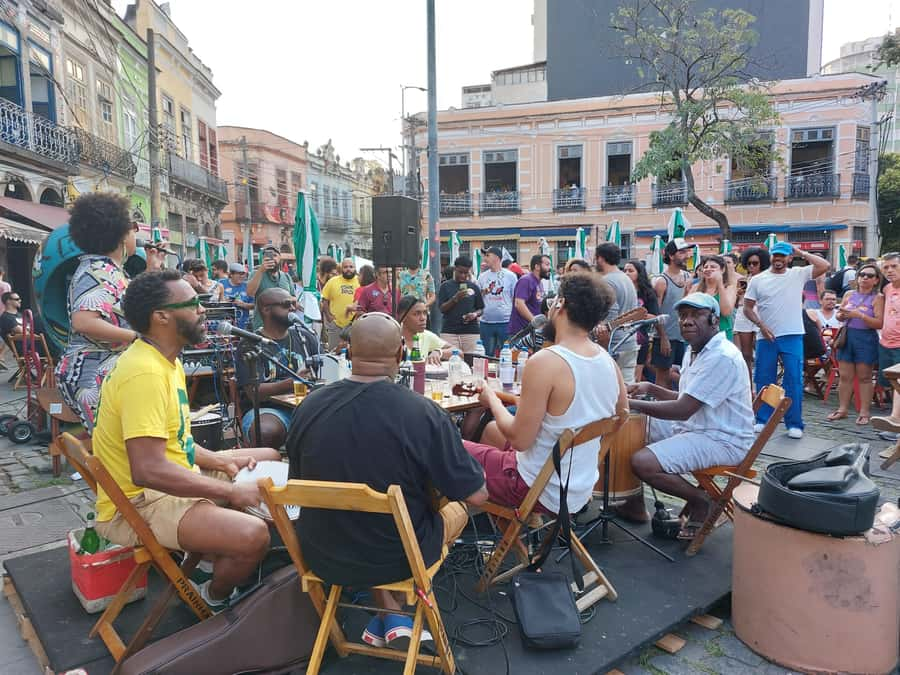
Pedra do Sal is the walk’s most musical stop. Known as the Rock of Salt, it is regarded as the birthplace of samba and the center of Little Africa. Musicians historically gathered here to sing and dance, and the area became linked to early carnival bloco parties and parades.
The setting helps explain why music is central to Afro-Brazilian culture. Samba was not created in isolation. It grew from African musical traditions, community gatherings, movement through the city, and the ability of people to maintain culture under harsh conditions.
Pedra do Sal remains tied to music today, with weekly rodas de samba. A roda is an informal circle of musicians and singers, and the tradition gives the place an active social life beyond its historical importance.
The tour itself does not promise a live samba performance, so do not book it expecting a concert. It does, however, explain why this location matters and can give you tips about local music and programming. One guide, Jaíse, invited a participant to an authentic samba jam at a town square after the walk. That kind of local suggestion can be one of the most useful parts of the experience, especially if you want to hear music outside the main tourist circuit.
Food is also listed in connection with Pedra do Sal, but meals are not included. Treat this as a chance to ask the guide about regional food and nearby places rather than as a dining tour.
Candomblé, umbanda, and African spiritual traditions
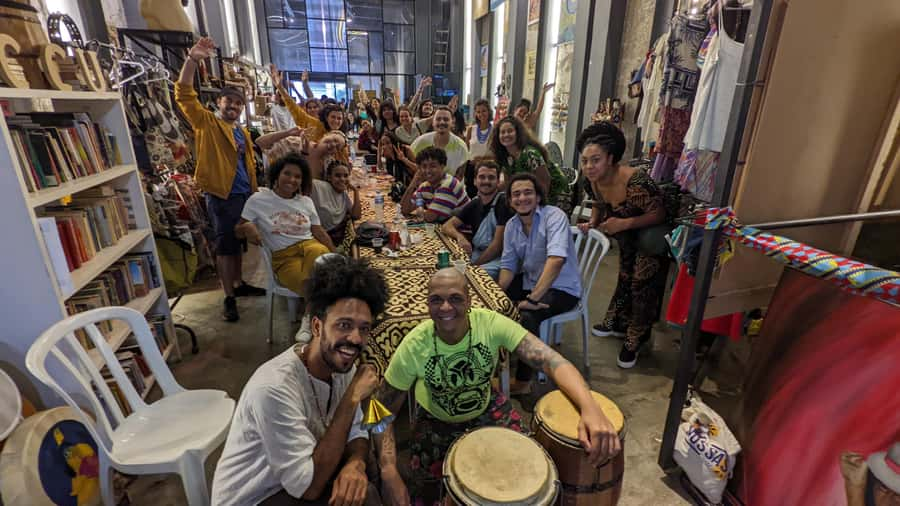
The religious section adds depth to the route. You learn about candomblé and umbanda, two Afro-Brazilian religions, and about their relationship with Christianity.
The explanation includes orishas, nkisis, and voduns, which are spiritual beings and traditions associated with different African cultural backgrounds. You also learn about Brazilian ancestral gods and goddesses of nature. These beliefs are part of a larger story of adaptation, preservation, and syncretism.
Syncretism refers to the blending or linking of religious traditions. In Brazil, African spiritual practices developed under conditions where open expressions of African identity were often restricted or attacked. Christian figures and practices became connected with African religious traditions in complex ways.
This part of the tour is valuable because it prevents a common mistake: treating candomblé and umbanda as colorful curiosities separated from daily life. The guide presents them as living traditions tied to ancestry, nature, community, and identity.
You do not need prior knowledge of Brazilian religion. The guide speaks to beginners, and you can ask questions as the walk goes on. Still, you should come ready to listen respectfully. This is not a theatrical display of belief. It is a cultural and historical explanation.
How much value do you get for $64?
The price is $64 per person for 150 minutes. That is not the cheapest way to spend a morning in Rio, especially since food, museum admission, and transfers are separate. The value depends on what you want from your time in the city.
If you simply want to see streets and take photographs, you can explore the port district for less. But this tour gives you a guide who can connect Valongo Wharf, Pedra do Sal, samba, religion, public art, and the legacy of slavery. Those links are difficult to build from a map or a short online description.
I think the price is fair for visitors who care about context and prefer a focused experience over a long list of sights. It is also useful early in your Rio stay because the guide can offer suggestions about music, art, museums, restaurants, and local programming.
The rating is 4.9 from nine reviews, with particular praise for the guides’ historical detail, warmth, and personal connection to the subject. That is a small number of ratings, so I would not treat it as a guarantee. Still, the repeated approval of Kelly and Jaíse points to the main strength of the tour: the quality of the storytelling.
What to bring and how to prepare
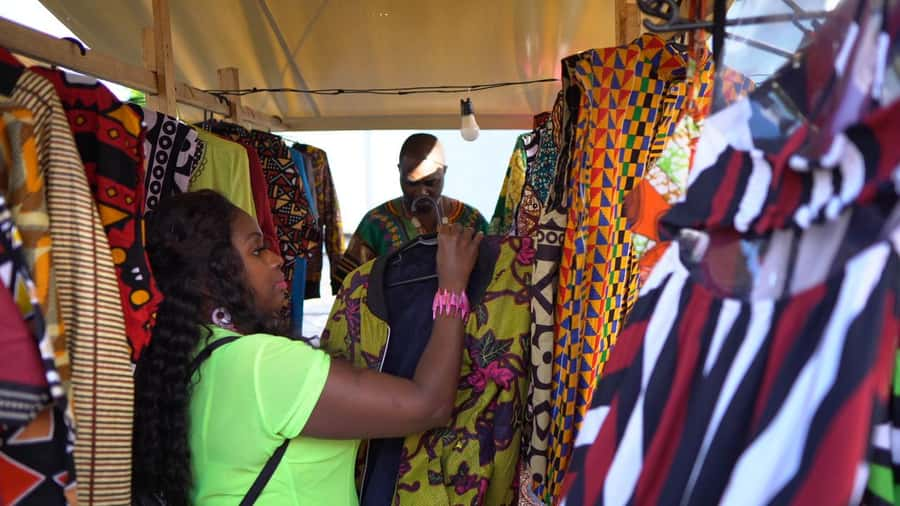
This is a rain-or-shine activity. Bring a reusable water bottle, comfortable clothes, a hat, and rain gear. Rio’s weather can change quickly, and there is no advantage in trying to look polished for a walk that lasts two and a half hours.
You should also keep your travel insurance number and operating details handy, as requested by the guide. Insurance is not mandatory for the tour, but it is recommended for outdoor activities.
There are no pets allowed, except assistance dogs. The tour is wheelchair accessible. Because the experience takes place outside and includes walking between historic sites, confirm any route concerns before booking if you need specific assistance.
Free cancellation is available up to 24 hours before the start, and you can reserve now and pay later. Private groups may be arranged for another date with usual 24-hour notice, though transfer fees can apply and depend on vehicle availability.
Who should book this experience?
I would choose this walk if you want to understand Rio beyond beaches, Sugarloaf, and carnival clichés. It suits first-time visitors who want historical context, as well as returning visitors looking for a different side of the city.
It is especially good for people interested in African diaspora history, music, religion, public art, and local neighborhoods. It also suits anyone who prefers a small-scale cultural activity where the guide’s voice matters more than a packed sightseeing schedule.
I would think twice if you want a relaxed food tour, a museum visit, or a live samba show. The subject is often painful, and the route asks you to pay attention. It is rewarding, but it is not lightweight entertainment.
Should you book the Afro-Brazilian Heritage and Black History Walk?
Book it if you want the history behind Rio’s music, faith, port, and communities. The strongest parts are Valongo Wharf, Pedra do Sal, and the guide’s explanation of how African traditions shaped Brazilian culture.
The $64 price makes the most sense when you value interpretation and local guidance. Bring water, prepare for rain, and confirm the meeting point before you go. If you want a more honest picture of Rio, this walk belongs near the top of your list.
FAQ
How long does the Afro-Brazilian Heritage and Black History Walk last?
The tour lasts 150 minutes, or two and a half hours.
Where does the tour meet?
The meeting point is under the trees in front of the MAR Museum, the Rio Art Museum, at Praça Mauá. One listed starting option is Museu de Arte do, R. Pedro Ernesto, 32, so confirm the exact point with the guide.
Which languages are available?
The tour is offered in English, Spanish, and Portuguese.
Is the tour wheelchair accessible?
Yes, the activity is listed as wheelchair accessible.
What places does the walk visit?
The route includes Saúde, Rio’s downtown heritage area, Valongo Wharf, Praça Mauá, Pedra do Sal, and the Etnias mural by Eduardo Kobra. Drop-off locations include Cais do Valongo, Etnias, and Largo São Francisco da Prainha.
Is museum admission included?
No. Admission to the Museum of Tomorrow and the Rio Art Museum is not included.
Is food included?
No. Food is not included, though the tour includes information connected with regional food and local recommendations.
Does the tour include transportation?
No. Transfers are not included. Private group arrangements may include transfer options, with fees depending on vehicle availability.
What happens if it rains?
The tour operates rain or shine. Bring rain gear, along with a reusable water bottle, comfortable clothes, and a hat.
Just added around Rio de Janeiro
- Vidigal Favela Tour★ 4.4 · 26 reviews
- Hang gliding flight in Rio de Janeiro★ 5.0 · 6 reviews
- Rio de Janeiro: Zip Lining and Canopy Tree Tour★ 3.3 · 6 reviews
- Tijuca Forest Hike – Waterfalls & Caves, Nature & Wild Life!★ 5.0 · 51 reviews
- Unforgettable Boat Party★ 5.0 · 3 reviews
- Guided Tour to Favela Santa Marta★ 5.0 · 60 reviews
- Rio de Janeiro: Attend a Vasco da Gama game with local guide★ 4.8 · 9 reviews
- Rio Highlights: Christ, Sugarloaf, and More in a Private Tour★ 5.0 · 36 reviews
Rio Walking Tours, compared.



Sunrise and Sunrise Walk Two Brothers with Local Guide
Read our review →
Learn the History of Rio with an Unforgettable City Center Walking Tour
Read our review →
Rio’s city walking tour: a glimpse of history and olympic legacy
Read our review →
Walking tour of the bohemian neighborhoods of Santa Teresa and Lapa
Read our review →
Browse the lists this tour appears in