
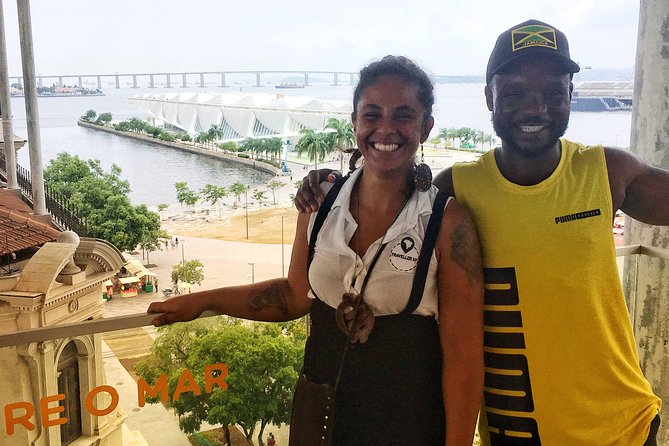
Review · RIO FOOD AND DRINK TOURS
African Heritage: Gastronomy and Musicality Experience
Rio’s African story is not tucked away in a museum case. It lives in the streets, food, drums, murals, and community spaces of the port district. This five-hour private tour follows that story from the Morrinho model at MAR and Kobra’s huge mural to the sobering Valongo Wharf and a hands-on session at Pedra do Sal.
I like the way the experience joins serious historical places with food and music. I also like the personal scale: your own group travels with a guide such as Isabella or Jaíse, rather than being folded into a large crowd. The main drawback is that the tour is not a good fit for people with food restrictions, and the three-hour Pedra do Sal portion may feel long if you prefer quick sightseeing.
- Morrinho at MAR: See favela life presented through a detailed miniature model instead of a one-note stereotype.
- IPN and Valongo Wharf: Face the evidence and places connected to Brazil’s enslavement of Africans.
- Pedra do Sal: Taste Afro-Brazilian and Yoruba food, then work with percussion.
- Local guides: Isabella and Jaíse bring personal energy and clear explanations to the subject.
- Private format: Only your group participates, allowing room for questions and a more flexible conversation.
- Walkable historic center: The route ends at Largo de São Francisco da Prainha, surrounded by old Portuguese-style buildings and evening music.
A five-hour route through Rio’s African story
This is not a standard highlights tour. It focuses on the port district and nearby Centro, an area where art, memory, religion, music, and daily life meet.
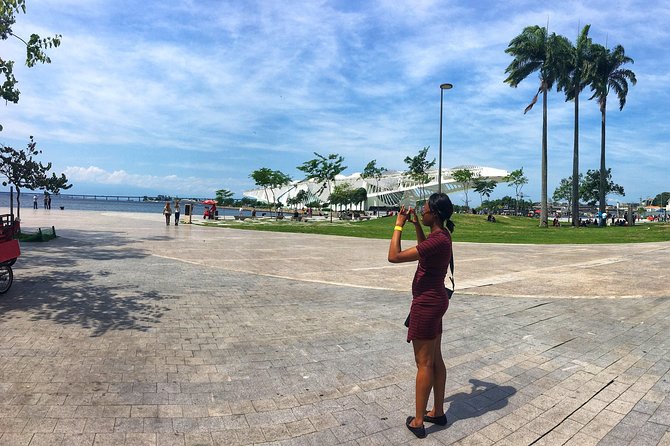
You begin at 10 a.m. at Museu do Amanhã in Praça Mauá. The route ends at Largo de São Francisco da Prainha, so you finish in a historic square rather than returning to the starting point. That matters when planning the rest of your day. You can continue exploring the area after the tour, but you should not expect a round trip to your hotel.
The tour costs $110 per person and lasts about five hours. For a private experience, that price is reasonable if you want a guide who can explain the connections between the sites rather than simply point them out. The value rises for solo visitors or small groups who care about Afro-Brazilian culture, food, and music. It may feel expensive if you mainly want a quick look at Rio’s landmarks.
MAR and the Morrinho model
The first major stop is Museu de Arte do Rio, known as MAR. The focus here is the Morrinho Project, a permanent model of the Pereira da Silva favela.
The model recreates streets, residents, buildings, and ordinary routines in painstaking detail. Its importance is not just artistic. It gives you a way to think about favelas as lived communities with creativity, social ties, and daily work, rather than reducing them to stories about danger.
You spend about 25 minutes here, and admission is free. That is enough time for an introduction and a focused look, though not enough for a full museum visit. If you want to explore all of MAR, treat that as a separate plan.
This stop is especially useful if you have heard simplified stories about Rio’s favelas. The model offers a more human view without pretending that the challenges are not real. It is a smart opening because it asks you to examine how Brazil is represented before the tour turns to much harder subjects.
More food and drink tours in Rio de Janeiro:
- Rio: Pub Crawl in Lapa with Cachaça Tasting and Live Samba
★ 4.7 · 881 reviews - Rio: Caipirinha Workshop and Samba Class
★ 4.8 · 113 reviews - Guided Market Fruit Tasting in Rio with 15+ Exotic Flavors
★ 5.0 · 68 reviews
Kobra’s mural and the public face of ancestry
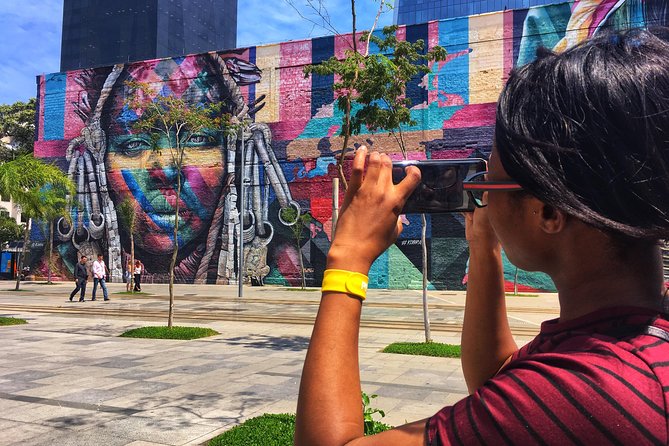
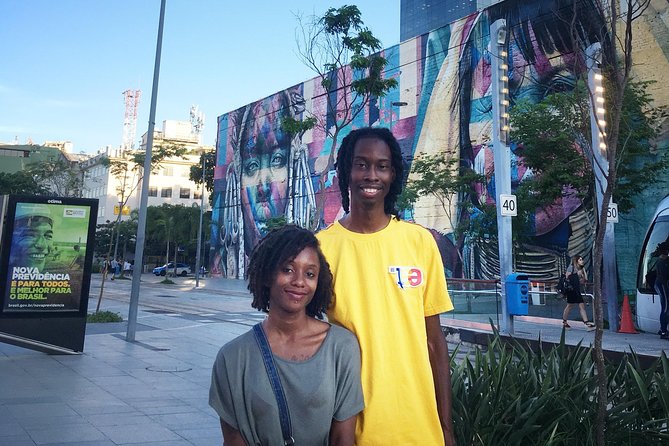
The route also includes Eduardo Kobra’s enormous graffiti mural. The artwork presents ancestral ethnic groups and old cultures connected, directly or indirectly, to Brazil’s story.
This is a brief outdoor art stop rather than a long museum visit. It gives you a visual entry into the subject, and it helps show how African and Indigenous references can appear in public art, not only in formal historical institutions.
The exact timing is not listed separately, so expect it to be fitted into the route between the scheduled stops. Wear shoes suitable for walking and keep your attention on the guide, since the value here comes from the explanation of the figures and their place in Brazil’s cultural memory.
IPN, bones, and the evidence of enslavement
At the Instituto de Pesquisa e Memória Pretos Novos, you visit an archaeological site and permanent display containing bones of Africans found at the location.
This is likely to be the most difficult stop emotionally. The site makes the period of enslavement physical. Instead of learning only through dates and broad descriptions, you confront material evidence connected to people who were brought to Brazil under brutal conditions.
The visit lasts about 40 minutes, with admission included. The guide’s role matters greatly here. Isabella has been praised for making difficult subjects understandable, while Jaíse has been described as passionate about the African diaspora and Brazil. Expect the conversation to cover more than the past. The tour also links these events to present-day culture, social conditions, and the contributions of Black communities.
You should come ready to listen. This is not a light sightseeing stop, and it is not designed to avoid uncomfortable facts. That is part of its value.
Cais do Valongo and Little Africa
The next stop is Cais do Valongo, the historic pier in the area often called Little Africa. You spend about 15 minutes at the site.
The short visit works because the place itself carries much of the weight. The guide explains its role in the arrival of enslaved Africans and its importance to the story of Rio and humanity. The surrounding district then gives that history a living setting. Music, food, religion, and community traditions did not appear separately from this past. They developed through survival, adaptation, and cultural strength.
Do not expect a large indoor attraction here. This is an outdoor historical site, and its meaning comes through context. A guide who can connect the stones beneath your feet with the cultural life around them makes the stop far more useful than a quick photograph.
More history tours in Rio de Janeiro:
- Rio de Janeiro: Historic Rio and Santa Teresa Half-Day Tour
★ 4.4 · 228 reviews - Rio de Janeiro: Little Africa Heritage Walking Tour
★ 4.9 · 177 reviews - Explore Little Africa : Unveiling Afro Heritage in Rio de Janeiro
★ 5.0 · 97 reviews - Learn the History of Rio with an Unforgettable City Center Walking Tour
★ 5.0 · 82 reviews
Pedra do Sal: food, drums, and community

Pedra do Sal is the heart of the experience. The scheduled time here is about three hours, much longer than at any other stop.
The area is linked with the remaining community of Quilombo Pedra do Sal and with the preservation of Afro-Brazilian heritage. It is also known for outdoor samba sessions, so music is not treated as a decorative extra. It is part of the place’s identity and ongoing community life.
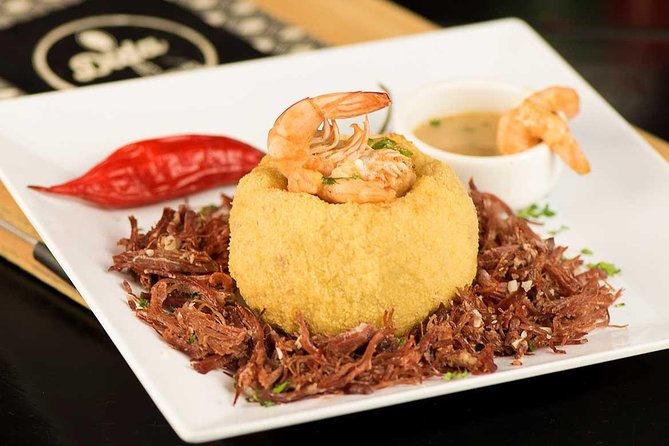
The food tasting includes typical dishes from Afro-Brazilian and Yoruba cooking. These foods are connected to the daily practices of religions with African origins. That connection gives the tasting more meaning than a generic lunch. You are not simply sampling unfamiliar dishes. You are learning how food can carry memory, faith, family practice, and identity.
Drinks are not included, so bring money if you want something to drink. The experience is specifically described as unsuitable for people with food restrictions. If you have allergies, medical dietary needs, or strong limitations, this may not be the right booking. The available information does not promise substitutions.
The musical portion is a percussion workshop with an instructor and drummer from the African continent. You are expected to take part rather than only watch. That makes the activity a good choice if you enjoy hands-on cultural experiences and do not mind trying a rhythm in front of other people.
The three-hour block can feel generous. For someone eager to eat, talk, and play, it gives the subject room to breathe. If you prefer a fast-moving itinerary, it may be the part that tests your patience. Still, this is where the tour best explains how African traditions continue to shape Rio today.
The setting also matters. Pedra do Sal is not presented as a sealed historic exhibit. It is a place where community, music, and public life continue. That distinction helps you understand culture as something practiced, not simply displayed.
Largo de São Francisco da Prainha at the end
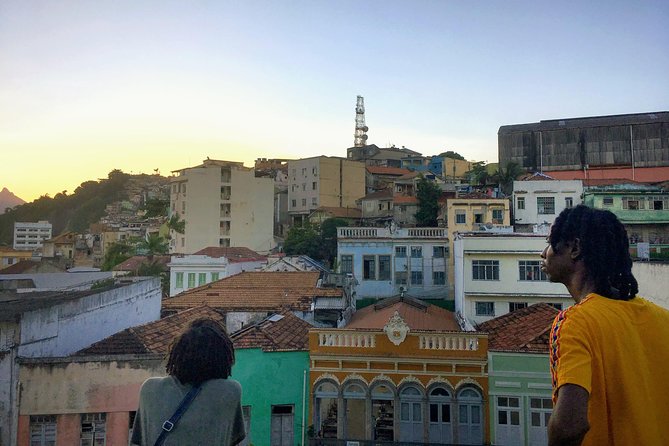
The tour finishes at Largo de São Francisco da Prainha, a square near Morro da Conceição. The scheduled visit lasts about 15 minutes, but the area deserves more time if your plans allow.
The square is surrounded by Portuguese-style buildings and local bars with outdoor seating. Depending on the time and day, you might find samba, funk, jazz, or chorinho in the area. Cold beers and snacks are available for purchase, though they are not part of the tour price.
Ending here is a good choice. After the heavier sites and the structured workshop, you finish in a social setting where Rio’s music and street life carry on around you. The short official stop is more of an orientation than a full evening visit. If you want to stay for music or food, plan to do so after the tour on your own.
What the guides add to the experience
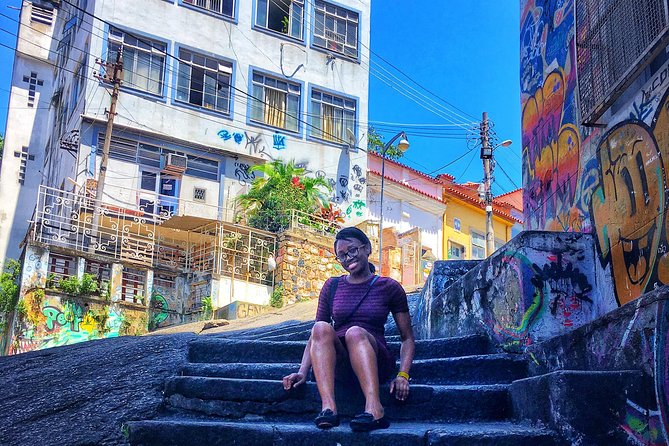
The strongest part of this tour is the guide’s ability to connect subjects that are often taught separately.
Isabella is repeatedly described as personable, passionate, and clear. She has been praised for discussing Afro-Brazilian culture alongside the city’s economy, social conditions, development, and underdevelopment. That wider frame helps you understand why the historic sites still matter.
Jaíse is also identified as a guide who brings a diasporic perspective and strong enthusiasm for Black history in Brazil. The experience is particularly appealing if you want to consider what it means to be Black in Brazil, not only to memorize dates about the transatlantic slave trade.
The private setup gives you room to ask direct questions. You can also expect the conversation to adjust to your interests, at least more easily than it would in a large group. Solo participants have found the format especially personal, while families and couples can use the time to discuss difficult subjects together.
The tone is passionate rather than detached. That will suit you if you want a guide who openly values Black heritage and challenges incomplete versions of Brazilian history. If you prefer a strictly academic, neutral presentation, you may find the approach more personal than expected.
Timing, transport, and practical planning
The tour begins at 10 a.m. at Museu do Amanhã, Praça Mauá, 1, in Centro. The meeting point is near public transportation, and most people can participate. Service animals are allowed.
Because the route covers several stops in the central port area, comfortable walking shoes are sensible. The information provided does not give a precise transport plan between every point, so ask the operator after booking if you need details about walking distances or vehicle use.
You will finish at Largo de São Francisco da Prainha in Saúde. Build your next activity around that location instead of assuming you will return to Praça Mauá.
The experience is private, and only your group participates. Confirmation is sent when you book. It is usually reserved well ahead of time, with an average booking lead of about 69 days, so you should not leave it until the last moment if the date matters to you.
The tour requires good weather. If poor weather forces cancellation, you are offered another date or a full refund. The same applies if the minimum number of participants is not reached. You can cancel for a full refund up to 24 hours before the start time. Changes or cancellations inside that window are not accepted.
Who will get the most from this tour
I would choose this experience if you want to understand Rio through Black Brazilian history and present-day culture. It suits solo visitors, couples, families, and small private groups who want time for conversation.
It is also a strong match for:
- People interested in the African diaspora and Brazil’s cultural development
- Visitors who want more than beaches, viewpoints, and famous monuments
- Anyone curious about the history of favelas beyond common stereotypes
- Food lovers who can eat the dishes provided
- People willing to join a percussion workshop
- Visitors who appreciate a guide with a clear personal point of view
I would think twice if you want a relaxed food tour with little historical discussion. The visit to IPN can be emotionally heavy, and the themes of enslavement, racism, inequality, and community resistance are central to the day.
Is $110 a fair price?
At $110 per person, the price includes the Afro-Brazilian food tasting and IPN admission, but not drinks. MAR, Cais do Valongo, the mural, and Largo de São Francisco da Prainha are free stops.
The real cost is for the guide, private format, and three-hour cultural session at Pedra do Sal. If you booked separate short visits and paid for food on your own, you might spend less, but you would lose the thread connecting the sites.
For me, the value depends on your interests. If you want a broad Rio sightseeing tour, this is not the best use of your budget. If you want a focused introduction to Afro-Brazilian memory, cuisine, and music with a guide who can explain the links, the price is justified.
Should you book it?
Book this tour if you want Rio’s African heritage placed at the center of your day, not added as a footnote. The combination of IPN, Cais do Valongo, Pedra do Sal, food, and percussion gives you both difficult history and living culture.
Skip it if you have strict food restrictions, dislike participation, or want a quick itinerary. For everyone else, this is a thoughtful choice, especially if you book early and leave extra time after the final stop to enjoy the square and surrounding area.
FAQ
How long does the African Heritage: Gastronomy and Musicality Experience last?
The experience lasts approximately five hours.
What time and where does the tour begin?
It starts at 10 a.m. at Museu do Amanhã, Praça Mauá, 1, Centro, Rio de Janeiro.
Where does the tour end?
The tour ends at Largo de São Francisco da Prainha in Saúde, Rio de Janeiro.
Is the tour private?
Yes. Only your group participates in the activity.
What is included in the price?
The price includes an Afro-Brazilian gastronomy tasting and admission to the Instituto de Pesquisa e Memória Pretos Novos.
Are drinks included?
No. Drinks are not included.
Can I cancel for a full refund?
Yes. You can cancel at least 24 hours before the start time for a full refund. Poor weather or failure to meet the minimum number of participants may also lead to another date or a full refund.
Just added around Rio de Janeiro
- Vidigal Favela Tour★ 4.4 · 26 reviews
- Hang gliding flight in Rio de Janeiro★ 5.0 · 6 reviews
- Rio de Janeiro: Zip Lining and Canopy Tree Tour★ 3.3 · 6 reviews
- Tijuca Forest Hike – Waterfalls & Caves, Nature & Wild Life!★ 5.0 · 51 reviews
- Unforgettable Boat Party★ 5.0 · 3 reviews
- Guided Tour to Favela Santa Marta★ 5.0 · 60 reviews
- Rio de Janeiro: Attend a Vasco da Gama game with local guide★ 4.8 · 9 reviews
- Rio Highlights: Christ, Sugarloaf, and More in a Private Tour★ 5.0 · 36 reviews
Rio Food and Drink Tours, compared.
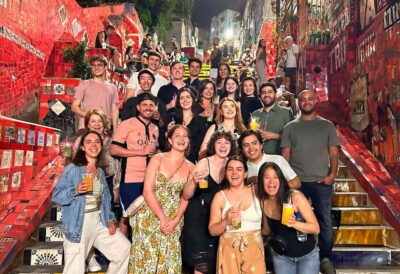
Pub Crawl in Lapa with Cachaça Tasting and Live Samba
Read our review →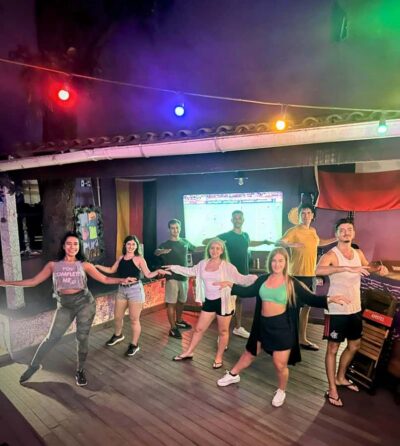
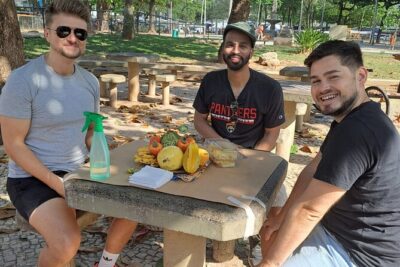
Guided Market Fruit Tasting in Rio with 15+ Exotic Flavors
Read our review →
City Tour Full VIP – Corcovado Train + Churrascaria Rodízio
Read our review →
Rio Experience: Caipirinha Workshop (2 Caipis) + Funk Class
Read our review →
The Best Food Tour: Taste the Most Authentic Flavours of Rio
Read our review →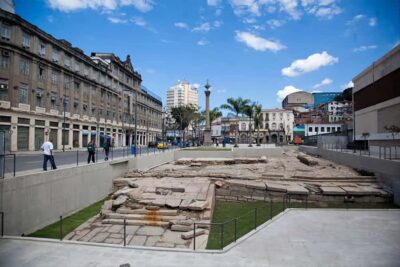
Samba Night in Pedra do Sal with 1 free caipirinha
Read our review →Browse the lists this tour appears in