
Review · SANTA TERESA TOURS
Rio de Janeiro: Lapa and Santa Teresa with Tram Ride
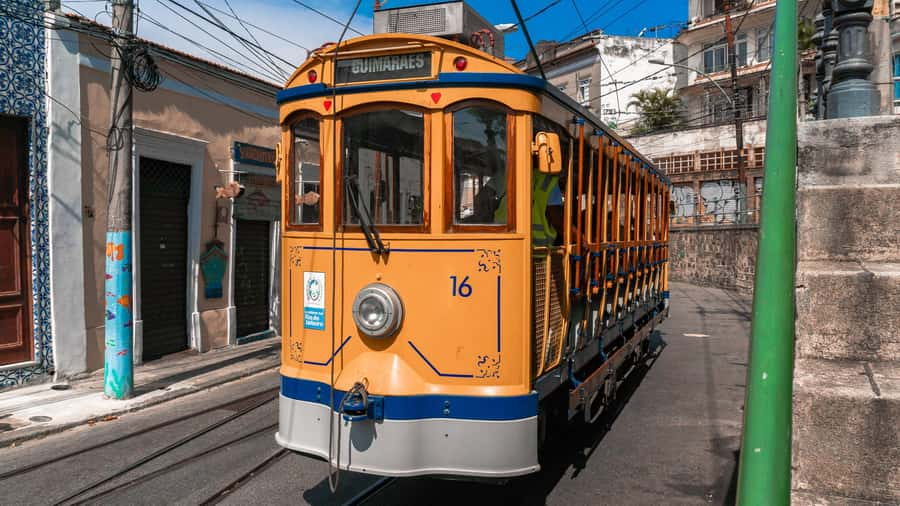
The best part of this outing is the Santa Teresa tram ride, which crosses the old Lapa Aqueduct before climbing into Rio’s artistic hillside neighborhood. You get a quick but lively look at several central districts without having to plan each stop yourself.
I like the contrast between Ruins Park’s quiet views and the colorful Selarón Steps below. I also like the finish at Confeitaria Colombo, where a pastry and a cup of coffee come with fine Art Nouveau details. The main concern is price: at $200 per person, this is costly for a four-hour tour that includes only the tram ticket, guide, and transport to and from selected hotels.
Key points to know
- The tram crosses the Arcos da Lapa, one of Rio’s most recognizable old structures.
- Santa Teresa feels unlike the beach districts, with narrow cobbled lanes and an artistic, village-like mood.
- Ruins Park offers broad views toward Sugarloaf Mountain from the remains of a former mansion.
- The Selarón Steps are seen on foot, with the route heading down into Lapa.
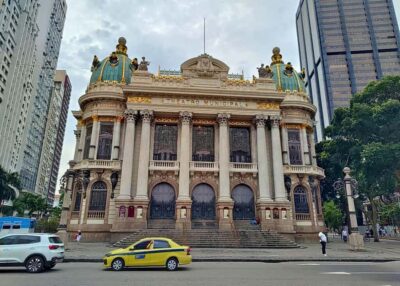
- Cinelândia brings grand public buildings, including the Theatro Municipal and Biblioteca Nacional.
- Confeitaria Colombo is closed on Sundays, and food and drinks cost extra.
The tram from Centro to Santa Teresa
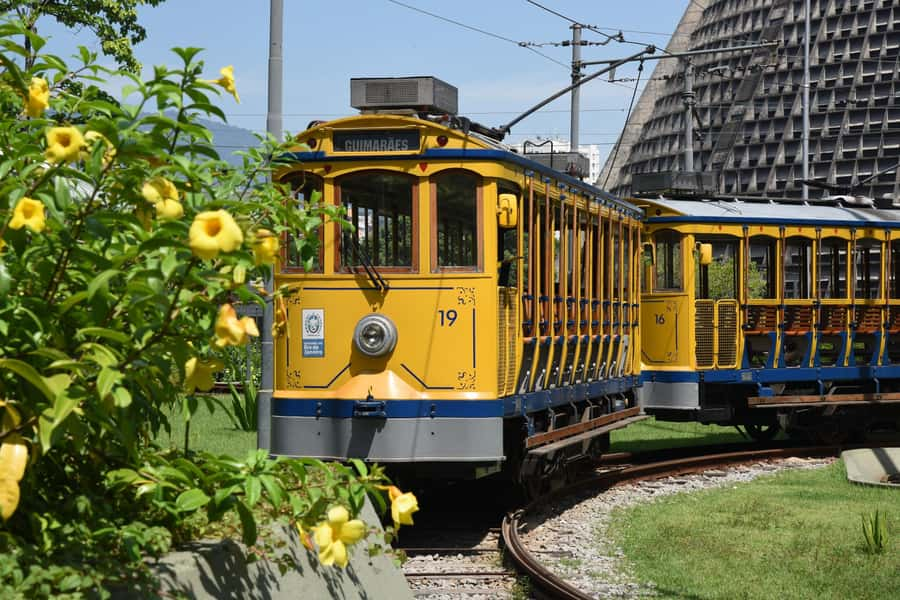
Your four-hour tour begins in Downtown Rio, known locally as Centro. If you are picked up at a hotel, that service applies to addresses in Copacabana, Leme, Ipanema, Leblon, and Barra da Tijuca. The tour then brings you to the tram departure point.
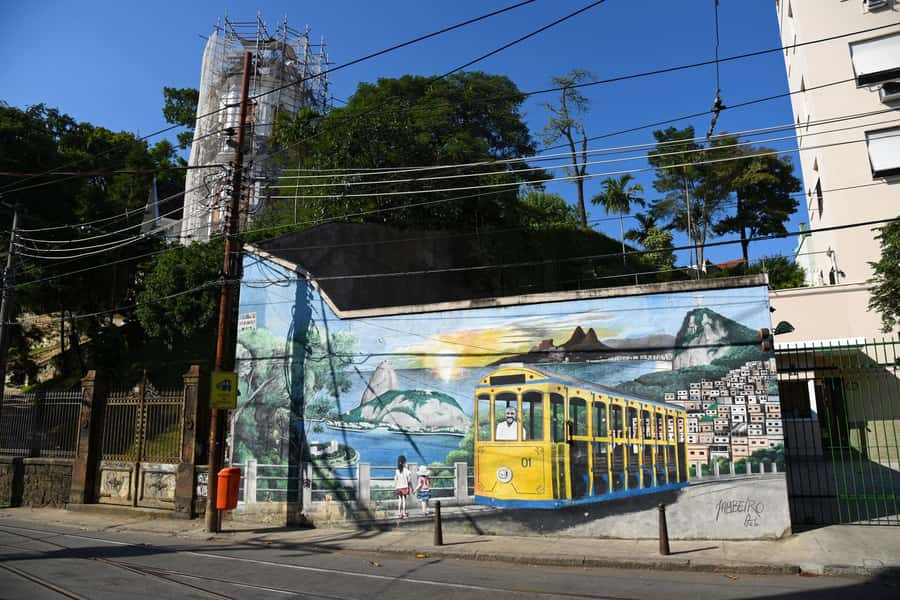
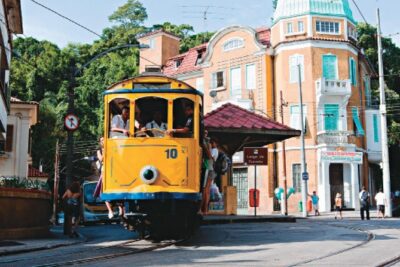
The tram, or bondinho, is the star of the morning. Its route links Centro with Santa Teresa by crossing the old Arcos da Lapa, a white stone aqueduct that once carried water and now carries the tram line over one of Rio’s most recognizable public spaces.
This is not a polished sightseeing bus. The tram gives you a more open view of the city and connects two parts of Rio that feel quite different. Below, Lapa has wide streets, old civic buildings, restaurants, and nightlife. Above, Santa Teresa has narrow cobbled lanes, creative studios, and a slower pace.
The ride is short enough to fit into a half-day schedule, but it is also the part most affected by crowds, street activity, and the pace of the group. You should think of it as a memorable link between neighborhoods rather than a long scenic railway trip.
More Santa Teresa tours:
- Santa Teresa, Lapa, and Cinelândia with Tram Ride and Selarón Steps
★ 4.5 · 274 reviews - Rio de Janeiro: Historic Rio and Santa Teresa Half-Day Tour
★ 4.4 · 228 reviews - Ancient Rio and Santa Teresa Tour with Hotel pick-up and drop-off
★ 4.5 · 154 reviews
Santa Teresa’s narrow lanes and creative character
Santa Teresa is often compared with Montmartre in Paris, a useful comparison if you want to picture a hilltop district with art, old buildings, and winding streets. The comparison has limits, but the neighborhood does have a distinct character that separates it from Rio’s seaside areas.
You will walk along narrow cobblestone lanes and see the district’s artistic side. The tour does not promise a long free period for shopping or independent wandering, so this is best for a first look rather than a full exploration of Santa Teresa.
I like this part because it lets you see Rio as a collection of neighborhoods, not just a postcard of beaches and mountains. Santa Teresa has a more local, lived-in feel, and the tram helps explain how the district connects with the city center.
The walking can be uneven because of the cobbles and slopes. Wear shoes with a firm sole, especially since the route later includes the Selarón Steps. Four hours is enough to sample Santa Teresa, but not enough to see every lane or gallery.
Ruins Park and views toward Sugarloaf
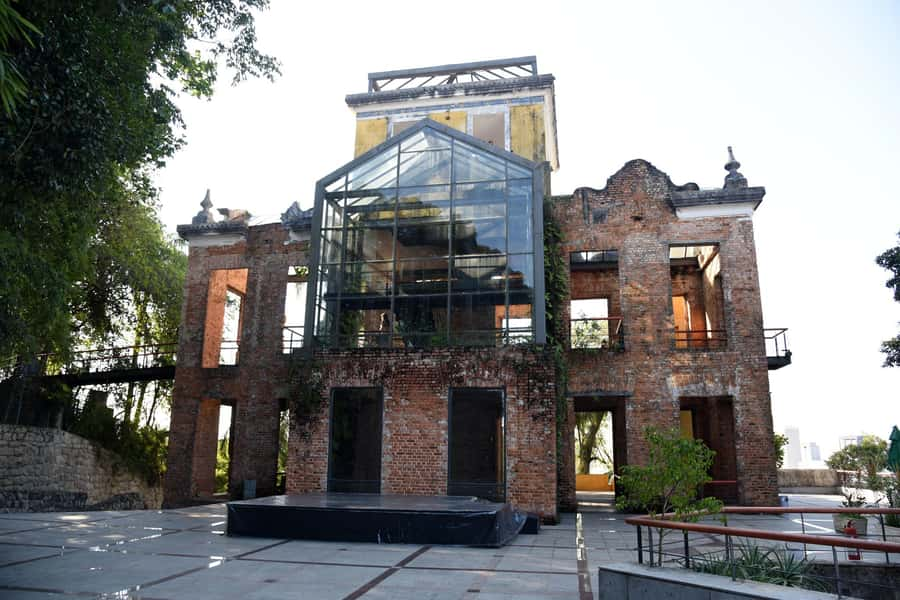
Ruins Park, or Parque das Ruínas, is one of the most unusual stops on the route. It occupies the remains of a historic mansion and includes an art gallery within the old structure.
The appeal comes from the mix of broken walls, open space, and city views. From here, you can look across Rio toward Sugarloaf Mountain. The setting gives you a useful pause after the tram ride and before the busier streets of Lapa.
This stop also adds some context to Santa Teresa. You are not simply walking through a pretty neighborhood. You are seeing how older buildings, public art, and high views have shaped the area’s identity.
Do not expect a major museum visit. The gallery is part of a public park, and the time available depends on the guide and the group. The value is in the atmosphere and the view, not in a large collection of exhibits.
Going down the Selarón Steps

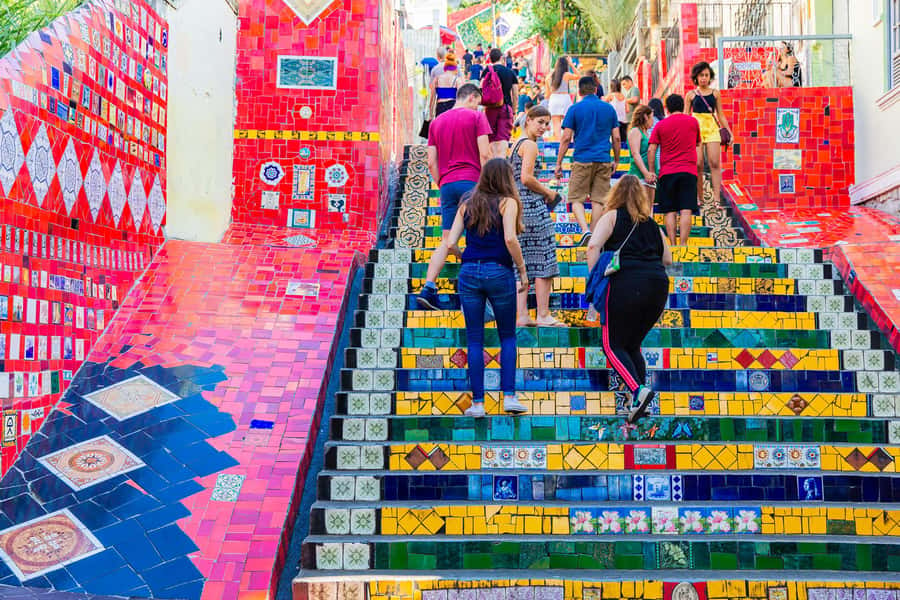
The tour then takes you to the Selarón Steps, one of Rio’s most recognizable public artworks. The staircase is covered with colorful ceramic tiles and offers a very different mood from the quiet remains at Ruins Park.
The route is described as a descent, which is useful to know. Going down is easier for many people than climbing the full staircase, but you still need to manage steps and uneven surfaces. If stairs are difficult for you, ask about the walking route before booking.
The steps connect Santa Teresa with Lapa in both a physical and visual sense. At the top, you have the hillside neighborhood. At the bottom, you reach one of central Rio’s liveliest districts.
This stop can feel crowded, and you will likely have limited time for photographs if the group is moving on. Still, the staircase is worth seeing because its color and scale are hard to understand from a quick photograph alone.
More samba nights in Rio de Janeiro:
- Rio de Janeiro: Beginner Samba Lesson in Ipanema
★ 4.9 · 1,071 reviews - Rio: Pub Crawl in Lapa with Cachaça Tasting and Live Samba
★ 4.7 · 881 reviews - Rio: Carnival Backstage Tour at Samba City with Cocktail
★ 4.6 · 520 reviews - Hop-ON Hop-OFF Sightseeing Bus in Rio de Janeiro – Rio Samba Bus
★ 3.5 · 457 reviews
Lapa, the Passeio Público, and Cinelândia

After the steps, the tour continues through Lapa, an area known for nightlife and social activity. During the day, you see a different side of the district, with its old architecture and public spaces rather than its evening music scene.
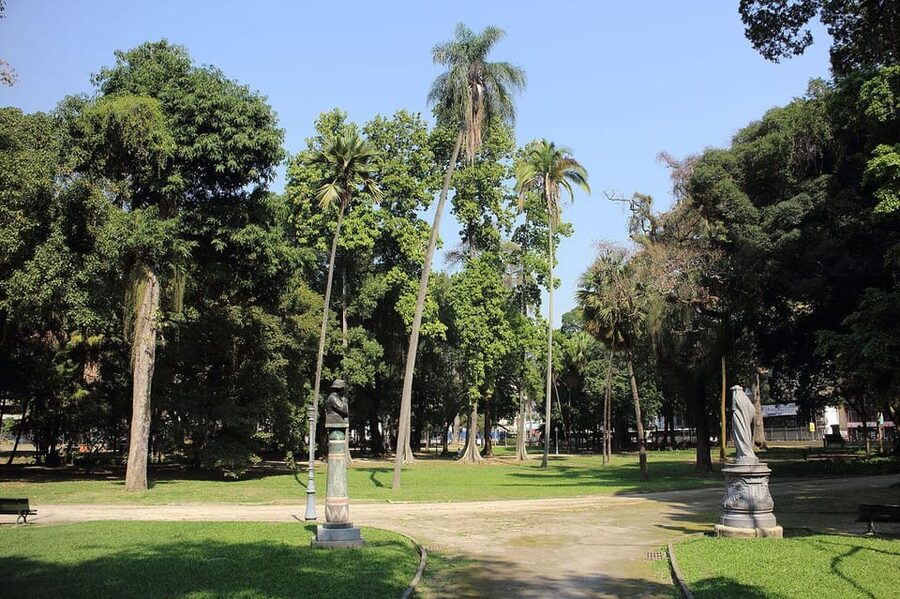
The Passeio Público is another important stop. It is described as South America’s oldest public park, giving the tour a chance to move beyond the most photographed sights. The park helps show how Rio once planned grand formal spaces in the center of the city.
From there, you reach Cinelândia, one of Rio’s main civic squares. The surrounding buildings include the Theatro Municipal and the Biblioteca Nacional. These are not just decorative façades. They show the scale and ambition of Rio’s early twentieth-century public architecture.
The Cinelândia section is especially useful if you care about architecture and city planning. It gives you a compact look at the formal center of Rio, which can otherwise be easy to miss when your attention is fixed on Sugarloaf, Christ the Redeemer, or the beaches.
The tradeoff is pace. You will see several landmarks within a few hours, but this is not a specialist architecture walk with long interior visits. The guide’s explanations matter here, since the buildings are more rewarding when you understand what you are looking at.
A final stop at Confeitaria Colombo
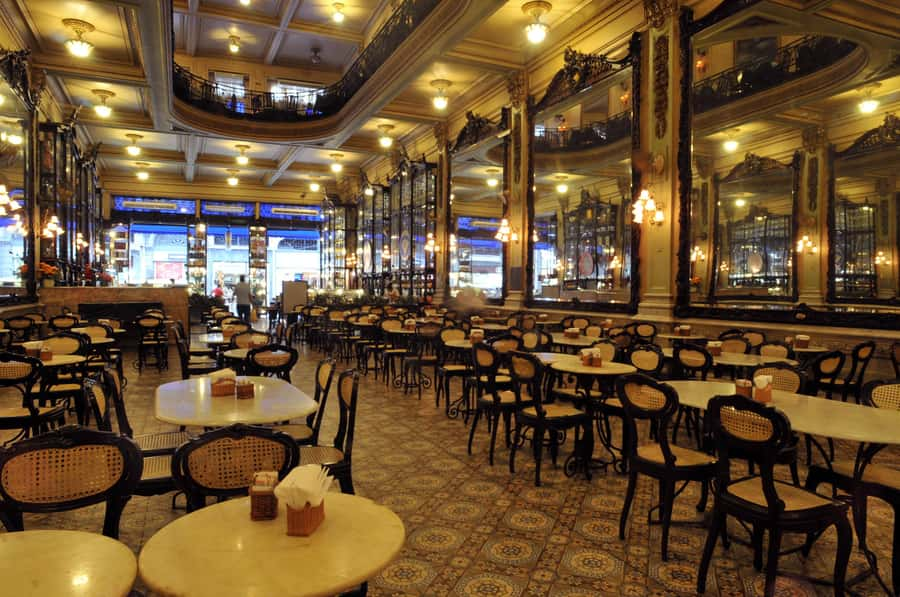
The tour finishes at Confeitaria Colombo, one of Rio’s best-known historic cafés. The interior is the reason to come: Art Nouveau decoration, stained glass, and mirrors imported from France, Portugal, and Belgium create a formal setting that feels far removed from the tram and the tiled steps.
You can order a Brazilian snack or sweet, but food and drinks are not included in the tour price. Options named for this visit include coxinha de frango, a savory chicken snack, and brigadeiro, a soft chocolate confection.
I like this ending because it gives the tour a comfortable pause and connects Rio’s public history with everyday food. You move from a tram line and an outdoor staircase to a café associated with the city’s early twentieth-century social life.
Confeitaria Colombo is closed on Sundays. If your booking falls on that day, you should confirm how the final stop is handled before paying. On other days, budget separately for anything you want to eat or drink.
What $200 buys you
The listed price is $200 per person. That is a serious amount for four hours, especially because meals, drinks, and any extra café purchase are not included.
You are paying for more than the tram fare. The package includes hotel pickup and drop-off from the South Zone and Barra da Tijuca, a live guide, and the Santa Teresa tram ticket. If you are staying outside those areas, the included transport does not apply, so the value calculation changes.
For a first visit to Rio, the route does cover a lot: Santa Teresa, the Lapa Aqueduct, Ruins Park, Selarón Steps, Passeio Público, Cinelândia, and Confeitaria Colombo. Organizing those stops independently would take time and would require working out the tram, walking route, and return transport.
Still, the cost is high for a half-day walking tour. One assessment described the guide as professional and well prepared but still felt the tour did not justify the price. That is a fair concern. You should book it for the convenience and concentrated route, not because it is a bargain.
The guide is offered in English, Portuguese, and Spanish. Guide quality can vary: one assessment specifically found the English difficult and the explanations confusing, while another praised the guide as very kind. If clear English commentary is important to you, confirm the language and ask about the guide before the tour begins.
Who will enjoy this route most
I would recommend this tour to you if you want a guided introduction to central Rio and prefer to see several districts in one morning or afternoon. It suits first-time visitors who want some help with transport, neighborhood context, and the city’s older landmarks.
It is also a good match if the Santa Teresa tram is high on your list. The tram ride is the feature that is hardest to replicate in a standard walking itinerary.
You may want another option if you prefer slow travel. The route has many stops, and four hours does not leave much room to linger at each one. Independent visitors could spend longer in Santa Teresa, take photographs at the steps, or sit at Confeitaria Colombo without watching the clock.
The tour is less suitable for anyone who dislikes stairs, uneven pavement, or hills. The cobbled streets and Selarón Steps are central to the outing, so this is not a flat, easy-access city walk.
Booking details worth checking
The activity lasts four hours, with starting times based on availability. Pickup and drop-off are included only for hotels in Copacabana, Leme, Ipanema, Leblon, and Barra da Tijuca.
You can cancel up to 24 hours in advance for a full refund, and the booking allows you to reserve now and pay later. Those terms help if your Rio schedule is still changing, but they do not reduce the main cost concern.
Bring water and wear comfortable shoes. Food and drinks are extra, and Confeitaria Colombo is closed on Sundays. The listed languages are English, Portuguese, and Spanish.
Should you book the Santa Teresa tram tour?

Book this tour if you value a smooth introduction to Rio’s central neighborhoods and want the tram, Selarón Steps, Ruins Park, and Cinelândia handled in one compact route. The hotel pickup is useful, and the mix of outdoor views, old architecture, public art, and Brazilian café culture gives you a broad first taste of the city.
Skip it if $200 feels too high for four hours or if you prefer to set your own pace. The route is appealing, but the price depends heavily on the convenience of the guide and transport. For the best value, choose it when the tram ride is a priority, your hotel falls within the pickup zones, and you are comfortable paying extra for food at Confeitaria Colombo.
FAQ
How long does the Rio de Janeiro Santa Teresa tour last?
The tour lasts four hours.
Which languages are available?
The live guide is available in Portuguese, English, and Spanish.
Is hotel pickup included?
Pickup and drop-off are included for hotels in Copacabana, Leme, Ipanema, Leblon, and Barra da Tijuca.
Is the Santa Teresa tram ticket included?
Yes. The Santa Teresa tram ticket is included.
Is food included in the price?
No. Food and beverages are not included. You can purchase items such as coxinha de frango or brigadeiro at Confeitaria Colombo.
Is Confeitaria Colombo open every day?
No. Confeitaria Colombo is closed on Sundays.
Just added around Rio de Janeiro
- Vidigal Favela Tour★ 4.4 · 26 reviews
- Hang gliding flight in Rio de Janeiro★ 5.0 · 6 reviews
- Rio de Janeiro: Zip Lining and Canopy Tree Tour★ 3.3 · 6 reviews
- Tijuca Forest Hike – Waterfalls & Caves, Nature & Wild Life!★ 5.0 · 51 reviews
- Unforgettable Boat Party★ 5.0 · 3 reviews
- Guided Tour to Favela Santa Marta★ 5.0 · 60 reviews
- Rio de Janeiro: Attend a Vasco da Gama game with local guide★ 4.8 · 9 reviews
- Rio Highlights: Christ, Sugarloaf, and More in a Private Tour★ 5.0 · 36 reviews
Santa Teresa Tours, compared.

Santa Teresa, Lapa, and Cinelândia with Tram Ride and Selarón Steps
Read our review →
Ancient Rio and Santa Teresa Tour with Hotel pick-up and drop-off
Read our review →
Walking tour of the bohemian neighborhoods of Santa Teresa and Lapa
Read our review →
Centro Historico and Lapa – Santa Teresa Walking, Historical and Bohemian Tour
Read our review →

Browse the lists this tour appears in