
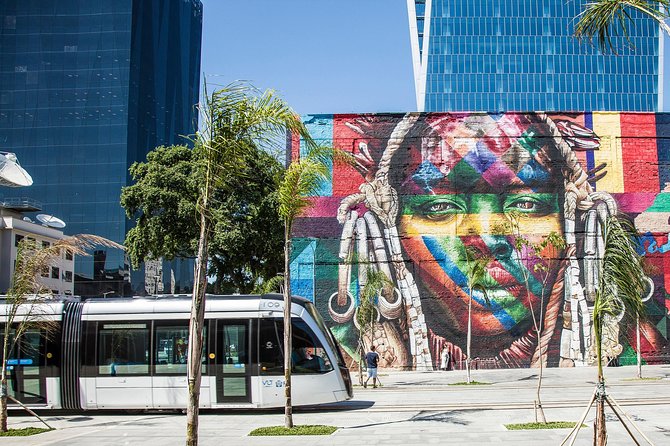
Review · RIO DE JANEIRO
Rio Street Art Tour
Rio’s street art is more than paint on walls. It is a running conversation about identity, politics, folk art, neighborhoods, and the artists who shape the city’s public spaces. This four-hour walk follows that conversation from Copacabana to Botafogo, with a stop at São João Batista Cemetery for an optional tribute to Chilean artist Selarón.
I like the small-group format, capped at 15 people, and I like that guide Nina explains the people and stories behind the work instead of treating murals as photo backdrops. The main caution is price: at $75 per person, this is a good fit for art lovers who want a focused guide, but it may feel costly if you simply want to see a lot of murals.
Key points to know
- Three distinct Rio neighborhoods: The route moves from Copacabana to São João Batista Cemetery and finishes in Botafogo.
- Nina’s artist-focused guidance: Nina is praised for explaining individual artists, their work, and the personal stories tied to Rio’s street-art scene.
- About four hours on foot: The scheduled time is roughly 1 hour 30 minutes in Copacabana, 1 hour 10 minutes at the cemetery, and 1 hour 20 minutes in Botafogo.
- A small group helps: With no more than 15 people, you have a better chance to ask questions and keep up with the guide.
- No hotel transport: You meet at Rua Siqueira Campos in Copacabana and finish near the Nelson Mandela Park metro station in Botafogo.
- Weather matters: The experience can be canceled for poor weather, with a new date or full refund offered.
Why Rio’s street art deserves a walking tour

Rio’s public art is easy to spot but harder to understand on your own. A mural may look striking in a photograph, yet its meaning can depend on the artist, the neighborhood, local traditions, or a story that is not obvious from the pavement.
That is where a guide adds real value. Nina’s role is not just to lead you from wall to wall. She explains Brazilian artists and helps you recognize their styles as the walk continues. One particularly useful detail from the tour experience is that she can point out current artists such as Rafamon, whose work you may notice again elsewhere in Rio.
I like this approach because it trains your eye. By the end, you are not only looking at color and scale. You are beginning to connect names, techniques, and recurring ideas. That makes the city’s art easier to appreciate during the rest of your stay.
The tour also links street art with everyday city life. You walk through neighborhoods, pass buildings and houses, and hear about the local scene as it appears in public space. This is less formal than a museum visit and more connected to the streets where Rio’s culture keeps changing.
A few more Rio de Janeiro tours worth weighing up
- Rio Street Art Tour
★ 5.0 · 39 reviews
Copacabana begins with art and local context
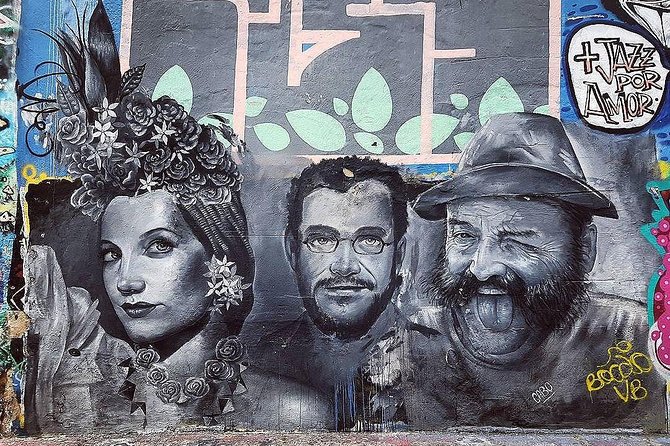
The tour starts at Rua Siqueira Campos, 96, in Copacabana. The first section lasts about 1 hour and 30 minutes, and it focuses on art around the neighborhood while introducing the wider street-art scene in Rio.
Copacabana is a practical starting point because it is familiar to many visitors, yet the tour directs your attention away from the usual beach-and-boardwalk view. You look at art on buildings and houses, with Nina adding context about the work and the city around it.
This portion should suit you if you want a gentle beginning. You are not dropped straight into a long technical lecture. Instead, the guide can help you get used to the way the tour works: notice a piece, identify the artist when possible, then connect it to local culture.
A small group matters here. In a group of 15 or fewer, you can ask why a certain work matters, how artists are identified, or what has changed in the neighborhood. Nina is also described as checking that people have time to rest and drink water, a useful habit on a warm Rio day.
Do not expect a museum with a fixed collection. Street art can change, disappear, or be added to. The value lies in the guide’s current understanding of the scene and in the way the route uses the neighborhood itself as the setting.
São João Batista Cemetery and the Selarón connection
The second stop is São João Batista Cemetery, with about 1 hour and 10 minutes scheduled. The group can choose to visit the final resting place of Selarón, the Chilean artist associated with one of Rio’s best-known public art projects.
This is the most intimate part of the route. Instead of viewing art only on large walls, you encounter a personal memorial connected to an artist whose work has become part of Rio’s visual identity. The cemetery setting changes the pace and gives the tour a quieter, more reflective moment.
The stop is optional, so it is useful to understand what that means before booking. If you are mainly interested in large murals, this may feel like a detour. If you care about artists as people and want to understand how their lives connect to Rio, it can be one of the more memorable parts.
The schedule gives this section more than a quick photo stop. You have time to hear the story and consider the relationship between public art and personal legacy. That is a welcome change from racing through a list of walls.
Because this is a cemetery, you should approach it respectfully. The appeal is not only the name attached to it. It is the chance to see how an artist’s connection with the city can continue after his death.
Botafogo finishes with more art and a youthful feel
The final section lasts about 1 hour and 20 minutes and takes place in Botafogo. The tour ends at Parcão da Nelson Mandela, near R. Nelson Mandela, 53-31, by another metro station.
Botafogo gives the walk a different setting from Copacabana. The neighborhood is described as young and full of art and stories, so the ending keeps the focus on current city life rather than closing with a formal museum-style conclusion.
This is also a useful place to finish because you are left near public transportation. You do not return to the starting point, so plan your onward route before you begin. The end point is convenient for continuing your day, but you should not assume hotel drop-off or a ride back to your accommodation.
One of the strongest features of this final stretch is the sense of progression. You begin by learning how to look at Rio’s street art, pause for an artist’s memorial, and finish in another neighborhood where you can apply what you have learned. That makes the tour feel like a connected walk through the city rather than three unrelated stops.
The route does require walking and outdoor exposure. Most people can take part, but children must be accompanied by an adult. Service animals are allowed, and the tour is near public transportation.
Same city, a completely different kind of day:
- Rio de Janeiro: 6-Stop Highlights of Rio with Lunch
★ 4.4 · 5,157 reviews - Christ the Redeemer Entry Ticket by Corcovado Train
★ 4.4 · 4,476 reviews - Rio de Janeiro: Rocinha Favela Walking Tour with Local Guide
★ 4.8 · 3,052 reviews - Rio: Christ the Redeemer, Sugarloaf, Selaron & BBQ Lunch
★ 4.5 · 2,428 reviews
Nina’s guiding style is the main reason to book
The guide can make or break a street-art tour. Here, Nina is the central strength. She is described as passionate about art, easy to understand in English, patient, and willing to explain both major and lesser-known artists.
Her approach appears to go beyond basic labels. She shares stories behind the graffiti, explains the artists themselves, and can make the installations feel connected to the people who created them. She also has a sense of humor and a relaxed manner, which helps keep four hours from feeling like a classroom session.
I especially like the practical way she helps you recognize artists. One person who took the tour later identified Rafamon’s work elsewhere in Rio after Nina had made a detour to show more of his murals. That kind of knowledge stays useful after the tour ends.
Nina also appears willing to adjust within reason. She has taken slight detours, checked on rest and water needs, and helped people who went to the wrong nearby metro station find the correct meeting point. Still, you should arrive at the stated location, rather than depend on last-minute rescue.
The tour has earned a 5 out of 5 rating from 76 people, with 99 percent recommending it. Those figures suggest a strong track record, but they do not remove the main question: are you paying for access to information and interpretation, or only for the walk? The answer matters because the price is not low.
Is $75 per person fair?
At $75 per person, the tour sits in the premium range for a four-hour walking experience. There is no vehicle, fuel, hotel pickup, or meal included. You are paying mainly for Nina’s time, language skills, local connections, and ability to explain Rio’s art scene.
That can be fair if you are genuinely interested in street art. A good guide helps you see work you might pass without noticing, understand who made it, and place it within the neighborhoods you are visiting. The smaller group also gives you more access to the guide than a large city walk would.
The value is less clear if your goal is simply to collect photographs of murals. Some people may prefer a longer, cheaper walk or a private guide who covers more of Rio. One person considered $30 to $35 per person a more suitable price after comparing this experience with longer guiding services.
I would judge the price this way:
- Book it if you want artist stories, cultural context, and a focused route.
- Think twice if you measure value mainly by hours, distance, or the number of murals seen.
- Compare it with other art walks in Rio if budget is important.
- Remember that the group limit of 15 gives you a more personal setting, but it is not the same as a private tour.
The tour is often booked about 44 days ahead, so advance planning may be sensible if your Rio dates are fixed. Confirmation arrives within 48 hours of booking and depends on availability.
Who will get the most from this experience?

This tour is best for you if street art is a real travel interest, not just an occasional photo stop. It also suits anyone who wants a local guide to explain how art fits into neighborhood life.
Solo visitors should find the small group useful, since the walk gives you a shared activity without the commitment of a private tour. Couples and families can also take part, though children need an adult with them.
It is a good choice for:
- Art lovers who want to identify Brazilian artists.
- First-time visitors seeking a different view of Rio.
- People who enjoy walking through neighborhoods while learning.
- Visitors comfortable spending four hours outdoors.
- Anyone interested in the personal stories behind public art.
It may not suit you if you want hotel pickup, a vehicle, a short sightseeing stop, or a tour built around major landmarks. It also may not be right if you dislike walking or do not want an experience affected by weather.
Practical details before you go
The meeting point is at Rua Siqueira Campos, 96, in Copacabana. The tour ends at Parcão da Nelson Mandela, near R. Nelson Mandela, 53-31, in Botafogo, close to another metro station. Since the start and finish are different, check your route before setting out.
Alcoholic drinks are not included, though they are available to purchase. The tour includes the local guide and all listed activities, but not hotel pickup or drop-off.
Wear comfortable walking shoes and bring water. That advice follows the nature of the outing: you will move through three areas over roughly four hours, with time outdoors and no included transport between the stops.
Confirmation is sent within 48 hours, subject to availability. You can cancel without penalty up to 24 hours before the start time for a full refund. A cancellation made less than 24 hours ahead is not refunded, and changes inside that window are not accepted.
Good weather is required. If poor conditions cause the tour to be canceled, you are offered another date or a full refund.
Should you book the Rio Street Art Tour?
Book this tour if you want Rio’s street art explained by someone who follows the artists and cares about the local scene. Nina’s guidance, the small group, the Selarón memorial, and the neighborhood-to-neighborhood route give the experience more purpose than a simple mural hunt.
Skip it if $75 feels high for a four-hour walk, especially if you would rather cover more ground with a vehicle or choose a longer private tour. The price is easiest to justify when you value interpretation, conversation, and the chance to recognize artists later in your trip.
For an art-focused visit to Rio, I would consider it a worthwhile splurge. For a budget-focused itinerary, compare alternatives first.
FAQ
How long is the Rio Street Art Tour?
The experience lasts approximately four hours.
Where does the tour start?
It starts at Rua Siqueira Campos, 96, in Copacabana, Rio de Janeiro.
Where does the tour end?
It ends at Parcão da Nelson Mandela, near R. Nelson Mandela, 53-31, in Botafogo, by another metro station.
Which neighborhoods are included?
The route includes Copacabana, São João Batista Cemetery, and Botafogo.
Is a visit to Selarón’s resting place required?
No. The group can choose whether to see the intimate tribute to Chilean artist Selarón at his resting place.
How many people can join the tour?
The maximum group size is 15 people.
Is hotel pickup included?
No. Hotel pickup and drop-off are not included.
What happens if bad weather cancels the tour?
You will be offered another date or a full refund.
Just added around Rio de Janeiro
- Rio de Janeiro: Zip Lining and Canopy Tree Tour★ 3.3 · 6 reviews
- Vidigal Favela Tour★ 4.4 · 26 reviews
- Hang gliding flight in Rio de Janeiro★ 5.0 · 6 reviews
- Tijuca Forest Hike – Waterfalls & Caves, Nature & Wild Life!★ 5.0 · 51 reviews
- Unforgettable Boat Party★ 5.0 · 3 reviews
- Guided Tour to Favela Santa Marta★ 5.0 · 60 reviews
- Rio de Janeiro: Attend a Vasco da Gama game with local guide★ 4.8 · 9 reviews
- Rio Highlights: Christ, Sugarloaf, and More in a Private Tour★ 5.0 · 36 reviews