
Review · RIO DE JANEIRO
Rio Street Art Tour
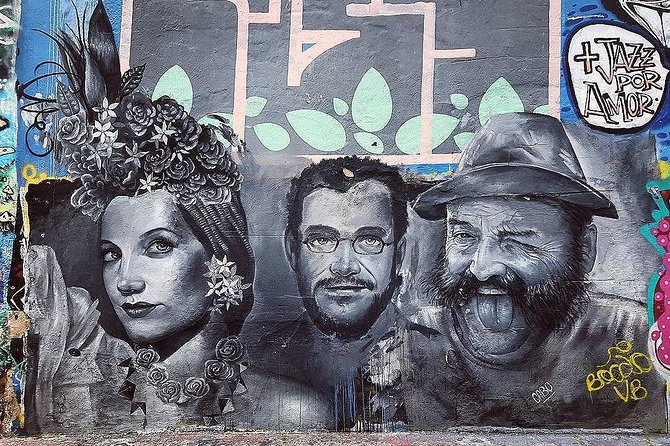
Rio’s street art is not just decoration. It is a public record of Rio de Janeiro, covering slavery, politics, Carnival, race, neighborhood change, and the city’s complicated relationship with public space. This private tour with Wellington uses murals and graffiti as the thread tying central Rio together.
I like two things right away: you get beyond the usual postcard stops, and you travel like a local, using the subway, VLT tram, and your own feet. The guide also adds architecture, Carnival, and city history, so the tour feels like a moving introduction to Rio rather than a quick mural checklist.
The main consideration is the pace. Three hours includes a lot of walking, several stops, and public transportation. Bring water, wear comfortable shoes, and expect the art to be spread across busy central neighborhoods rather than gathered in one compact gallery.
Key points
- A private route through central Rio: Only your group takes part, making it easier to ask questions and adjust the conversation.
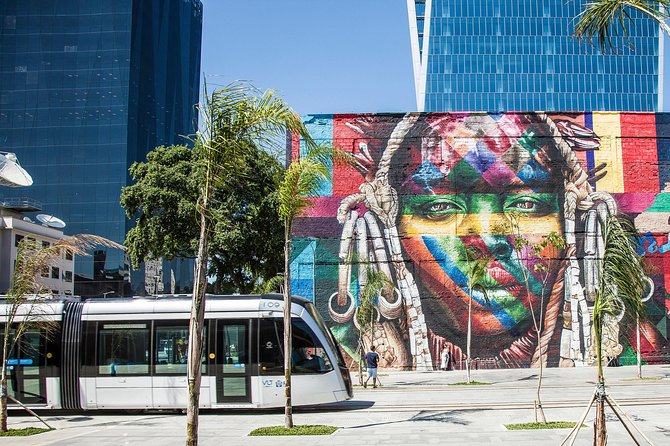
- The Etnias mural at Porto Maravilha: The tour ends near the enormous graffiti work often described as the world’s largest graffiti mural.
- More than painted walls: Wellington connects the art to Rio’s politics, architecture, slavery, Afro-Brazilian culture, Carnival, and samba schools.
- Public transit is part of the experience: You’ll use the subway and VLT tram, not a sightseeing coach.
- Selarón Steps included: The famous tiled staircase gives the tour a recognizable landmark alongside less obvious street art.
- Strong overall record: The experience is rated 4.9 out of 5 from 39 ratings, with 100 percent recommending it.
Why Rio’s street art tells a bigger story
Rio’s murals are a good way to read the city because they sit where daily life happens. You are not looking at art in a quiet museum with a label beside each work. You are seeing it beside train lines, old civic buildings, port streets, museums, restaurants, and neighborhoods shaped by migration and forced labor.
That setting matters. A painted face or political image can mean something different when you learn who lives nearby, how the area changed, and why the wall was painted there. Wellington’s style, based on the tour’s description and the many detailed comments about his guiding, is to explain those connections in plain language while keeping the walk moving.
I especially like the way this experience adds Afro-Brazilian culture and Little Africa to the route. The port district is closely tied to the history of enslaved Africans in Brazil, and the art becomes more meaningful when you understand that background. This is one of the strongest reasons to choose the tour over simply photographing murals on your own.
Wellington is also praised for speaking excellent English and for welcoming questions. One especially personal touch noted in the experience is his willingness to help with Portuguese practice. That can make the walk feel more like time with a local guide than a formal lecture.
A few more Rio de Janeiro tours worth weighing up
- Rio Street Art Tour
★ 5.0 · 76 reviews
Starting beside the Municipal Theater
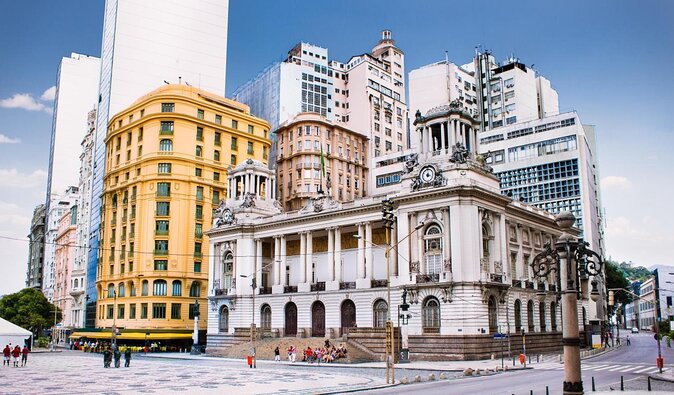
The meeting point is at the Municipal Theater of Rio de Janeiro in Praça Floriano, in central Rio. This puts you in Cinelândia, an area surrounded by major public buildings and grand European-influenced architecture.
The tour description places the first section in Glória, reached by subway, where you begin by looking at Rio’s first legalized graffiti. That is a useful opening because it gives you a starting point for understanding how public art moved from something often treated as illegal or unwanted toward a recognized part of the city.
From there, the guide brings in the architecture of central Rio. The contrast is part of the fun: formal theaters, libraries, and civic buildings on one side, bold painted walls on the other. You get to see how Rio’s public identity is built from many layers rather than one neat architectural style.
This opening section is not designed as a long museum visit. Admission to the listed stops is free, and the focus stays outdoors. You should expect to pause for explanations, photographs, and close looks at the work before continuing on foot or by transit.
Selarón Steps: famous, colorful, and worth context
The Escadaria Selarón is one of Rio’s best-known public art sites. Chilean artist Jorge Selarón covered the staircase in colorful tiles, and the steps have become one of the city’s most photographed places.
The tour gives you about 20 minutes here. That is enough to see the staircase, take pictures, and hear how it fits into the wider story of Rio’s public art. It is also a useful counterpoint to the less famous murals elsewhere on the route. Selarón Steps are polished by tourism and easy to find, while the other works often require someone who knows the city’s streets.
Do not expect a long, private visit. This is a public site and can be crowded. The value comes from having the staircase placed in a larger cultural route instead of treating it as an isolated photo stop.
The tour may finish near the staircase according to one detailed account, while the published route also places the final stop at Porto Maravilha. The practical point is to confirm the exact end location with the provider before you set a dinner reservation or another activity. The listed meeting point is definitely the Municipal Theater, while the activity ends elsewhere.
Cinelândia and central Rio’s civic face
Cinelândia brings the tour back to the formal center of the city. You will see major libraries and Rio’s main theater, with the surrounding buildings showing the European influence that shaped parts of central Rio.
This is where Wellington’s wider commentary matters. The street art is only one part of the story. You can also hear about architecture, political events, Carnival, samba schools, and how central Rio developed. Several detailed accounts describe the tour as a way to understand the city through its public spaces rather than simply collecting mural photographs.
After this section, the group takes the VLT, Rio’s light rail tram, toward the Olympic Boulevard area. Using public transit keeps the route grounded in ordinary city life. It also means you should stay alert, keep your belongings secure, and follow the guide’s instructions during transfers. The tour includes transportation as part of the outing, but it is not a private vehicle experience.
Same city, a completely different kind of day:
- Rio de Janeiro: 6-Stop Highlights of Rio with Lunch
★ 4.4 · 5,157 reviews - Christ the Redeemer Entry Ticket by Corcovado Train
★ 4.4 · 4,476 reviews - Rio de Janeiro: Rocinha Favela Walking Tour with Local Guide
★ 4.8 · 3,052 reviews - Rio: Christ the Redeemer, Sugarloaf, Selaron & BBQ Lunch
★ 4.5 · 2,428 reviews
Olympic Boulevard and Rio’s museum district
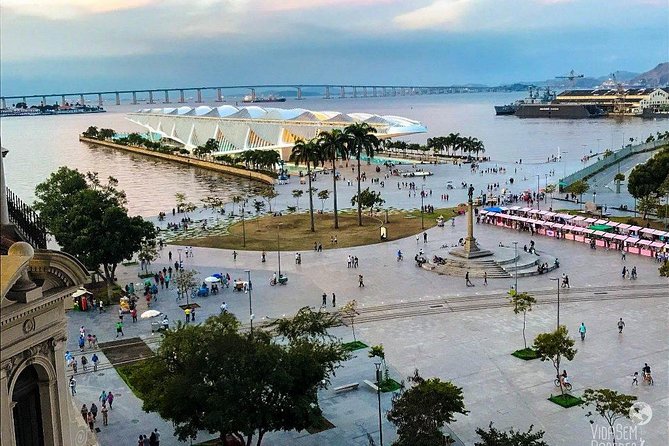
The Olympic Boulevard area is home to several of Rio’s main museums. It was reshaped around the city’s Olympic-era redevelopment, and its open public spaces provide a striking setting for large-scale art.
The tour lists about 30 minutes here. You may see the Museum of Tomorrow and the Museu de Arte do Rio in or near the route, but this experience is not presented as a museum admission tour. The emphasis is on the outdoor art, the district itself, and the relationship between new cultural buildings and older port neighborhoods.
This part of the walk is useful if you want a first look at Rio’s museum zone without spending half a day inside one institution. It also gives the murals room to breathe. Large works are easier to appreciate when you can step back and see their full scale.
One practical point: the official route uses the name Boulevard Olimpico more than once, so the sequence can sound confusing on paper. In practice, think of the day as a connected walk through central Rio: start around Cinelândia and Glória, pass Selarón Steps, ride the VLT, then continue into the port district.
Porto Maravilha and the Etnias mural
The tour’s longest stop is Porto Maravilha, with about an hour set aside for the area. This is where you see the Etnias mural, often described as the largest graffiti mural in the world.
The work was created by Brazilian artist Eduardo Kobra for the Rio Olympics and represents Indigenous people from different parts of the world. The scale is the point. You need time to stand back, look across the full wall, and then study the color and faces close up.
A good guide makes a large mural easier to understand. Wellington explains the messages in the work, the history of the port area, and its connection to enslaved Africans. That gives the final stop more weight than a simple big wall, quick photo ending.
Porto Maravilha also places you near Little Africa, the Museum of Tomorrow, and the Museu de Arte do Rio. Depending on the exact route and timing, you may also hear about the old port’s role in Rio’s development. The tour does not promise museum entry, so plan a separate visit if you want to go inside.
The port district can feel more open and spread out than the earlier streets. That is good for seeing the mural, but it contributes to the walking load. Give yourself enough energy for the final hour, especially in warm weather.
What the public transit adds
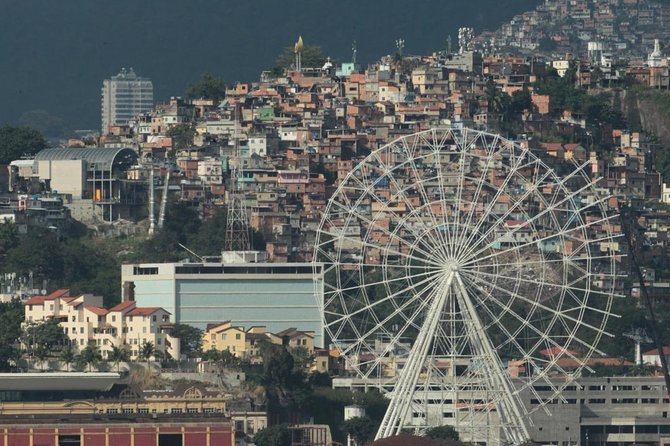
The subway and VLT are not just ways to move between sights. They help you see how this part of Rio functions beyond the usual visitor route. You are changing neighborhoods, watching the city from street level, and moving between old civic Rio and the redeveloped port.
This also makes the tour more active than a coach excursion. You will walk, wait, ride, and walk again. One account describes an easy walking route but still advises bringing water, and another specifically notes that there is lots of walking. Both points can be true: the route is manageable for most people, but it is not a sit-down activity.
The tour is listed as suitable for most people and is near public transportation. Still, anyone with limited stamina should ask for a precise route before booking. The available details do not promise step-free access, a private vehicle, or a reduced walking version.
A private tour with room for questions
This is a private activity, so only your group participates. That can be a major advantage in a subject as broad as Rio’s street art. You can stop to ask about a mural, request more information about Little Africa, or spend less time on a topic that does not interest you.
The private format also suits solo visitors. A solo booking still receives the full experience rather than being dependent on a minimum group size. For families, it lets the guide adjust the pace and explain difficult subjects, such as slavery or political conflict, in a way that fits the group.
Wellington receives especially strong praise for being friendly, animated, and easy to talk with. His best quality for this route is not simply knowing facts. It is the ability to connect a mural to the larger city and to add personal stories from life in Rio.
There is one useful note for repeat visitors: some of the works are older, and one suggestion was to add newer graffiti. Street art changes quickly, so the exact selection can shift over time. If you have already seen the main murals, ask Wellington what newer pieces are currently on the route.
Price, timing, and practical value
The cost is $68.61 per person for about three hours. That is not the cheapest way to look at murals, since you can walk through parts of central Rio without a guide. The value comes from the private format, the use of public transit, the interpretation, and the range of subjects covered.
You are paying for more than a photo route. The tour includes central architecture, Selarón Steps, Olympic Boulevard, Porto Maravilha, Little Africa, and the Etnias mural, with history and culture woven through the stops. If Wellington helps you understand why a work was created and what the surrounding neighborhood means, the price can be fair for a first day in Rio.
I would book it early if the timing matters. It is commonly reserved about 30 days ahead, and the private setup means limited availability can matter more than it would for a large group excursion.
The tour lasts about three hours, but allow extra time before and after it. The route uses public transportation and ends in a different location from the meeting point. Comfortable shoes, water, sun protection, and a small bag are sensible choices.
Confirmation arrives at booking. Free cancellation is available up to 24 hours before the start time. Changes or cancellations inside that window are not accepted for a refund. The experience requires good weather, so a weather cancellation brings the choice of another date or a full refund.
Who should book this Rio street art tour
I would choose this tour if you want Rio explained through neighborhoods, public spaces, and local culture. It is particularly good for first-time visitors who want an introduction to central Rio without spending the entire day inside formal attractions.
It also suits anyone interested in:
- Street art and large public murals
- Afro-Brazilian culture and the history of Little Africa
- Carnival and samba school traditions
- Rio’s architecture and civic landmarks
- Small private tours with plenty of questions
- Seeing the city by subway, tram, and on foot
I would think twice if you dislike walking, public transportation, hot-weather sightseeing, or stops that focus on social and political history. If your only goal is to see the Etnias mural and Selarón Steps, you can visit major landmarks more directly. You will get the best value here if you want the context connecting them.
Should you book it?
Yes, if you want a thoughtful introduction to Rio rather than a quick list of attractions. The strongest parts are Wellington’s personal approach, the links between art and city history, the visit to Little Africa and Porto Maravilha, and the chance to see central Rio through ordinary public transportation.
Before booking, confirm the final meeting point and ask what murals are currently included. Then bring water and comfortable shoes. For a private three-hour experience priced at $68.61, this is a good pick for people who want street art to open the door to Rio’s culture, politics, architecture, and past.
FAQ
Where does the Rio Street Art Tour start?
It starts at the Municipal Theater of Rio de Janeiro, at Praça Floriano in central Rio.
Where does the tour end?
The activity ends in a different location from the starting point. The route finishes in the Porto Maravilha area, near the Etnias mural, though you should confirm the exact end point with the provider.
How long does the tour last?
The tour lasts approximately three hours.
Is this a private tour?
Yes. Only your group participates in the activity.
Does the tour include public transportation?
Yes. The route uses the subway and the VLT tram, along with walking between the stops.
What happens if the weather is poor?
The experience requires good weather. If it is canceled because of poor weather, you can choose a different date or receive a full refund.
Just added around Rio de Janeiro
- Vidigal Favela Tour★ 4.4 · 26 reviews
- Hang gliding flight in Rio de Janeiro★ 5.0 · 6 reviews
- Rio de Janeiro: Zip Lining and Canopy Tree Tour★ 3.3 · 6 reviews
- Tijuca Forest Hike – Waterfalls & Caves, Nature & Wild Life!★ 5.0 · 51 reviews
- Unforgettable Boat Party★ 5.0 · 3 reviews
- Rio de Janeiro: Attend a Vasco da Gama game with local guide★ 4.8 · 9 reviews
- Guided Tour to Favela Santa Marta★ 5.0 · 60 reviews
- Rio Highlights: Christ, Sugarloaf, and More in a Private Tour★ 5.0 · 36 reviews