
Review · SANTA TERESA TOURS
Ancient Rio and Santa Teresa Tour with Hotel pick-up and drop-off
Rio’s past comes into focus on this compact tour, which links the bohemian hills of Santa Teresa with the grand squares and public buildings of downtown. You’ll see old mansions, the famous Lapa aqueduct, narrow lanes, ferry docks, theaters, libraries, and the remains of Rio’s early 20th-century makeover.
I like the contrast between Santa Teresa’s leafy streets and Ancient Rio’s formal architecture. I also like the air-conditioned vehicle and hotel return, a real help in Rio’s heat. The main caution is pace: four hours covers a lot, so this is better for seeing the city’s shape than for lingering inside museums or riding the tram.
Key points to know before booking
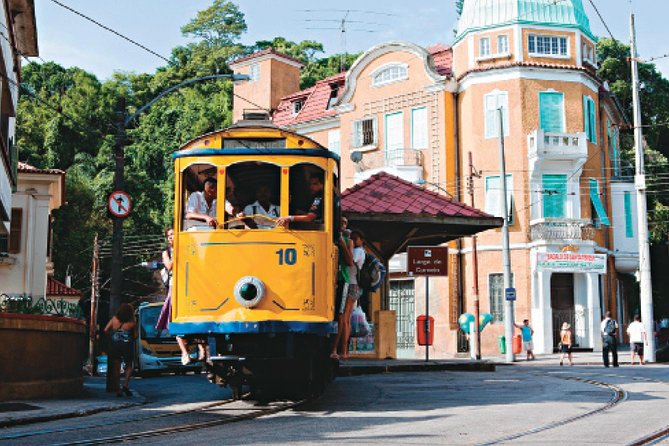
- Santa Teresa’s 1897 tram: You can see Rio’s famous yellow streetcar, but a tram ride is not included in the standard shared tour.
- A useful first-day orientation: The route fills in the story behind Rio beyond Christ the Redeemer and Sugarloaf Mountain.
- Mostly exterior sightseeing: The National Museum of Fine Arts, Theatro Municipal, and National Library are viewed from outside.
- A small-group feel is possible: The minivan can hold up to 19 people, though some departures use a private car or a much smaller group.
- Expect uneven walking: Santa Teresa has old cobblestones, hills, and streets that can be tiring for anyone with mobility problems.
- Timing matters: Mondays, holidays, New Year’s Day, Carnival, and poor weather can affect openings, traffic, and the order of the route.
Santa Teresa begins the story on Rio’s hillside
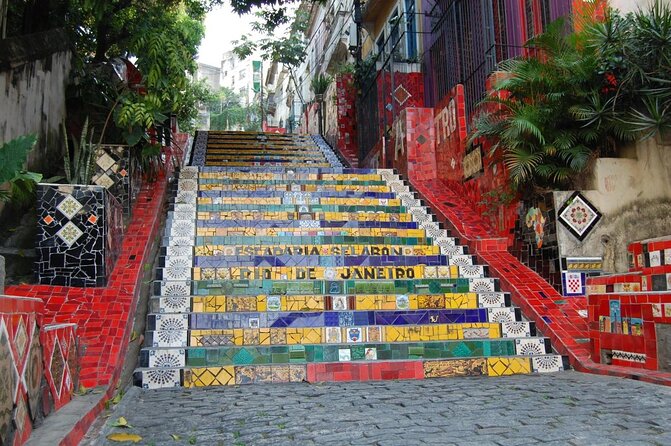
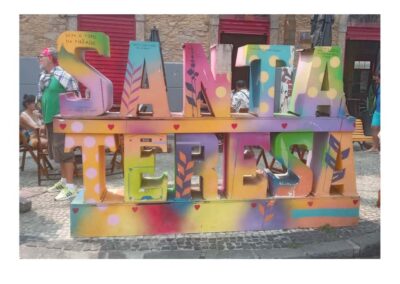
Santa Teresa is the most atmospheric part of the tour. This old hillside neighborhood has a slower feel than the city below, with large early 20th-century homes, art studios, colorful walls, and streets that twist around the slopes.
The neighborhood became home to painters and other artists, and that creative character still shapes the visit. You’ll have time to look at the old façades and get a sense of how Santa Teresa developed as a residential district above central Rio.
The famous tram is an important part of the neighborhood’s identity. Built in 1897, it remains one of Rio’s best-known symbols of old Santa Teresa. You should be clear about what the tour provides, though: the standard route lets you see the tram and learn about it, but does not include a ride. A tram trip takes extra time, which is why it is generally better suited to a private itinerary.
The walking here is not a smooth city stroll. Expect uneven cobblestones and some slopes. Wear shoes with a firm sole, and take care around the old streets. If walking is difficult for you, tell the operator in advance. One guide, Monica, was praised for adjusting the route for a husband who had trouble walking, but you should not assume every departure can make the same changes.
More Santa Teresa tours:
- Santa Teresa, Lapa, and Cinelândia with Tram Ride and Selarón Steps
★ 4.5 · 274 reviews - Rio de Janeiro: Historic Rio and Santa Teresa Half-Day Tour
★ 4.4 · 228 reviews - Walking tour of the bohemian neighborhoods of Santa Teresa and Lapa
★ 5.0 · 59 reviews
Parque das Ruínas adds art and a fine city view
The Centro Cultural Municipal Parque das Ruínas occupies the former home of Laurinda Santos Lobo, an important supporter of artists. Today, the building serves as a cultural center and preserves her connection with Rio’s art world.
The stop lasts about 20 minutes and admission is free. This is not a long museum visit. Instead, you’ll see the setting, hear why Laurinda mattered, and take in the cultural role of Santa Teresa.
The old structure also provides one of the tour’s more memorable settings. It helps explain why the neighborhood attracted artists and why Santa Teresa feels different from the formal center below. If you want a fuller look at exhibitions or cultural spaces, you’ll need to return on your own.
Lapa Arches show Rio’s old water system
The Arcos da Lapa are among Rio’s most recognizable structures. The white arches once carried water into the city. Now they support the tram line linking Santa Teresa with the lower part of Rio, giving an old public work a second life.
The stop lasts about 30 minutes. You can inspect the arches, photograph the long row of stone openings, and connect the aqueduct with the tram you saw in Santa Teresa.
A tram ticket is not included. In practical terms, the tour is giving you the history and the view, not a complete tram excursion. That distinction matters because the tram is one of the features most likely to attract you to this route.
Praça XV puts imperial Rio under your feet
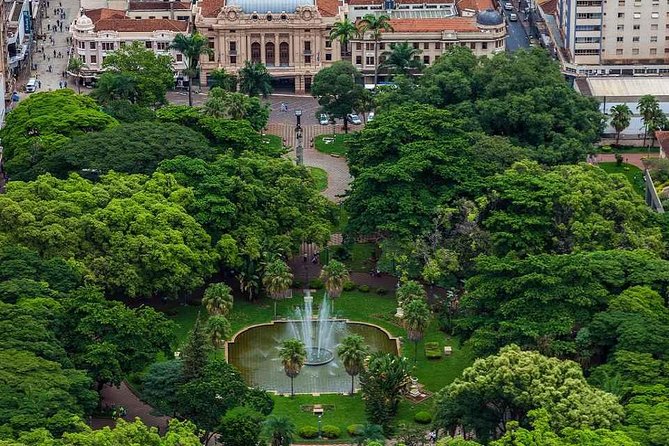
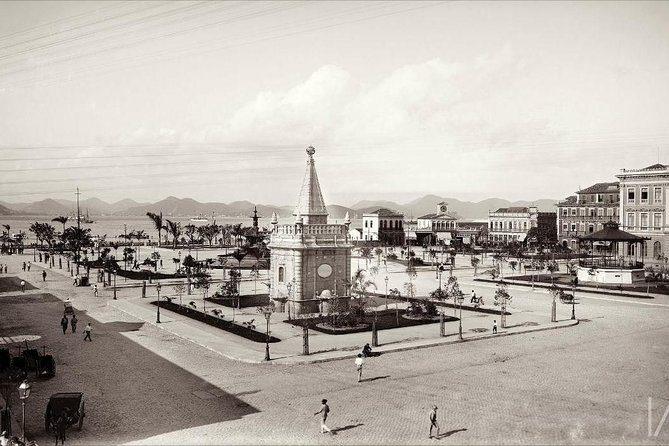
Praça Quinze de Novembro is one of the key squares in central Rio. It is surrounded by the Paço Imperial, the Palácio Tiradentes, and the Legislative Assembly of Rio de Janeiro.
The Paço Imperial connects the square with Brazil’s royal and imperial past. The Palácio Tiradentes adds a political layer, since the building is tied to Rio’s role as a seat of government. Nearby, the Praça XV ferry terminal links central Rio with Niterói.
You’ll spend about 30 minutes here. That is enough to understand the layout and take photographs, but not enough for a slow architectural study of every façade. The guide’s explanations matter, since the square can otherwise feel like another open space among many in downtown.
Same city, a completely different kind of day:
- Rio de Janeiro: 6-Stop Highlights of Rio with Lunch
★ 4.4 · 5,157 reviews - Christ the Redeemer Entry Ticket by Corcovado Train
★ 4.4 · 4,476 reviews - Rio de Janeiro: Rocinha Favela Walking Tour with Local Guide
★ 4.8 · 3,052 reviews - Rio: Christ the Redeemer, Sugarloaf, Selaron & BBQ Lunch
★ 4.5 · 2,428 reviews
Arco do Teles leads into old lanes and local food
Arco do Teles marks the entrance to a small network of alleys that once formed part of Rio’s downtown market area. The passage opens into narrow streets lined with bars and small restaurants.
This is one of the places where the tour moves from grand public architecture to everyday city life. The lanes give you a sense of how older Rio operated at street level, rather than only through palaces and government buildings.
The stop is about 20 minutes. It is primarily a walk and orientation visit. Lunch is not included, so you should not expect a meal here. If you want to return for food or drinks, note the location and come back with more time.
Cinelândia gathers Rio’s grand public buildings
Cinelândia is one of the strongest architectural stops on the route. The square is surrounded by major buildings from the period when Rio was modernizing as Brazil’s federal capital.
The name is linked to the cinemas and entertainment venues that once defined the area, but the main reason to visit today is the cluster of monumental façades. You’ll have about 30 minutes for photographs and a short walk.
This is also where the tour’s focus on early 20th-century Rio becomes especially clear. The city was being reshaped with broad public spaces and grand institutions. You can see that ambition in the buildings around the square.
Three grand façades, one quick architectural lesson
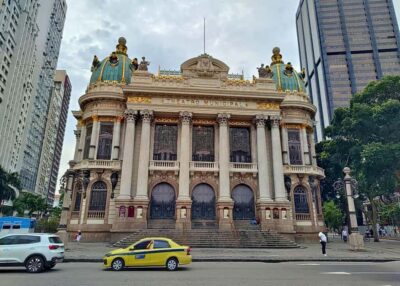
The National Museum of Fine Arts, Theatro Municipal, and Biblioteca Nacional are all close to one another. The tour visits them from the outside, so you should book this experience for exterior architecture and context rather than museum collections.
The National Museum of Fine Arts was designed in 1908 by Adolfo Morales de los Rios for the National School of Fine Arts. The school inherited the role of the Imperial Academy of Fine Arts, and the building was part of the urban modernization led by Mayor Pereira Passos.
The Theatro Municipal opened in 1909 and became one of Brazil’s leading theaters. Its program has included dancers, musicians, opera singers, and other performers. Since the 1930s, it has maintained its own choir, symphony orchestra, and ballet company.
The National Library was founded in 1810 by King João VI of Portugal. It is described as the largest library in Latin America, with almost nine million items. Its holdings include rare books, manuscripts, Princess Isabel’s original letters, Brazil’s first printed newspapers, and two copies of the Mainz Psalter Bible, printed in 1492.
Each stop lasts roughly 10 minutes. That is enough to admire the exterior and hear the basic story, but not enough to enter or explore the collections. If you specifically want to tour the theater, museum, or library, check opening days and plan a separate visit.
What the four-hour schedule really feels like
The stated duration is about four hours, with time divided among eight stops. That creates a broad introduction, not a slow walking tour.
You’ll spend about an hour in Santa Teresa, 20 minutes at Parque das Ruínas, 30 minutes at the Lapa Arches, 30 minutes at Praça XV, 20 minutes at Arco do Teles, 30 minutes in Cinelândia, and about 10 minutes at each of the three major institutions.
That schedule works well if you want to see many districts in one morning or afternoon. It works less well if your ideal day includes coffee, browsing craft shops, entering museums, or sitting in a square to watch city life.
Guide style can shape the experience. Guides including Renato, Dario, Wagner, Monica, Wanessa, Romeu, Roger, and Jack Daniel have been praised for local knowledge, clear English, warmth, punctuality, and enthusiasm. Other departures have felt rushed or less engaging. A strong guide can connect colonial history, politics, architecture, and modern Rio. A weaker one may make the stops feel like a series of quick photo calls.
Transport, pickup, and group size
The tour uses an air-conditioned vehicle, which is welcome in Rio’s heat. The advertised vehicle can be a minivan with up to 19 people, although some departures operate with only a few people or in a guide’s private car.
The stated meeting point is Hotel Rio Othon Palace on Avenida Atlântica in Copacabana, with the activity ending back at the meeting point. Pickup arrangements depend on your hotel location, and the operator contacts you with the proper time, so check your email and phone before the tour.
Allow extra time around the scheduled pickup. Traffic has caused delays, especially during Carnival. A full van may also take longer to return because several people need to be dropped off. On one reported departure, the final hotel drop-offs took about an hour and a half. That is not typical enough to define every tour, but it is a useful warning if you have an evening reservation.
The minivan format saves you from navigating central Rio and gives you a place to cool off between stops. The tradeoff is less freedom. You cannot always stop for a drink, linger in a shop, or change the route for your own interests.
How much value do you get for $55?
At $55 per person, the tour is reasonably priced for a four-hour guided introduction that includes vehicle transport and a return to the meeting point. You are paying for the route, the driver-guide service, and the ease of covering Santa Teresa and central Rio without arranging several separate rides.
The value is strongest if this is your first visit or your schedule is short. You can see districts that are easy to miss when you focus only on Rio’s famous mountain sights. You also get historical context that helps the architecture make sense.
The price does not include lunch, museum admissions, or a tram ride. In practice, the main limitation is not the ticket price but the compressed schedule. If you want to enter the National Library, visit the Museum of Fine Arts, attend the theater, or ride the tram, you will need extra time and likely another plan.
Private departures can offer better value for couples or families who want control over the pace. A private guide such as Dario or Roger may be able to adjust stops and spend more time on subjects that interest you, but the standard shared tour is the lower-cost choice.
The best day to go
A Sunday can work well for seeing downtown early in the day, when the center is quieter. It can also be a good day for art fairs and a more relaxed look at Santa Teresa.
Monday is less reliable for browsing. Shops and craft stores may be closed, which reduces the neighborhood’s street life. New Year’s Day can have the same problem, with downtown businesses and Santa Teresa shops shut.
Carnival brings another issue: traffic. The route may still be worthwhile, but delays can cut into sightseeing time. Poor weather can also lead to cancellation, with the option of a different date or a full refund.
For the fullest version of the route, choose a day with good weather and check whether the places you most want to enter are open. Since the main buildings are viewed from outside, an exterior-focused tour can still work when indoor sites are closed, but the overall feel may be quieter.
Who should book this Rio history tour?
I would choose it if you want to understand Rio beyond Corcovado and Sugarloaf Mountain. It suits first-time visitors, people with only a few days in the city, and anyone interested in architecture, urban history, art, or old neighborhoods.
It is also useful for visitors who prefer a guide to handle transportation between scattered sites. The route moves from Santa Teresa to Lapa and then through central Rio, areas that can be awkward to combine on your own in a short period.
I would hesitate if you dislike fixed schedules or want a leisurely neighborhood walk. It is also not the best fit for anyone who has trouble with uneven cobblestones unless the operator confirms suitable adjustments.
Should you book it?
Book this tour if you want a practical introduction to Santa Teresa and Ancient Rio for $55, with air-conditioned transport and a guide who can connect the city’s old buildings to its political and artistic past. The strongest departures, led by guides such as Renato, Dario, Monica, or Roger, can turn a quick route into a useful lesson about Rio.
Skip it if your priority is riding the Santa Teresa tram, entering museums, or spending an hour over coffee in one place. In that case, arrange a private tour or explore the neighborhood independently. For everyone else, this is a solid way to see the older side of Rio in half a day, as long as you accept the brisk pace.
FAQ
How long does the Ancient Rio and Santa Teresa Tour last?
The tour lasts approximately four hours.
What is the price of the tour?
The listed price is $55 per person.
Where does the tour start?
The stated meeting point is Hotel Rio Othon Palace, Av. Atlântica, 3264, Copacabana, Rio de Janeiro.
Where does the tour end?
The activity ends back at the meeting point.
Is hotel pickup available?
Pickup arrangements are made according to your hotel location. The operator contacts you with the proper pickup time, so check your email or phone.
Is the Santa Teresa tram ride included?
No. The tour shows the original tram and explains its role, but a tram ride is not included in the standard tour.
Are museum and building entrances included?
No. The tour views the National Museum of Fine Arts, Theatro Municipal, and National Library from outside. Museum entrance fees are not included.
Is lunch included?
No. Lunch is not included in the tour price.
How many people can join the tour?
The activity can have up to 19 people per minivan. The stated overall maximum is 99 people, although some departures may operate with a smaller group or private car.
Just added around Rio de Janeiro
- Vidigal Favela Tour★ 4.4 · 26 reviews
- Hang gliding flight in Rio de Janeiro★ 5.0 · 6 reviews
- Rio de Janeiro: Zip Lining and Canopy Tree Tour★ 3.3 · 6 reviews
- Tijuca Forest Hike – Waterfalls & Caves, Nature & Wild Life!★ 5.0 · 51 reviews
- Unforgettable Boat Party★ 5.0 · 3 reviews
- Guided Tour to Favela Santa Marta★ 5.0 · 60 reviews
- Rio de Janeiro: Attend a Vasco da Gama game with local guide★ 4.8 · 9 reviews
- Rio Highlights: Christ, Sugarloaf, and More in a Private Tour★ 5.0 · 36 reviews
Santa Teresa Tours, compared.

Santa Teresa, Lapa, and Cinelândia with Tram Ride and Selarón Steps
Read our review →

Walking tour of the bohemian neighborhoods of Santa Teresa and Lapa
Read our review →
Centro Historico and Lapa – Santa Teresa Walking, Historical and Bohemian Tour
Read our review →

Browse the lists this tour appears in