

Review · RIO SAMBA NIGHTS
Rio Samba Bus: hop-on hop-off city tour in Rio de Janeiro
Rio’s biggest sights are spread across a wide city, and the Rio Samba Bus gives you a simple way to connect them. Starting in Copacabana, you pass the waterfront, Sugarloaf Mountain, downtown landmarks, Lapa, the Sambadrome, Lagoa, Ipanema, and Christ the Redeemer. You can stay aboard for the full circuit or get off at the stops that match your plans.
I like the broad route, which covers more than 30 points of interest, and I like the live commentary in Portuguese, English, and Spanish. The open-sided buses offer better photos, while enclosed buses with air conditioning are useful in hot or rainy weather. The main drawback is timing: after the first departure, buses may not arrive exactly when scheduled, and finding some stops can be difficult.
Key points before you board

- Copacabana is the starting point: The first stops run along the famous beach promenade, making this an easy place to begin.
- The route links major sights: You pass Sugarloaf, Lapa, downtown, the Sambadrome, Christ the Redeemer, Lagoa, and Ipanema.
- You can hop off at 26 listed stops: The ticket is designed for sightseeing, not just a single ride.
- Music is part of the plan: Brazilian MPB, samba, and other rhythms are scheduled on board, though the musical program may not operate on every departure.
- The $31 price covers transport and guiding: Attraction tickets, meals, drinks, and hotel transportation cost extra.
- Allow more than two hours if you hop off: Two hours describes the ride itself, but visiting Sugarloaf or Christ the Redeemer requires much more time.
What the Rio Samba Bus is really good at

I see this tour as a city orientation with wheels. Rio is not a compact sightseeing city. Copacabana and Ipanema sit south of downtown, Sugarloaf rises near Botafogo and Urca, and Christ the Redeemer sits high above the city in the Tijuca Forest. Connecting these areas by ordinary public transport can take planning.
The bus gives you a single route through all of them. From your seat, you can get a quick sense of how the beaches, mountains, historic center, and residential districts fit together. The driver may slow down or stop briefly so you can take pictures, which helps when you are trying to photograph a major landmark from the road.
The experience works best if you think of it as a moving introduction to Rio. It is not a guaranteed minute-by-minute shuttle. The listed departure times are useful for planning, but the service may run late after the first departure. That matters if you want to use the bus to reach a timed cable-car ride or a reserved visit to Christ the Redeemer.
More samba nights in Rio de Janeiro:
- Rio de Janeiro: Beginner Samba Lesson in Ipanema
★ 4.9 · 1,071 reviews - Rio: Pub Crawl in Lapa with Cachaça Tasting and Live Samba
★ 4.7 · 881 reviews - Rio: Carnival Backstage Tour at Samba City with Cocktail
★ 4.6 · 520 reviews
Starting along Copacabana Beach
The outward route begins at Shopping Cassino Atlântico, then continues through Copacabana Beach Stations 5, 4, 3, and 2. It also serves the Hilton Hotel, Rio Sul Shopping Mall, and the Sugarloaf Cable Car Park.
Copacabana is a strong opening because you immediately see one of Rio’s defining scenes: a broad beach, a patterned promenade, and a long curve of coast backed by city buildings and mountains. Sitting on the upper deck gives you a better view, but the open bus also exposes you to sun and rain. Bring water and sun protection, and check the weather before choosing where to sit.
These first stops are also practical. If you are staying in Copacabana, you have several places to board instead of crossing the city to the first stop. Still, you should confirm the exact pickup point. The stops are not always as obvious as a normal city bus station, and a small route map can be hard to use if you are standing in an unfamiliar block.
Sugarloaf Mountain and the cable car stop
The Sugarloaf Cable Car Park is one of the most useful hop-off points. Sugarloaf is one of Rio’s signature views, and the cable car carries you first to Morro da Urca before continuing toward the mountain summit. From the heights, you can look back toward Copacabana, Botafogo, the open water, and the city.
The bus ticket does not include the cable-car ticket. You also need to allow time for the ride, any queues, and the views at the top. For that reason, Sugarloaf is not a quick ten-minute stop. If this is a priority, plan to get off and continue the bus route later, rather than trying to squeeze it into the full two-hour ride.
The route information lists the Sugarloaf stop as part of the outward journey. Since bus timing can vary, ask the guide about the next return service before leaving the bus. This is especially important if you are building a full day around several paid attractions.
Downtown Rio: Cinelândia, Lapa, and the old center

After the southern waterfront, the bus heads toward central Rio. The Municipal Theatre, Museum of Fine Arts, and National Library sit around Cinelândia, the city’s main historic area. This is one of the best sections for architecture and civic landmarks, though the bus gives you only a quick view unless you get off.
The Selarón Steps and Lapa Arches are separate listed stops. The colorful staircase is a popular photo stop, while the white arches are one of Lapa’s best-known landmarks. Lapa has a strong connection to samba and nightlife, so the promised Brazilian music on the bus fits this part of the route well.
You also pass Rio de Janeiro Metropolitan Cathedral, Paço Imperial, and Candelária Church. These stops show a different side of Rio from the beaches. The city center carries colonial, imperial, religious, and modern civic history within a fairly small area, but the bus commentary is important because many buildings are easy to pass without understanding their role.
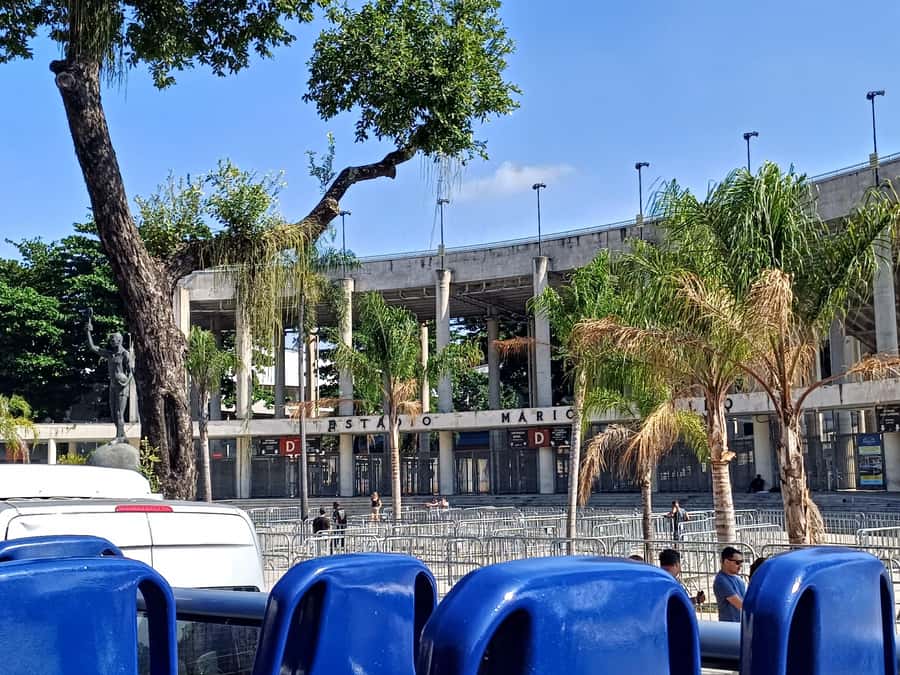
The bus also reaches AquaRio, Yup Star, and the Maracanã area on the outward route. The route information specifically lists Maracanã, although one passenger found that the bus did not pass directly by the stadium. If Maracanã is a must-see for you, confirm the exact stop and view with the guide before relying on the bus for a close look.
More city tours in Rio de Janeiro:
- Rio de Janeiro: 6-Stop Highlights of Rio with Lunch
★ 4.4 · 5,157 reviews - Hop-ON Hop-OFF Sightseeing Bus in Rio de Janeiro – Rio Samba Bus
★ 3.5 · 457 reviews - Rio de Janeiro: Private Guided City Tour
★ 4.6 · 207 reviews - Rio de Janeiro Full-Day Sightseeing Tour
★ 4.7 · 121 reviews
AquaRio, the Sambadrome, and Rio’s cultural landmarks

AquaRio and Yup Star offer modern attractions in the port area. The Sambadrome, listed on the return route, connects the city tour with Rio’s famous Carnival tradition. You see how the route moves beyond postcard beaches and into the city’s cultural and event spaces.
These stops are better for selective hopping than for a rushed full circuit. Attraction admission is not included, so you will pay separately if you enter AquaRio or ride Yup Star. The benefit of the bus is that it links them with other parts of Rio without making you arrange separate rides for each area.
The bus also lists Biopark and the Sambadrome on the return route. Since the service is described as a one-day hop-on, hop-off ticket, you can use it as a sightseeing base, but you should leave generous time between planned stops. Delays can turn a neat schedule into a long wait.
Christ the Redeemer by train
The Corcovado Train to Christ the Redeemer is the headline stop. The bus brings you to the train area, but the train ticket is not included. From there, the century-old Corcovado Railway climbs through the Tijuca Forest toward the statue.
The train ride is part of the appeal. As you rise, the city opens below you, with views toward the coast and the mountain ranges. At the top, Christ the Redeemer provides the classic Rio panorama, but conditions can change quickly at high elevation. Clouds or rain may reduce the view, so keep your expectations flexible.
This stop needs careful planning. The bus ride itself may be advertised as two hours, but Christ the Redeemer is a major visit, not a quick hop-off. You need time for the train, the mountaintop, and the return to the bus stop. If you want to visit both Christ the Redeemer and Sugarloaf on the same day, the bus can connect them, but delays and attraction queues may make the day tight.
Largo do Boticário, Lagoa, Flamengo, and Ipanema

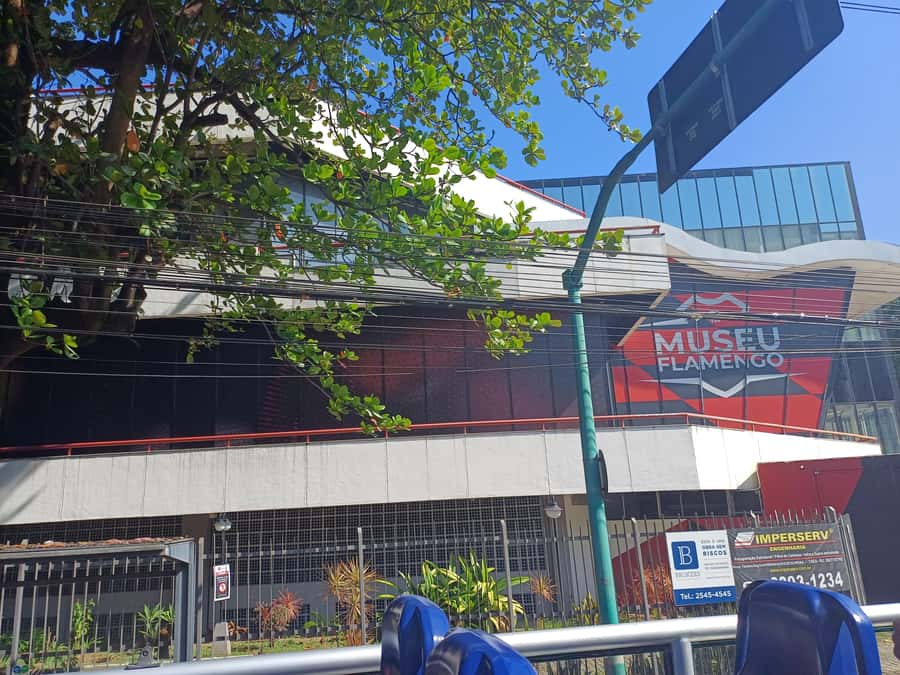
The return route passes Largo do Boticário, Lage Park, Lagoa Skating Park, the Flamengo Museum, Rua Garcia Dávila’s food center, and Ipanema Beach Posts 9 and 8.
This part of the route gives you a softer change of pace after the center and the major mountain sights. Lagoa offers a broad water view, while Ipanema brings you back to Rio’s beach culture. Garcia Dávila adds a food stop, but meals are not included, so plan to pay separately.
The Flamengo Museum is another optional stop for anyone interested in football. The route also includes Vasco da Gama Sports Club in the tour description, although the detailed stop list does not show a separate Vasco stop. That difference is worth clarifying on the day if the club is important to your plans.
Lage Park and Largo do Boticário are useful additions because they give you places to see green areas and older architecture without leaving the southern part of the city. Still, the bus cannot provide a long visit at every stop. Choose two or three priorities instead of trying to enter everything.
Brazilian music on the ride

Music is meant to be a central part of the experience. The bus is scheduled to feature MPB, samba, and other Brazilian rhythms, giving the ride a cultural layer beyond spoken commentary. Singing along and listening to local styles can make a slow traffic stretch more enjoyable.
The important practical point is that the music program is not guaranteed on every outing. One recent ride had no musical performance at all. I would treat the music as a welcome extra, not the main reason to book.
The live guide commentary is more dependable as a planning tool. It is available in Portuguese, English, and Spanish, and it adds context as you pass the major buildings and neighborhoods. If you do not speak Portuguese, check that you are near the guide or speaker system so you do not miss the explanations.
Open air, air conditioning, and weather
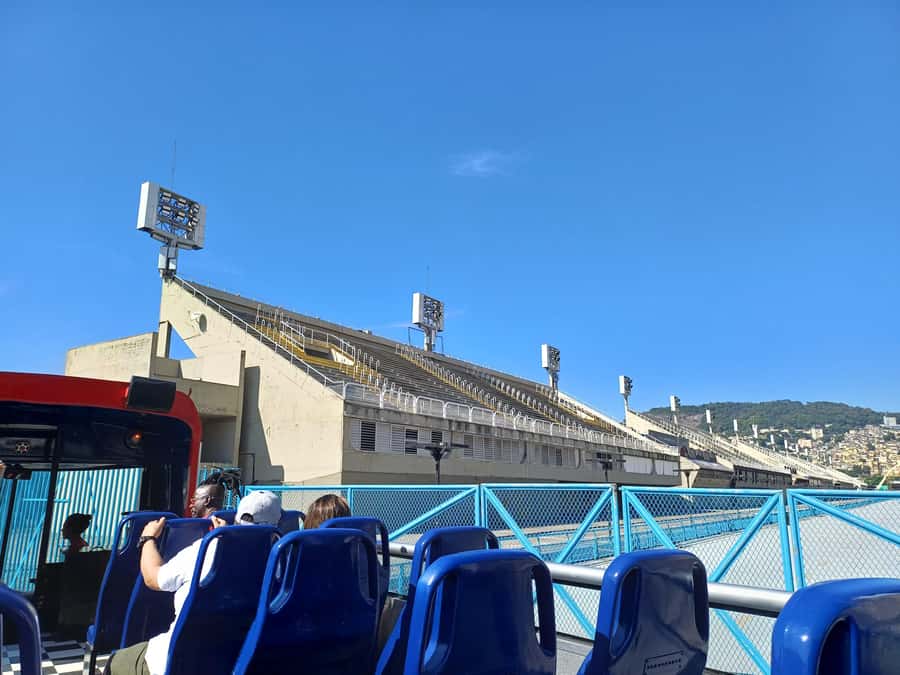
There are different bus types. Some are open, while others are enclosed and air-conditioned. The open bus gives you the best chance of photographing the waterfront and mountains, but Rio’s sun can be strong. The enclosed option is more comfortable during heat or rain.
Rain can change the whole experience. One outing was badly affected by wet weather, and that is easy to understand: outdoor views, open seating, and hop-off sightseeing lose much of their appeal under heavy rain. If the forecast is poor, use the bus mainly as a moving city overview and keep indoor attractions in reserve.
Free Wi-Fi is included, but I would not build the day around it. The practical value of the bus is the route, the commentary, and the ability to see many districts without changing transport several times.
Timing, stops, and the $31 price
At $31 per person, the tour can be good value if you use it for orientation and visit several areas. A single ride through Copacabana, downtown, Lapa, the waterfront, and Ipanema gives you a lot of visual information. The value falls if you stay on board for only a short stretch or expect the bus to replace taxis and trains on a strict schedule.
Listed departures begin at 9:15 a.m., then run at roughly 45-minute intervals through the afternoon, with later departures at 4:15 p.m. and 5:15 p.m. Those times suggest a useful rhythm, but actual arrivals may vary. After the first departure, you may wait longer than expected, including one reported wait of about 40 minutes.
The stop list also needs patience. Some stops are not clearly marked, and a tiny map may not be enough to locate the correct place after you leave the bus. Before hopping off, ask where and when to catch the next bus. If you need to reach a timed attraction, a taxi or ride service may be more reliable.
Food, drinks, attraction tickets, and hotel transportation are not included. You must make your own way to a starting stop, and the route begins in the Copacabana area. The ticket does allow cancellation up to 24 hours before departure for a full refund, and you can reserve now and pay later.
Who should book the Rio Samba Bus?
I would choose this tour if you are visiting Rio for the first time, want a broad look at the city, or prefer a guide to explain what you are seeing. It is also useful for families and for anyone who wants an easy connection between distant areas without arranging every ride separately.
I would be cautious if your day depends on exact departure times, if you want long visits at several attractions, or if you dislike waiting outdoors for a bus. The tour is strongest as a flexible overview. It is weaker as a precise transport service.
FAQ
How long does the Rio Samba Bus tour last?
The activity is listed as lasting two hours. If you hop off to visit Sugarloaf Mountain, Christ the Redeemer, museums, or other attractions, you will need additional time.
How much does the tour cost?
The listed price is $31 per person.
Where does the Rio Samba Bus start?
The route starts in the Copacabana area, with the first listed stop at Shopping Cassino Atlântico. Other early stops include Copacabana Beach Stations 5, 4, 3, and 2.
How many stops does the bus have?
The detailed route lists 26 stops, including Copacabana, Sugarloaf Cable Car Park, downtown, Lapa, the Corcovado train area, Lagoa, and Ipanema.
Can I get off and board again?
Yes. The ticket is a one-day hop-on, hop-off ticket, allowing you to get off at attractions and continue on the route.
Are attraction tickets included?
No. Tickets for Sugarloaf, Christ the Redeemer, the Corcovado train, museums, AquaRio, Yup Star, and other attractions are not included.
Does the bus visit Christ the Redeemer?
The bus stops at the Corcovado Train to Christ the Redeemer. The train ride and attraction tickets are separate.
What languages are available on the bus?
Live commentary is provided in Portuguese, English, and Spanish.
Is music included?
Musical performances featuring MPB, samba, and other Brazilian rhythms are included in the activity description. The music program may not operate on every departure.
Just added around Rio de Janeiro
- Vidigal Favela Tour★ 4.4 · 26 reviews
- Hang gliding flight in Rio de Janeiro★ 5.0 · 6 reviews
- Rio de Janeiro: Zip Lining and Canopy Tree Tour★ 3.3 · 6 reviews
- Tijuca Forest Hike – Waterfalls & Caves, Nature & Wild Life!★ 5.0 · 51 reviews
- Unforgettable Boat Party★ 5.0 · 3 reviews
- Guided Tour to Favela Santa Marta★ 5.0 · 60 reviews
- Rio de Janeiro: Attend a Vasco da Gama game with local guide★ 4.8 · 9 reviews
- Rio Highlights: Christ, Sugarloaf, and More in a Private Tour★ 5.0 · 36 reviews
Rio Samba Nights, compared.


Pub Crawl in Lapa with Cachaça Tasting and Live Samba
Read our review →
Carnival Backstage Tour at Samba City with Cocktail
Read our review →
Santa Teresa, Lapa, and Cinelândia with Tram Ride and Selarón Steps
Read our review →


Ginga Tropical – Brazilian Samba and Folklore Show
Read our review →
Pedra do Sal: Live Samba Night with Local Guide & Drink
Read our review →Browse the lists this tour appears in