

Review · TIJUCA FOREST TOURS
Rio: Tijuca Forest Small Group Hike to Caves and Waterfalls
Rio’s Tijuca Forest is not just a patch of trees beside the city. It is a former coffee-growing area, a replanted rainforest, and a maze of old paths leading to caves, waterfalls, ruins, and quiet viewpoints. This 6.2-kilometer hike gives you a useful mix of nature and Brazilian history without sending you far from your hotel.
I like the small-group format, which makes it easier to keep a steady pace and ask questions. I also like that guides such as Vini, Riccardo, Tito, and Luiza bring in Brazil’s geography, politics, culture, plants, and wildlife instead of treating the forest as scenery only. The main caution is the uphill work: 448 meters of elevation on rough, sometimes steep ground is more than a casual city walk.
Key points to know before you book
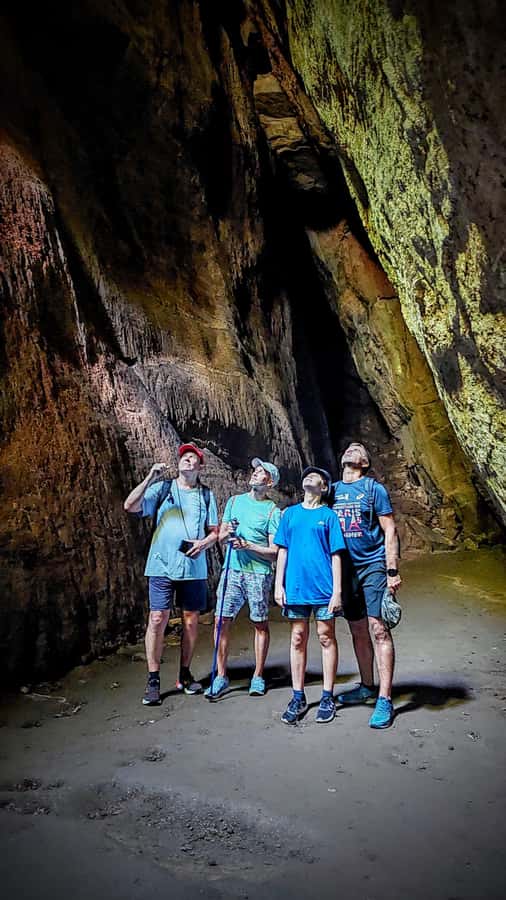
- A 6.2-kilometer forest circuit: Plan on roughly 2.5 to 3 hours of walking within a six-hour outing.
- Baronesa Cascade shower: Bring a swimsuit or quick-drying clothes if you want to cool off under the waterfall.
- Morcego’s Grotto: You visit Brazil’s largest gneiss cave, though bats may be resting and should not be disturbed.
- Coffee plantation past: Old trails, ruins, an abandoned residence, and a slave cemetery connect the forest to a difficult past.
- Hotel pickup in Rio’s South Zone: Pickup covers many hotels and hostels in Copacabana, Ipanema, Leblon, Leme, Flamengo, Santa Teresa, Gloria, Catete, Urca, and Botafogo.
- A guide-led nature lesson: Expect practical explanations about rainforest plants, animals, geology, Rio, and Brazil.
Why this Tijuca Forest hike is worth your Rio morning
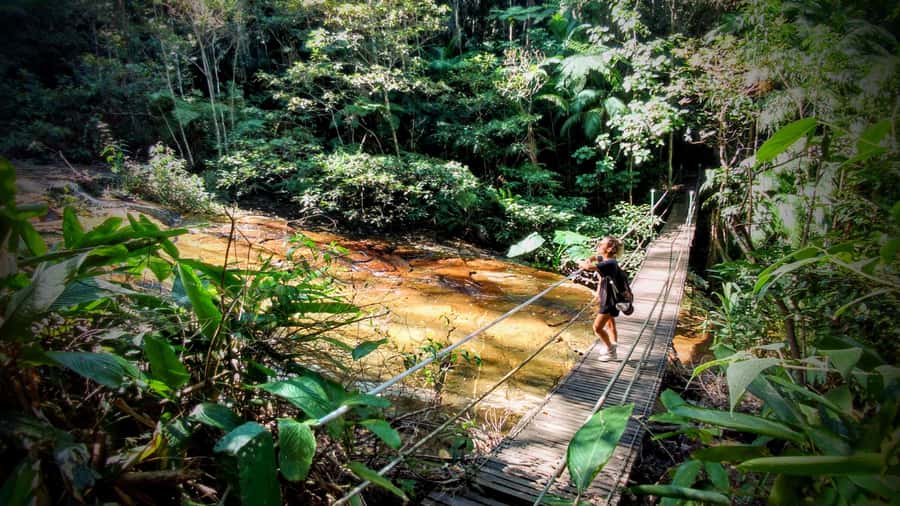
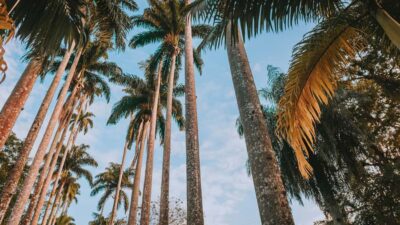
Tijuca National Park offers something rare: rainforest within a major city. You can leave the hotel zones, ride into thick forest, and spend much of the walk in shade. That makes this a useful break from Rio’s beaches and traffic, especially during hot weather.
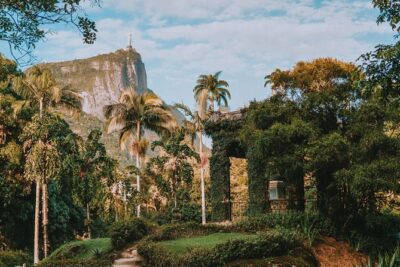
The walk follows routes created in the 19th century, when coffee farms occupied parts of the area. Tijuca was later replanted, creating what is described as the world’s largest replanted urban forest. That story gives the hike real substance. You are not simply walking past trees and taking waterfall photographs. You are seeing how land use, water protection, city planning, and conservation shaped Rio.
The tour costs $69 per person. That is fair value if you use the hotel transfer, need an English or Portuguese guide, and want the forest explained rather than explored alone. The price covers transportation from designated South Zone hotels, guiding, and insurance, but not food or drinks. You should bring your own water and snacks.
A six-hour booking includes transport, stops, and the hike itself. The walking portion is listed as 2.5 to 3 hours, but the full outing takes longer because of pickup and drop-off. Small groups or private departures are available, and group size can be especially small on some days.
More Hiking Tours in Tijuca Forest
- Rio de Janeiro: Tijuca Forest Challenge Hike Full-Day Trip
★ 4.9 · 163 reviews - Rio: Tijuca National Park Small-Group Hike to Pedra Bonita
★ 4.9 · 79 reviews - Hiking in the Tijuca Forest : Waterfalls and Caves
★ 5.0 · 72 reviews
From Cascatinha Taunay to the old Mayrink Chapel
The first major stop is Cascatinha Taunay, the park’s largest waterfall. The visit is fairly short, around 15 minutes, so think of it as an introduction rather than the main swimming stop. It is a good place to see the scale of the forest’s water system and start learning how the park fits into Rio.
The guide then gives you an overview of Tijuca National Park before the walk settles into its historical rhythm. At Mayrink Chapel, built in 1850, you get a brief stop for photographs and a look at one of the park’s more delicate historic structures. The chapel is not a long visit, but it helps show that this forest has long been shaped by people.
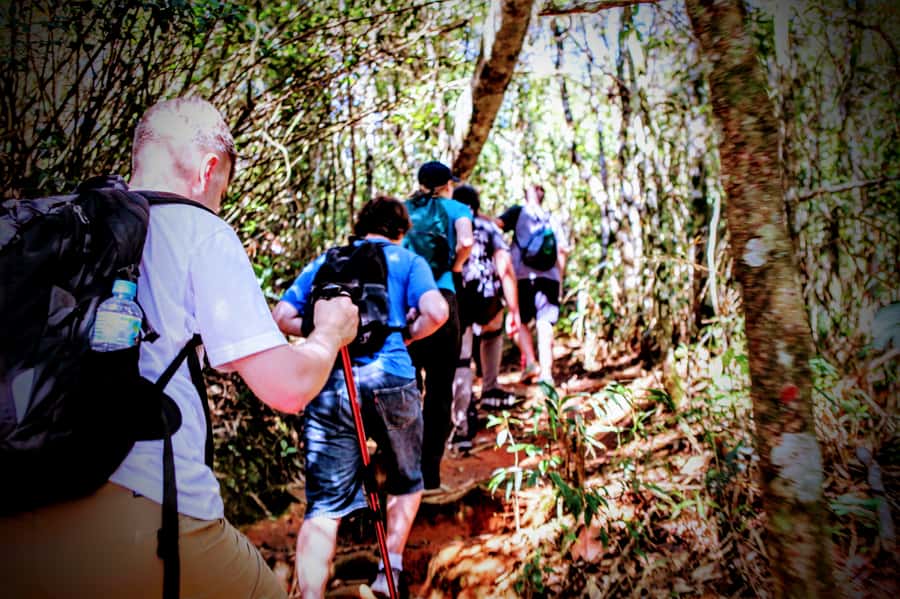
From here, the trail becomes the main event. Expect uneven rainforest ground, inclines, descents, and pauses to point out plants or explain the area. The canopy provides plenty of shade, but shade does not remove the need for water, sunscreen, insect repellent, and sturdy shoes.
Cova da Onça and the forest’s difficult past
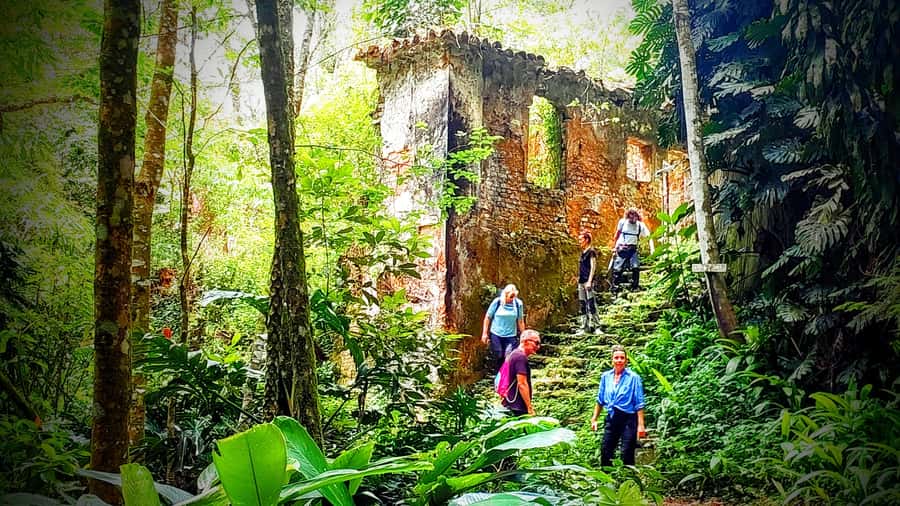
Cova da Onça Suspension Bridge adds a small touch of adventure to the route. It is a short stop, but it breaks up the walking and gives you a different view of the forest floor. The itinerary also includes the Eucalyptus Forest, which contains an old slave cemetery.
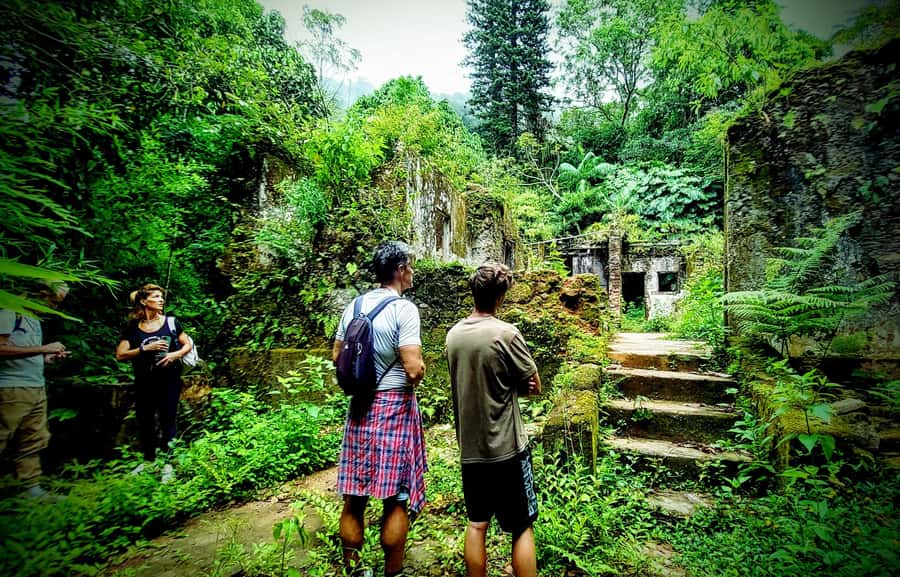
That cemetery is an important reason to choose a guide-led walk. Without context, it could be easy to pass through quickly and miss what it represents. A good guide can place the coffee era, forced labor, land use, and later replanting into a single story. The most praised part of this tour is not simply naming trees or pointing at waterfalls. It is the way guides connect the forest to Brazil’s past and Rio’s development.
The route also reaches old coffee farm remains and a former residence linked to Barão d’Escragnolle, a past park manager. The building is now the Esquilos restaurant, but the stop still helps you picture how the area once functioned. These traces are modest rather than grand. That is part of their appeal, but it also means you should not expect a preserved plantation museum.
Morcego’s Grotto, a real cave rather than a photo prop
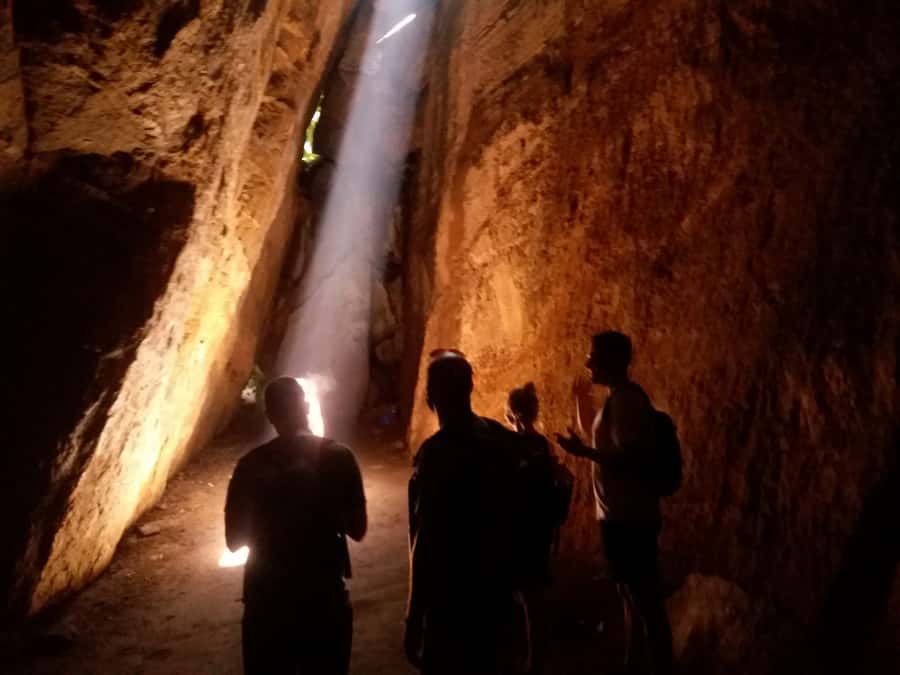
Morcego’s Grotto, also called the Bat Cave, is described as the largest gneiss cave in Brazil. The visit involves a short hike and guided explanation. It is one of the route’s most unusual stops, particularly if you have already seen Rio’s better-known viewpoints and want something less polished.
You may not see bats. That is normal and, frankly, preferable to disturbing them. One account noted that the bats were resting, and the sensible approach is to leave them alone. The cave is valuable for its rock, scale, atmosphere, and place in the forest, not just for animal sightings.
The route may also include a secret stop, a viewpoint, and a stop connected with unusual rock formations. The exact appeal of these shorter stops will depend on conditions and the guide’s choices that day. This is a forest walk, not a fixed museum circuit, so weather, trail conditions, and the number of people around can shape the experience.
More Tijuca Forest days:
- Rio de Janeiro: Christ, Selaron Steps, and Tijuca Park Tour
★ 4.7 · 857 reviews - Rio de Janeiro: Guided Jeep Tour through Tijuca Rainforest
★ 4.3 · 740 reviews - Jeep Adventure: Guided Tour through Tijuca Rain Forest
★ 4.0 · 554 reviews - Rio: Half-Day Jeep Tour at Floresta da Tijuca
★ 4.5 · 353 reviews
Baronesa Cascade is the payoff
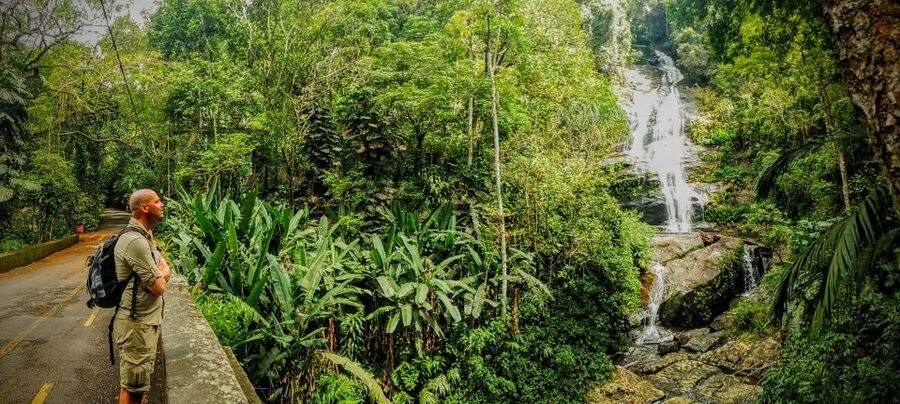
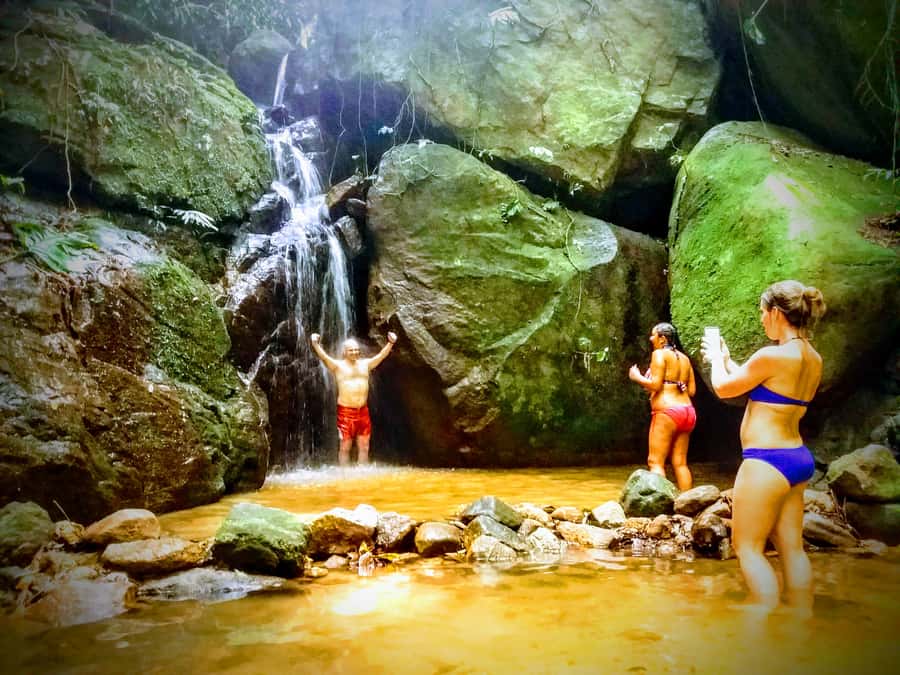
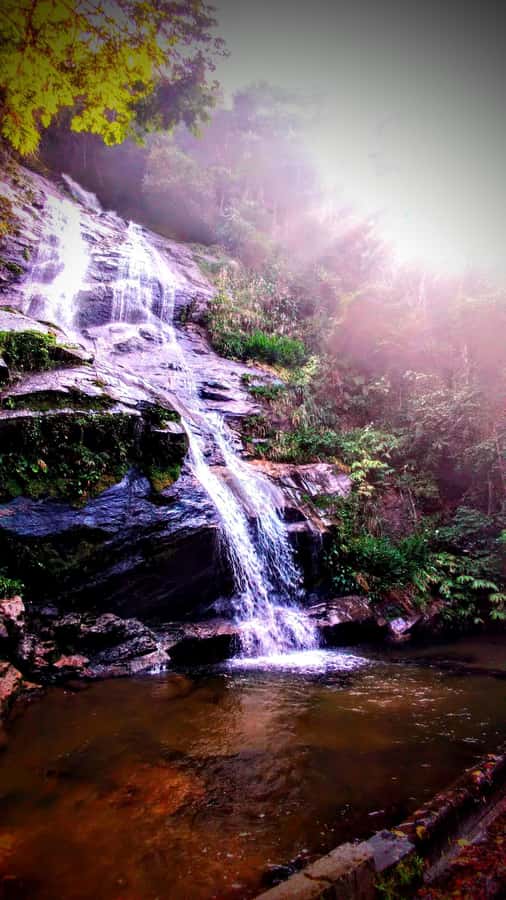
Later in the hike, you reach Baronesa Cascade. This is the place for the waterfall shower, and it is the most practical reason to pack light clothing that can get wet. The stop lasts around 20 minutes, giving you enough time to cool down if conditions allow.
Do not confuse it with a guaranteed private swimming hole. Tijuca is a popular park, and other people may be at the waterfalls or along the trails. Still, a short shower beneath falling water is a fine reward after the uphill sections. The water can also make the trail and rocks slippery, so follow the guide’s instructions and wear shoes with a secure grip.
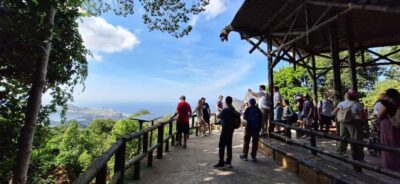
The route then works back toward the starting point through more forest. You may stop at Mirante da Palmira or another viewpoint for a scenic look along the way. The views are not the sole purpose of this outing, so those hoping for a series of sweeping city panoramas should choose a dedicated viewpoint tour instead.
What the guides add to the walk
The guide is central to the value of this experience. The repeated strength of the tour is the quality of the explanations and the care taken with different walking speeds. Guides named Vini, Riccardo, Tito, Luiza, Renata, Gustavo, Pietro, and Fernando have led departures, so the exact personality and emphasis will vary.
Some guides have strong backgrounds in botany or wildlife. Luiza, for example, is trained as a botanist, while other guides bring particular interest in Brazilian history, geology, geography, or city culture. English and Portuguese are offered.
The best version of this outing is not a fast march from one attraction to the next. It is a moving lesson. You might learn how the forest was replanted, why certain plants matter, how Rio’s geography affects the city, or what animals live in the park. Wildlife is possible, but not promised. Sightings have included capuchin monkeys, a coati, and even a sloth seen from the vehicle, while other departures saw no animals at all.
That variation matters. Book this for the forest, waterfalls, cave, and interpretation. Treat an animal sighting as luck, not part of the contract.
How hard is the 6.2-kilometer route?
The operator rates the route as moderate, with 448 meters of elevation gain. That is a sensible warning. Some people find it fairly easy, while others struggle with the steep section, especially in heat or after rain.
You need good fitness for rough ground and repeated uphill and downhill walking. This is not suitable for wheelchair users or people with heart problems. It is also not a suitable choice if you want to remain in sandals, bare feet, or ordinary city shoes.
Wear sports shoes with traction and sportswear that can handle humidity. Bring a daypack, water, snacks, sunscreen, insect repellent, and a light rain layer. Rain can arrive in the rainforest, and one guide has provided ponchos during a wet outing. Do not bring luggage or a large bag.
The forest is often cooler than Rio’s built-up areas, and much of the route is shaded. Even so, you will sweat on the climbs. Take small drinks regularly rather than waiting until you are thirsty.
Pickup makes this easier, with one transport tradeoff
Hotel pickup and drop-off are offered from many designated addresses in the South Zone. Covered areas include Copacabana, Ipanema, Leblon, Leme, Flamengo, Santa Teresa, Gloria, Catete, Urca, and Praia de Botafogo. You must confirm your exact hotel or address, since a nearby meeting point may be used if direct pickup is not possible.
This is a real convenience. Tijuca is not a beachside attraction, and arranging your own transport adds friction before an active morning. Pickup also means you can finish the hike tired and return close to your accommodation.
The vehicle may be compact. One participant found the van cramped, particularly for taller men, while other departures found it comfortable. The ride is generally short enough that this is a minor concern, but ask for vehicle details if that matters to you. Sending the license plate, vehicle model, or driver name in advance would make meeting the vehicle easier, so check the pickup instructions carefully.
Food and drinks are not included. Eat before pickup or pack a proper snack. You will not want to depend on finding food inside the park.
Is the $69 price good value?
For $69, I see three useful inclusions: a bilingual guide, transport from a long list of South Zone hotels, and insurance. A self-guided walk would cost less, but it would also leave you to find the trail, understand the ruins, identify plants, and manage the route without local help.
The guide is particularly valuable at the old cemetery, chapel, plantation remains, and cave. The forest’s meaning is easy to miss if you only follow a map. If you already know Tijuca well and only want independent exercise, the price may feel less attractive. If you have one Rio morning and want nature plus context, the package makes sense.
The small-group option also helps. The exact number varies, but some outings have had only two people, while others have had around five. A private option is available for people who want more control over pace and stops.
Free cancellation is available up to 24 hours before departure, and you can reserve now and pay later. Participants must provide their full name, birth date, and passport number for insurance.
Who should book this forest circuit?
I would choose this tour if you want an active half-day with real content. It suits people who enjoy moderate hikes, short historic stops, caves, waterfalls, and guides who explain the setting instead of simply leading the way.
It is also a good fit if you are staying in the South Zone and do not want to arrange transport. Families with older teenagers and reasonably fit adults should find the route manageable, but everyone needs to be comfortable with uneven ground and a steep climb.
I would look elsewhere if your priority is guaranteed wildlife, a long swim, major city panoramas, or a gentle stroll. You may see animals, but you may not. The waterfalls can be busy, and the walk can feel harder than expected in wet weather.
FAQ
How long does the Tijuca Forest tour last?
The full activity lasts about six hours, including hotel transportation, guided stops, and the hike. The walking circuit itself takes roughly 2.5 to 3 hours.
How far is the hike?
The route is 6.2 kilometers, or about 3.8 miles, with approximately 448 meters of elevation gain.
Is the hike difficult?
It is rated moderate and requires good fitness for rough rainforest terrain, uphill sections, and downhill walking. Some people find it fairly easy, but the steep section can be challenging.
Is hotel pickup included?
Yes. Pickup and drop-off are included from designated hotels and hostels in parts of Rio’s South Zone, including Copacabana, Ipanema, Leblon, Leme, Flamengo, Santa Teresa, Gloria, Catete, Urca, and Botafogo. If direct pickup is unavailable, a nearby meeting point may be offered.
What language does the guide speak?
Guides lead the tour in English and Portuguese.
Will I see animals?
Animal sightings are not guaranteed. The forest contains wildlife, and some outings have seen capuchin monkeys, coatis, or sloths, while others have seen no animals.
Can I swim under a waterfall?
You can cool off beneath Baronesa Cascade when conditions permit. Bring suitable clothing, and remember that wet rocks may be slippery.
What should I bring?
Bring water, food or snacks, sunscreen, insect repellent, sports shoes, sportswear, and a daypack. A rain layer can also be useful.
Is the tour suitable for wheelchair users or people with heart problems?
No. The activity is not suitable for wheelchair users or people with heart problems because of the rough terrain and elevation gain.
Should you book it?
Book this Tijuca Forest hike if you want Rio’s rainforest explained through its plants, animals, old coffee routes, chapel, cemetery, cave, and waterfalls. The price is reasonable when you use the included pickup and get a strong bilingual guide such as Vini, Riccardo, Tito, or Luiza.
Skip it if you want a soft walk or a guaranteed wildlife encounter. For a fit visitor with one free morning, though, this is a well-balanced way to trade the city for shade, stone, water, and a more complicated story of Rio.
More Hikes Around Rio de Janeiro
- Pedra do Telégrafo Hike and Beach Full-Day Tour
★ 4.5 · 417 reviews - Rio de Janeiro: Pedra da Gávea 7-Hour Hike
★ 4.7 · 183 reviews - Rio de Janeiro: Vidigal Favela Tour and Two Brothers Hike
★ 4.5 · 121 reviews - Rio de Janeiro: Dois Irmãos Peak Sunrise, Day or Sunset Hike
★ 4.7 · 94 reviews
Just added around Rio de Janeiro
- Vidigal Favela Tour★ 4.4 · 26 reviews
- Hang gliding flight in Rio de Janeiro★ 5.0 · 6 reviews
- Rio de Janeiro: Zip Lining and Canopy Tree Tour★ 3.3 · 6 reviews
- Tijuca Forest Hike – Waterfalls & Caves, Nature & Wild Life!★ 5.0 · 51 reviews
- Unforgettable Boat Party★ 5.0 · 3 reviews
- Guided Tour to Favela Santa Marta★ 5.0 · 60 reviews
- Rio de Janeiro: Attend a Vasco da Gama game with local guide★ 4.8 · 9 reviews
- Rio Highlights: Christ, Sugarloaf, and More in a Private Tour★ 5.0 · 36 reviews
Tijuca Forest Tours, compared.

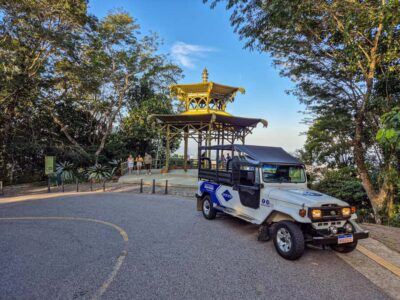
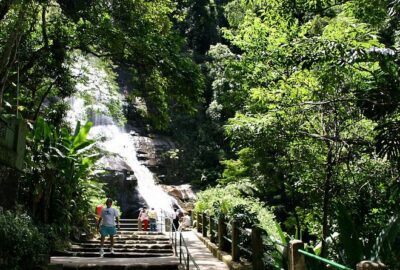
Jeep Adventure: Guided Tour through Tijuca Rain Forest
Read our review →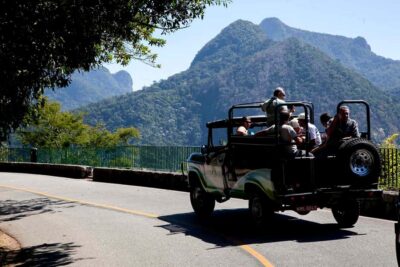
Rio de Janeiro Botanical Garden & Tijuca Forest Tour
Read our review →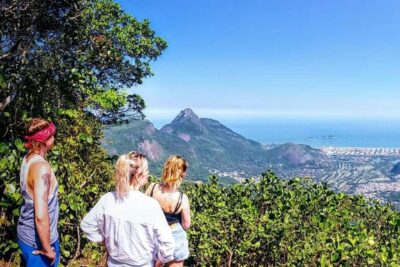
Browse the lists this tour appears in